Animal profile
Where to see blacktip reef sharks
Carcharhinus melanopterus
Almost guaranteed. Odds on a typical dive within its range — the right place and season are what beat them, which is what the destinations below are for.
VUVulnerable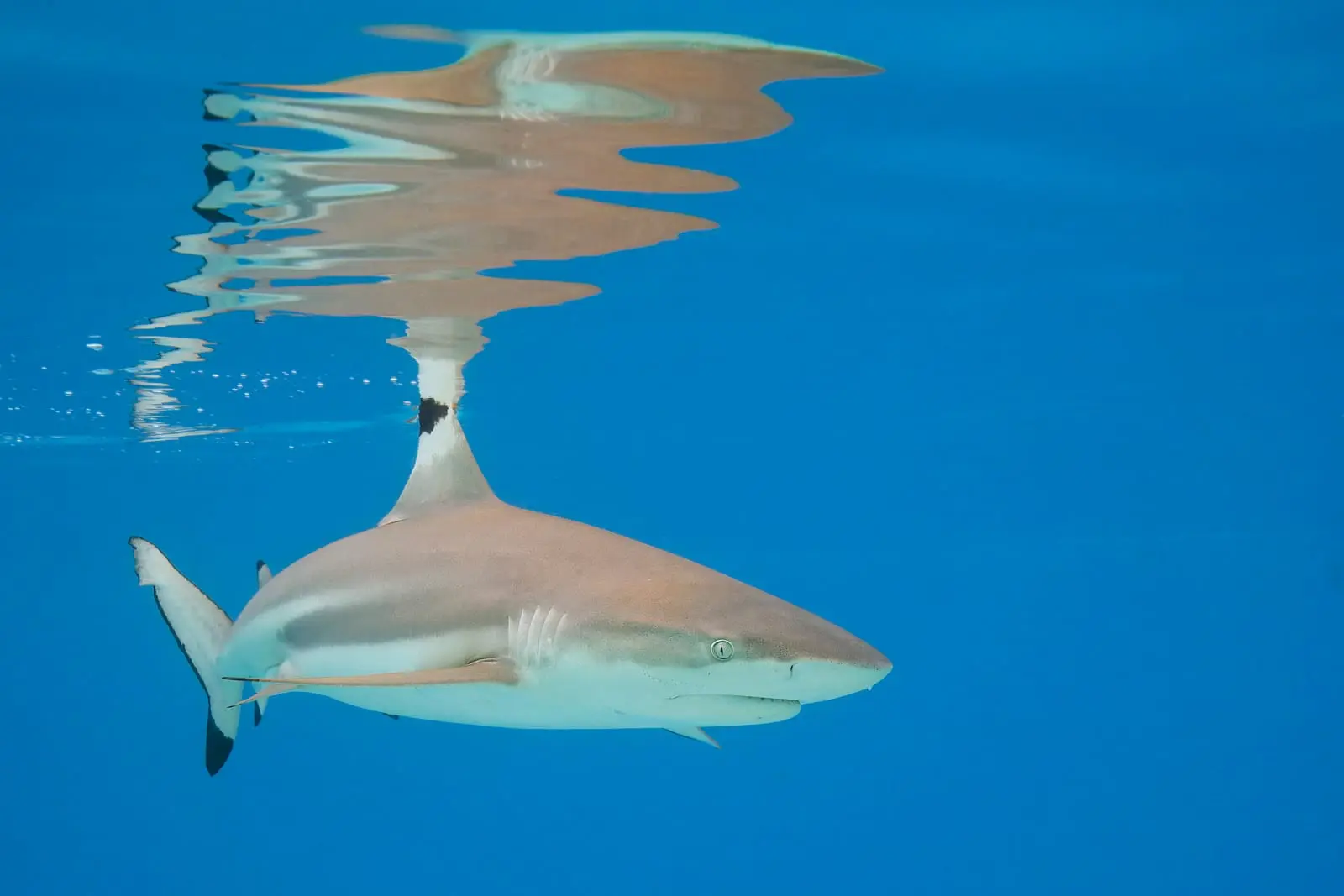
The blacktip reef shark is the shallow-water shark most divers meet first: a metre or so of nervous energy patrolling reef flats, lagoons and backreef sand across the tropical Indo-Pacific. Every fin is dipped in black, but the giveaway is the first dorsal — a black tip over a clean white band, readable from ten metres away. It cannot stop swimming, so unlike the whitetip you will never find one resting under a ledge; it works a home range often smaller than half a square kilometre, following the tide onto the flats to hunt small fish and octopus. Timid rather than threatening, it will usually turn away before you get close — and despite how common it feels on a good reef, the species is listed as Vulnerable and has lost more than 30% of its global population in four decades.
Size
The short version
Lifespan
~13 years
Small groups
a handful in the same spot
Diet
Small reef fish, octopus and squid, crustaceans and molluscs
Risk to youLow
Skittish; the rare bites are in shallow water, mistaken-identity nips at feet.
Risk from us
finning, coastal development — the last one is the part you control.
Planning the encounter
Depth
2–10 m on reef flats
Recorded between 0 m and 75 m
Night diving
Also seen on night dives
Odds through the day
Dawn
best time
Day
possible
Dusk
best time
Night
possible
Active around the clock — they cannot stop swimming — but foraging peaks at dawn and dusk. Movement onto the shallow flats tracks the tide more than the clock: they follow a rising tide in to hunt and drop back to the reef edge as it falls. Early morning, before boat traffic builds, is what operators consistently recommend.
Best places to see blacktip reef sharks
Well documented, and reliably seen in season.
Best time: Year-round, with the calmest lagoons from December to April
Well documented, and reliably seen in season.
Best time: Resident year-round; November to April for the calmest Andaman seas
Consistently reported, but a good way short of a sure thing.
Best time: Year-round in the tropical north; September to May on the southern cays
How to identify a blacktip reef shark
- The name is literal, but the white is the tell: the first dorsal carries a bold black tip with a distinct white band right below it, visible from a long way off.
- Not a whitetip reef shark — that species has white fin tips, a slimmer body, and lies motionless on sand or stacked in caves. A blacktip must keep swimming to breathe, so a resting shark is never one.
- Not a grey reef shark either — greys are chunkier, sit deeper on channel walls, and carry a broad black margin along the whole trailing edge of the tail rather than a black-tipped dorsal.
Meeting them responsibly
- Never feed them, and pick operators who do not. Blacktips are timid unless food is involved, and baiting is what turns a harmless shark into a bitten ankle.
- Let them come to you. They spook easily, so swimming at one guarantees it leaves — hold position, keep your hands in, and breathe slowly.
- Respect the nursery. Lagoons and mangrove shallows are pupping habitat; do not chase pups or crowd shallow water where a small shark has nowhere to retreat.
Frequently asked questions
- Are blacktip reef sharks dangerous?
- No. They are small, timid and quick to leave, and they feed on reef fish and octopus rather than anything diver-sized. The bite incidents on record almost all involve feeding, spearfishing catch, or someone standing in murky shallows — which is why not feeding them matters.
- Where is the easiest place to see a blacktip reef shark?
- A Maldivian island lagoon, where they patrol water shallow enough to wade in. The Phi Phi Islands in Thailand and the coral cay reef flats of the Great Barrier Reef are the other two reliable options.
- Do I need to dive to see one?
- No — snorkelling often works better. Blacktips live shallower than most dive profiles, so a lagoon snorkel or a walk along a reef flat at a rising tide can out-produce a boat dive spent at 25 metres.
Check me
The reference records behind this page on blacktip reef shark.