Nusa Penida and Nusa Lembongan, Bali
Where to see bamboo sharks in Indonesia
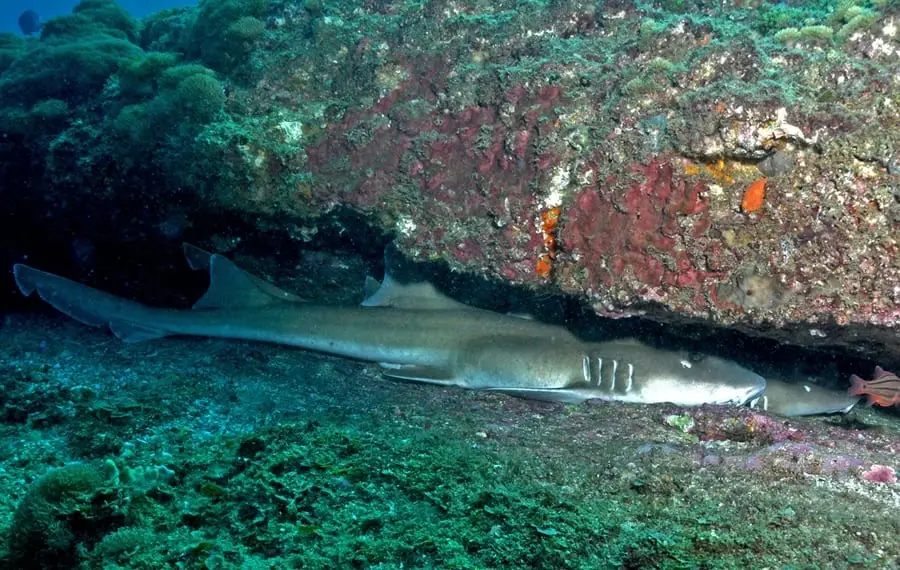
Brownbanded bamboo sharks are resident on the reefs off Nusa Penida and Nusa Lembongan, a short crossing from Bali, and they are found by looking under things rather than by waiting for something to swim past. Day dives turn them up tucked into crevices and under rocky overhangs on the plateaus; a night dive over rubble is what shows one out in the open, walking on its fins and nosing crabs out of the sand.
Best time: Year-round; resident, and a question of night diving rather than season
Consistently reported, but a good way short of a sure thing.
When to go
They are resident and non-migratory, so there is no season for the sharks themselves — timing is about conditions. The dry season from roughly April to October brings the best visibility and calmest crossings, and overlaps the cool upwelling that draws mola mola to the same reefs from about July to October. Wet-season months are quieter for boats but the currents and surface conditions are less forgiving.
Best dive sites for bamboo sharks in Indonesia
-
The Nusa Penida plateaus
Rocky plateaus and rubble slopes around the north coast where bamboo sharks shelter under overhangs through the day. Guides who know the reef can usually point to specific rocks that hold one.
-
Nusa Lembongan’s sheltered reefs
Calmer, shallower reef on the protected side of the channel, and the more practical option for a night dive — the exposed Penida sites carry serious current and swell that make after-dark diving a poor idea.
How to see them
Dive with a Nusa Penida or Lembongan operator and say explicitly that you want to look for bamboo sharks, because they are not on anyone's standard itinerary — the crossing sells mantas and mola, and this is a small brown shark under a rock. Ask for a sheltered site and, if the operator runs them, a night dive. Bring a torch even by day: the whole technique is putting light into shadows under overhangs. Current is the real planning constraint here rather than the shark; the channel between Bali and Penida moves hard, and the good bamboo shark sites are the sheltered ones.
What an encounter is like
Usually part of a shark rather than all of one: a tail, or a banded head, protruding from a crevice. Adults are fairly plain brown and around a metre; juveniles are strongly barred and much smaller. On a night dive expect to find one moving deliberately across rubble, propped on its pectoral fins, alongside the rest of the nocturnal cast — hunting octopus, sleeping parrotfish and decorator crabs. Sightings are a matter of searching, so a guide who knows the reef matters more than the site name.
Frequently asked questions
- Do I need a night dive to see one?
- No, but it is the difference between finding a hidden shark and watching one behave. Day dives regularly turn them up wedged under rocks if you search the overhangs with a torch; night is when they come out and hunt.
- Which species will I see?
- Around Bali it is the brownbanded bamboo shark, Chiloscyllium punctatum. Juveniles carry the strong dark bands the family is named for and adults fade to a fairly plain brown, so a big one and a small one can look like different animals.
- Is this worth crossing to Nusa Penida for on its own?
- Honestly, no. Go for the mantas at the cleaning stations and the mola mola in the cool season, and treat the bamboo sharks as the reason to ask for a sheltered reef or a night dive while you are there.
Sources
- Bamboo Sharks at Nusa Penida — Two Fish Divers
- Sharks in Nusa Penida: 7 Majestic Species Beneath the Waves — Scuba Junkie Penida
- Sharks in Bali: A Diver’s Guide to Where, When, and How to See Them — Bali Aqua