Animal profile
Where to see bull sharks
Carcharhinus leucas
Rare enough to plan the trip around. Odds on a typical dive within its range — the right place and season are what beat them, which is what the destinations below are for.
VUVulnerable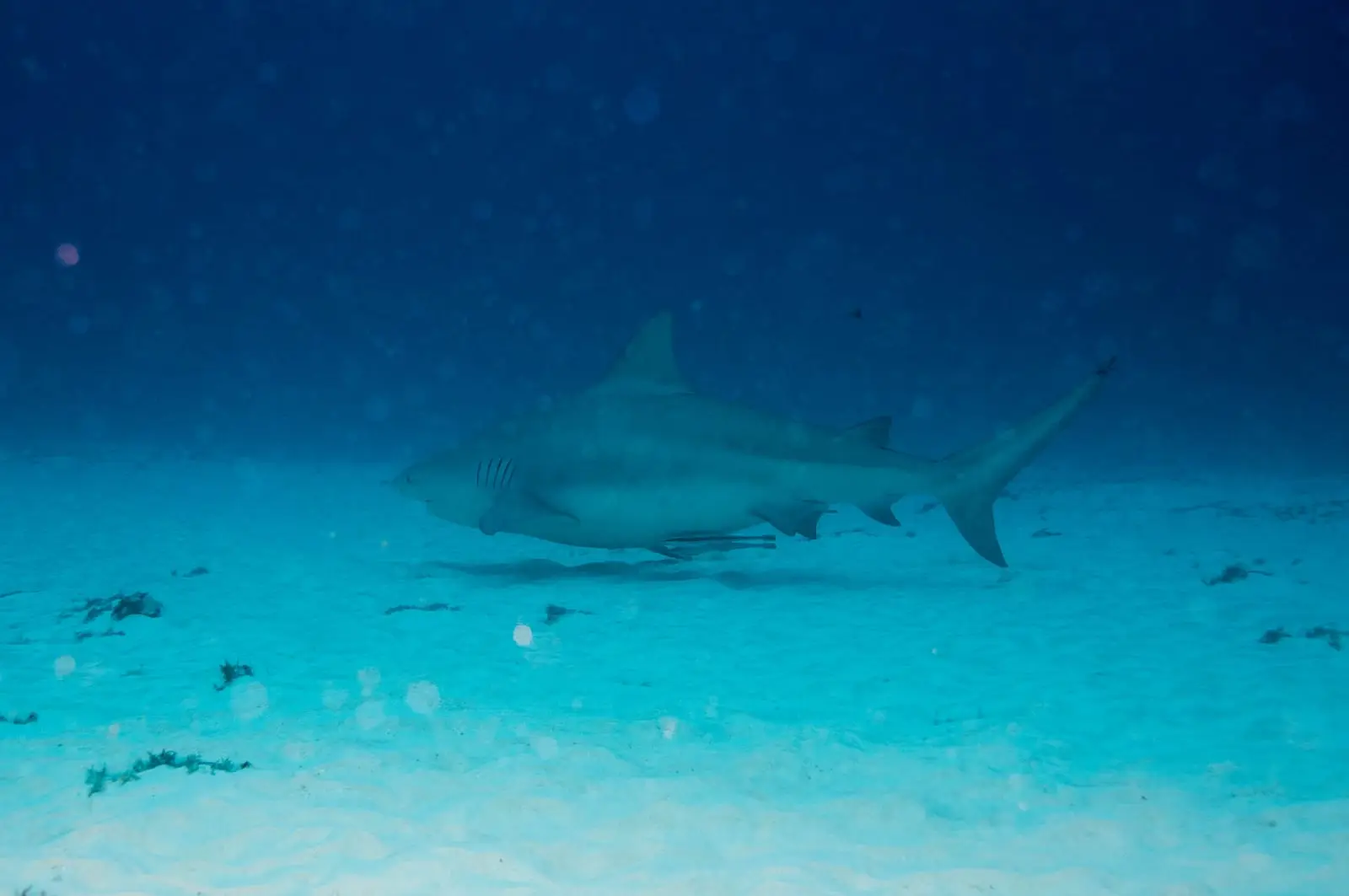
The bull shark is the only large shark that moves freely between salt and fresh water, and it has been recorded thousands of kilometres up the Amazon, the Mississippi and the Zambezi. That tolerance shapes where divers meet it: shallow, often murky coastal water, river mouths and sandy inshore flats rather than clear offshore reef. It is stocky and short-snouted, and it holds its ground in a way reef sharks do not, which is most of the reason for its reputation. The practical picture is narrower than the reputation suggests — the encounters divers actually get are on sand, in daylight, with a guide, and they are usually slow, curious passes. Its most dependable dive anywhere is off Playa del Carmen, where pregnant females gather each winter before pupping in the mangroves.
Size
The short version
Lifespan
25–32 years
Solitary
usually met one at a time
Diet
Bony fish, rays and smaller sharks, plus turtles, crustaceans and the occasional seabird
Risk to youNeeds a briefed operator
Powerful, bold and at home in murky shallows — dive it only where it is run as a managed dive.
Risk from us
finning, shark control nets, river habitat loss — the last one is the part you control.
Planning the encounter
Depth
20–25 m at Playa del Carmen
Recorded between 1 m and 150 m
Night diving
Also seen on night dives
Odds through the day
Dawn
likely
Day
possible
Dusk
likely
Night
possible
A crepuscular hunter that works hardest in the low light at either end of the day, and stays active after dark. That is not how you will meet one, though: the Playa del Carmen dives run in the early morning because the sea is flattest and the visibility best then, so the sharks there keep hours set by the boats rather than by their own appetite.
Best places to see bull sharks
How to identify a bull shark
- The head is the tell: a very short, broadly rounded snout, blunt as a shovel, on a body far thicker through the shoulders than any reef shark of the same length.
- There is no ridge of skin between the two dorsal fins. A Caribbean reef shark on the same Mexican dives has one, and running your eye down that midline is the fastest way to separate them.
- The eyes are small for the size of the head, and the first dorsal is large, broad-based and sharply triangular — not the swept-back sickle of a silky or an oceanic whitetip.
Meeting them responsibly
- Stay on the bottom, hold the position the guide gives you, and keep your hands in. These are baited dives on open sand, and a diver who drifts up into the bait line is the one thing that turns a calm pass into a problem.
- Do not swim at one, and never block its line out. A bull shark that feels cornered will not flee the way a reef shark does — it will assert itself, and that is a situation of your making, not the animal’s.
- Ask how the operator baits before you book. Practice varies from a sealed crate on the sand to hand-feeding, and over a season those two make quite different animals of the same species.
Frequently asked questions
- Where is the most reliable place to dive with bull sharks?
- Playa del Carmen on Mexico’s Riviera Maya, from mid-November to March, when pregnant females gather in the shallows before pupping in nearby mangroves. Beqa Lagoon in Fiji and Protea Banks in South Africa are the other established bull shark dives.
- Are bull sharks dangerous to divers?
- They are large, powerful and less easily deterred than reef sharks, and they rank among the top three species in the historical bite record. On guided dives with a proper briefing, incidents are very rare — the risk sits in murky, shallow, low-visibility water rather than on a clear-water dive where everyone can see everyone.
- Can bull sharks really live in fresh water?
- Yes, and they are the only large shark that does it routinely. They regulate salt through their kidneys, gills and rectal gland, which lets them enter rivers and lakes; individuals have been found far up the Amazon and the Mississippi. They do not spend their whole lives there, but they use estuaries and river mouths as nurseries.
Check me
The reference records behind this page on bull shark.