Southern Great Barrier Reef, Queensland
Where to see epaulette sharks in Australia
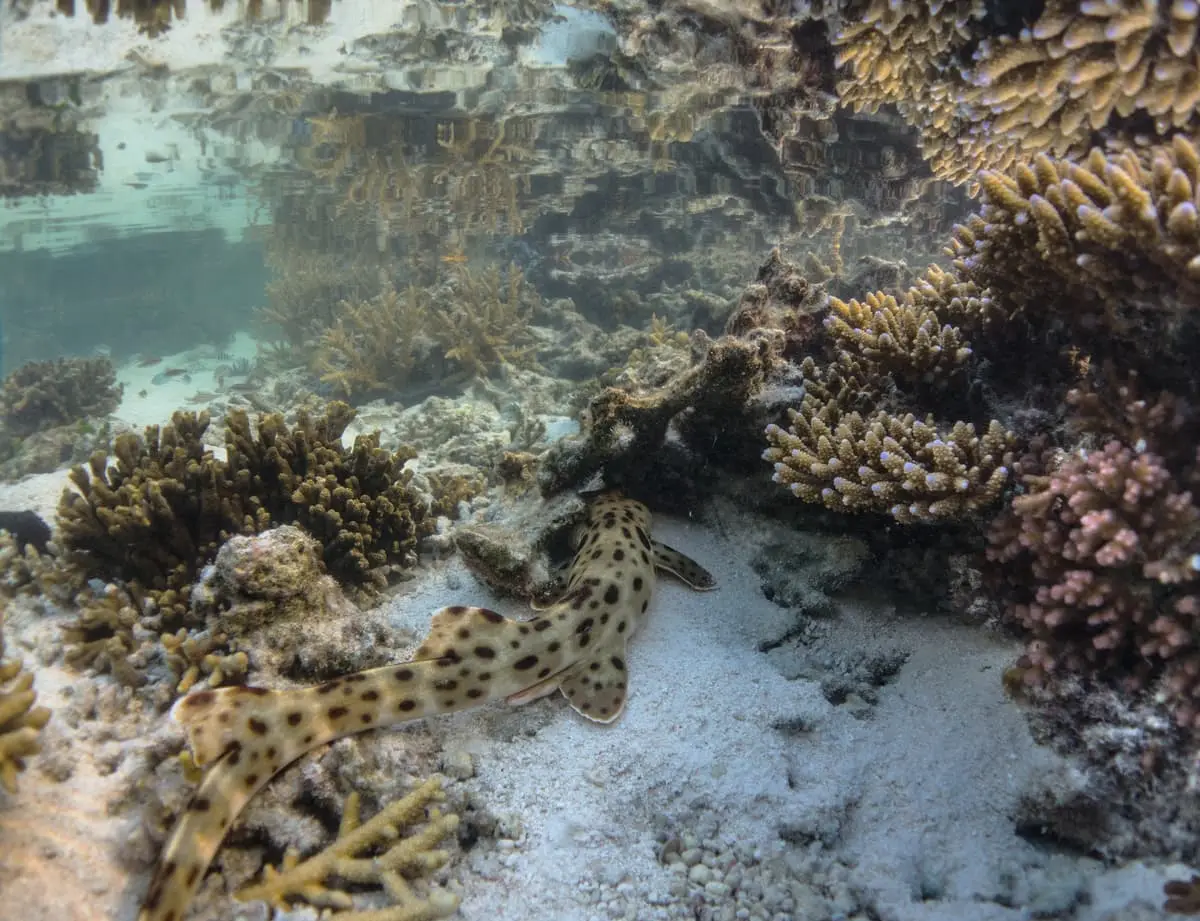
The shallow lagoons and reef flats of the southern Great Barrier Reef are the reliable place to find epaulette sharks, and Lady Elliot and Heron Islands are the two best known. They are resident all year, so timing is about tide and light rather than season: a night dive or shallow snorkel over rubble on a low tide is what turns a hidden shark into one walking across the sand in front of you.
Best time: Year-round; best on the lowest night tides of the warmer months
Well documented, and reliably seen in season.
When to go
They are resident and non-migratory, so there is no season to catch — the variables are tide and time of day. The warmer months from about October to March bring the most comfortable shallow night diving and coincide with turtle nesting on both islands. Winter is perfectly viable for the sharks themselves, just colder in very shallow water where there is nothing between you and the surface.
Best dive sites for epaulette sharks in Australia
-
Lady Elliot Island lagoon
Shallow coral rubble and sand at the southern tip of the reef, in a metre or two of water. Epaulettes forage here after dark and are regularly seen walking between coral heads; the lagoon is calm enough that much of the looking can be done on snorkel.
-
Heron Island reef flat
A research-station reef with an extensive flat that empties on spring lows, stranding epaulettes in pools where they wait out the tide. Much of what is known about the species’ hypoxia tolerance was worked out here.
How to see them
This is a shallow, slow, look-under-things dive rather than a big-animal drift — the skill is patience and a good torch, not depth or gas. Day dives turn them up wedged under plate coral and ledges if you look into the shadows instead of across the reef; night is much better, when they leave cover and walk the open sand. Tide is the other half, since the lowest tides concentrate them in pools and channels on the flat. Both islands have on-site dive operations, and either can be done as a night dive or, in the lagoon shallows, on snorkel.
What an encounter is like
A slender, spotted, half-metre shark moving deliberately across sand on its fins, usually alone and usually unbothered by a diver who stays still. Expect to find them by searching rather than by waiting: several on a night dive is a good result. The same shallows hold the rest of the nocturnal cast — sleeping turtles, shovelnose rays, and enough shrimp and crab activity to explain what the sharks are doing there.
Frequently asked questions
- Do I need to dive to see one?
- Not necessarily. In the Lady Elliot lagoon they forage in water shallow enough to snorkel, and a night snorkel over the rubble is a genuinely good way to see one walking. A night dive just gives you more time and steadier light.
- Is Raja Ampat’s walking shark the same species?
- No. Raja Ampat has its own endemic walking shark, Hemiscyllium freycineti, and there are nine species in the genus spread across Australia, Indonesia and Papua New Guinea. The Great Barrier Reef animal is H. ocellatum.
- What time of year is best?
- Any. They are resident year-round, so plan around the tide table and dive at night rather than around a season. October to March is the more comfortable window for long dives in a metre of water, and it overlaps turtle nesting.
Sources
- Meet the Walking Shark — Oceanic Society
- Epaulette Shark in the Great Barrier Reef — Great Barrier Reef Tours
- Where to find Walking Sharks: Epaulette Sharks in Raja Ampat, PNG and Australia — Diveplanit
- Bizarre animal spotted walking along Great Barrier Reef seabed — BBC Discover Wildlife