Neptune Islands, off Port Lincoln, South Australia
Where to see great white sharks in Australia
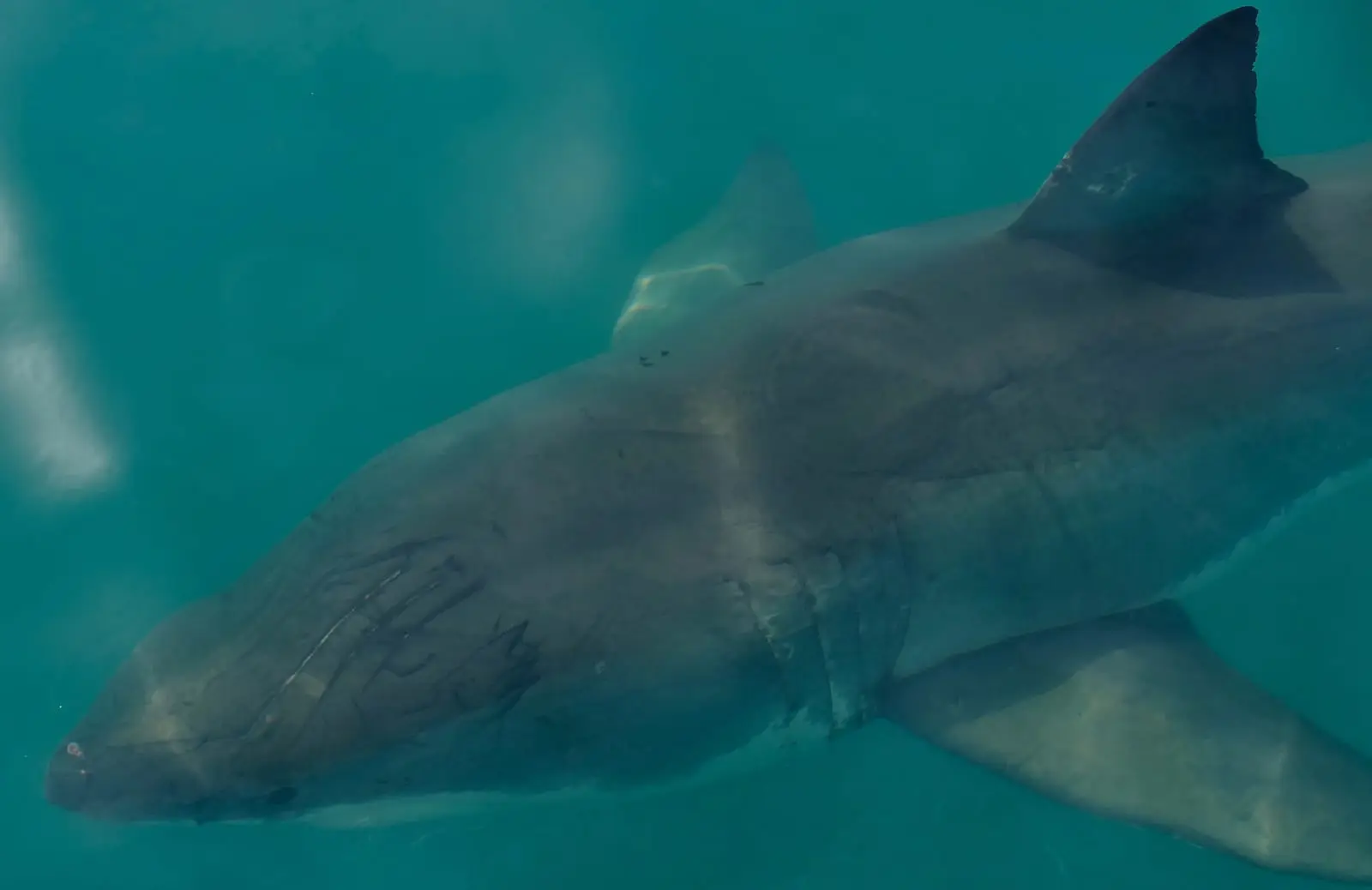
The Neptune Islands, a long boat ride off Port Lincoln in South Australia, are one of the most important white shark aggregation sites in the world and the only place in Australia where you can cage dive with them. Sharks are present year-round but most reliable in the cooler months, with the largest females most often seen from May to July. Surface cages need no certification at all; some operators also lower a cage to the seabed.
Best time: April to July for the biggest sharks; December and January a calmer second window
Well documented, and reliably seen in season.
When to go
Sharks are at the Neptunes year-round, so this is about reliability and size rather than presence. The cooler months are the strongest, and May to July is when the large mature females turn up most often; April through July is the usual recommendation, with December and January a good secondary window that trades some size for far better weather. Winter wind and swell are the main reason trips do not run.
Best dive sites for great white sharks in Australia
-
North Neptune Islands
The main anchorage, beside a large long-nosed fur seal colony — the reason the sharks are here. Surface cages hang off the stern in a few metres of water while the crew works bait to bring sharks past.
-
The ocean-floor cage
Some operators lower a second cage to the bottom in roughly 20–25 m, which gives the one genuinely diver-only perspective here: sharks passing overhead against the light rather than at the surface.
How to see them
Trips leave from Port Lincoln on the Eyre Peninsula and range from long day boats to multi-day liveaboards; the crossing is several hours and can be rough, so the overnight trips buy you far more time in the cage for the same seasickness. The surface cage is done on hookah with no certification required, which means non-divers and children on some operators can do the same dive as everyone else. Certification only matters if you want the seabed cage. Book more days than you need: this is exposed water and winter weather cancels trips.
What an encounter is like
White sharks passing within a metre or two of the bars, usually one to three animals working the boat at a time, against a constant background of fur seals that are far faster and more agile than the sharks and know it. The water is cold and often green rather than blue — this is temperate diving, and the visibility is nothing like Guadalupe’s famous 30 metres. Winter brings the biggest animals, including mature females over five metres.
Frequently asked questions
- Do I need a diving certification?
- Not for the surface cage, which hangs off the boat and runs on hookah — non-divers do it routinely. A certification is only needed for the ocean-floor cage that some operators lower to the seabed.
- Can I dive with them outside a cage?
- No. There is no legal or responsible free-swimming white shark dive at the Neptune Islands, and any operator suggesting otherwise is worth walking away from.
- Is this the same as Guadalupe used to be?
- Not visually. Guadalupe Island in Mexico offered exceptional blue-water clarity and has since been closed to shark-diving tourism. The Neptunes are colder and greener, so expect a temperate-water encounter rather than the images that made Guadalupe famous.
Sources
- Frequently Asked Questions — Rodney Fox Shark Expeditions
- When is the best time to cage dive with great white sharks in Australia? — Australian Adventure Travel
- Great White Shark Cage Diving — Indo Pacific Images
- Shark Cage Diving Tours, Port Lincoln — Port Lincoln (official visitor site)