Kavieng and the New Ireland passages
Where to see grey reef sharks in Papua New Guinea
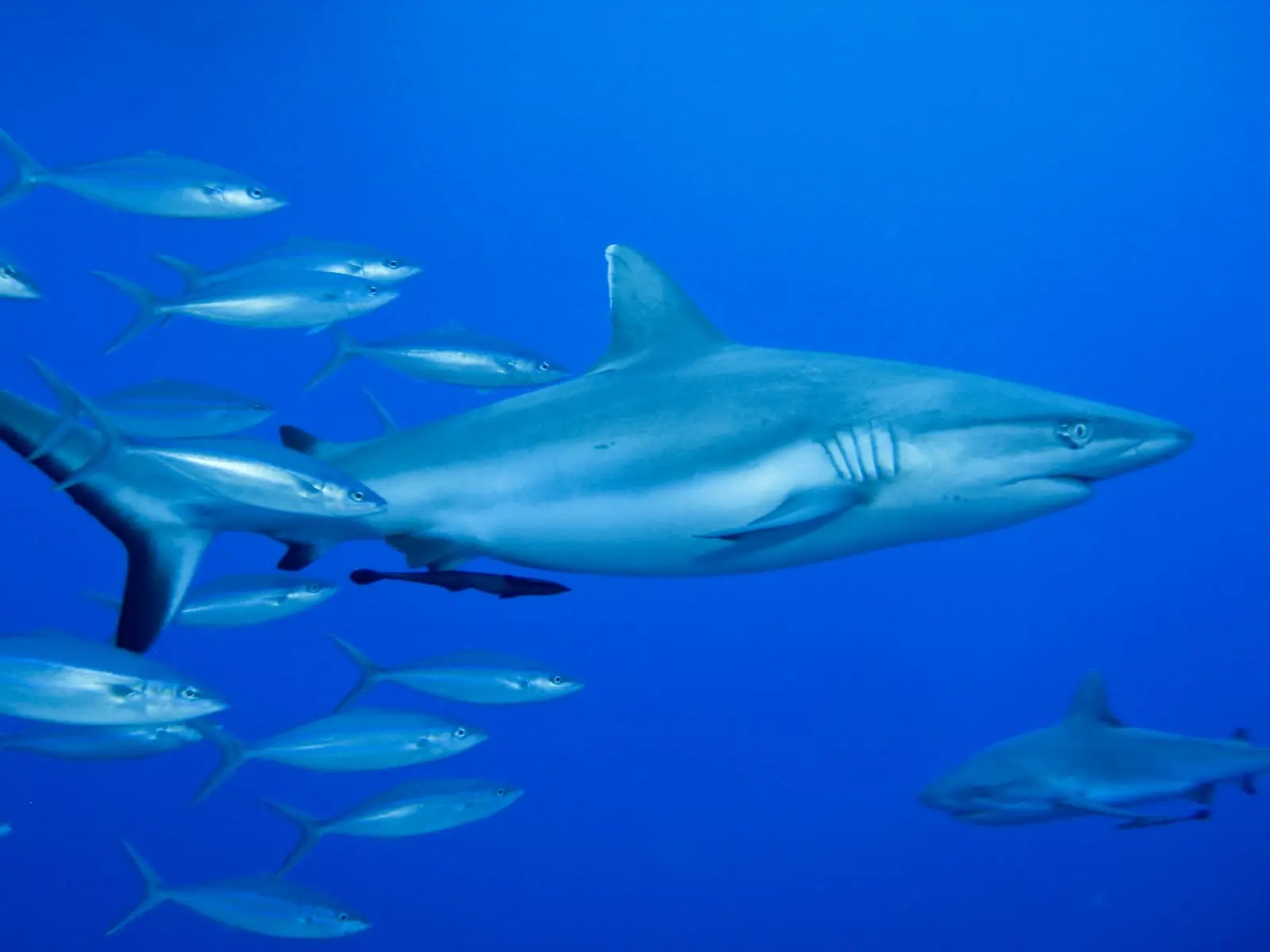
Papua New Guinea’s tidal passages hold healthy, largely unfished grey reef shark populations, and Albatross Passage near Kavieng is the one divers name. Time it on an incoming tide and the channel fills with grey reefs, eagle rays, barracuda and dogtooth tuna in thirty metres of visibility. It is less of a guarantee than the Maldives or Osprey and more of a reward for getting the tide right.
Best time: April to June and September to November
Consistently reported, but a good way short of a sure thing.
When to go
Diving is possible year-round. Kavieng is best from April to June and September into early December, and the Pacific side from August to October brings calm seas, offshore winds and visibility often beyond 40 metres. Kimbe Bay peaks May to June and September to December.
Best dive sites for grey reef sharks in Papua New Guinea
-
Albatross Passage, Kavieng
The reference dive. Strong tidal flow funnels between New Ireland and Aua Island, with grey reefs patrolling the blue while divers hold onto bommies.
-
Eagle Ray Passage, Kavieng
The western arm of Planet Channel, with eagle ray schools when the current runs hard and grey reefs working the same flow.
-
Silvertip Reef, Kavieng
As the name suggests, the place to practise separating white-margined silvertips from black-tailed grey reefs, since both turn up.
-
Fathers Reefs, West New Britain
Offshore seamounts off Kimbe Bay with genuine pelagic action — sharks, rays and barracuda schools, reached by liveaboard from Walindi.
How to see them
Everything hinges on the tide. Dive the incoming flow: it drags clear ocean water into the passage, lifts visibility to 30 or 40 metres and switches the fish on. Descend fast on a negative entry at the up-current end and expect to hold on — passage diving here is a grip-and-watch dive rather than a hover, and divers routinely hang onto coral heads while the show goes past. Reef gloves and a reef hook are worth carrying. Grey reefs generally hold on the blue-water side at 20 to 30 metres, so face out rather than in, and carry a delayed surface marker buoy because you will surface well down-current.
What an encounter is like
Papua New Guinea is remote and expensive to reach, and domestic flights are not always reliable. Shark numbers are healthy but unmanaged and unbaited, so a bad tide means a quiet dive — this is the least scheduled of the three destinations, which is also its appeal. Currents at Albatross can be genuinely strong and it is not the place for a first current dive. Much of the country’s fame is macro and coral diversity rather than sharks, so choose a Kavieng-focused itinerary if grey reefs are the goal.
Frequently asked questions
- Where are the best shark dives in Papua New Guinea?
- The tidal passages around Kavieng in New Ireland, especially Albatross Passage, plus the offshore Fathers Reefs seamounts off Kimbe Bay.
- How strong are the currents?
- Strong enough that you hold on rather than hover. Albatross Passage in particular is a negative-entry, grip-the-bommie dive and is not suitable as a first current dive.
- Incoming or outgoing tide?
- Incoming. It brings clear ocean water into the passage, which lifts visibility dramatically and brings the pelagics in with it.
Sources
- Best Scuba Diving in Papua New Guinea — Bluewater Dive Travel
- Diving Papua New Guinea's Top 5 Dive Spots — Diveplanit