Nusa Penida & Nusa Lembongan, Bali
Where to see mola mola in Indonesia
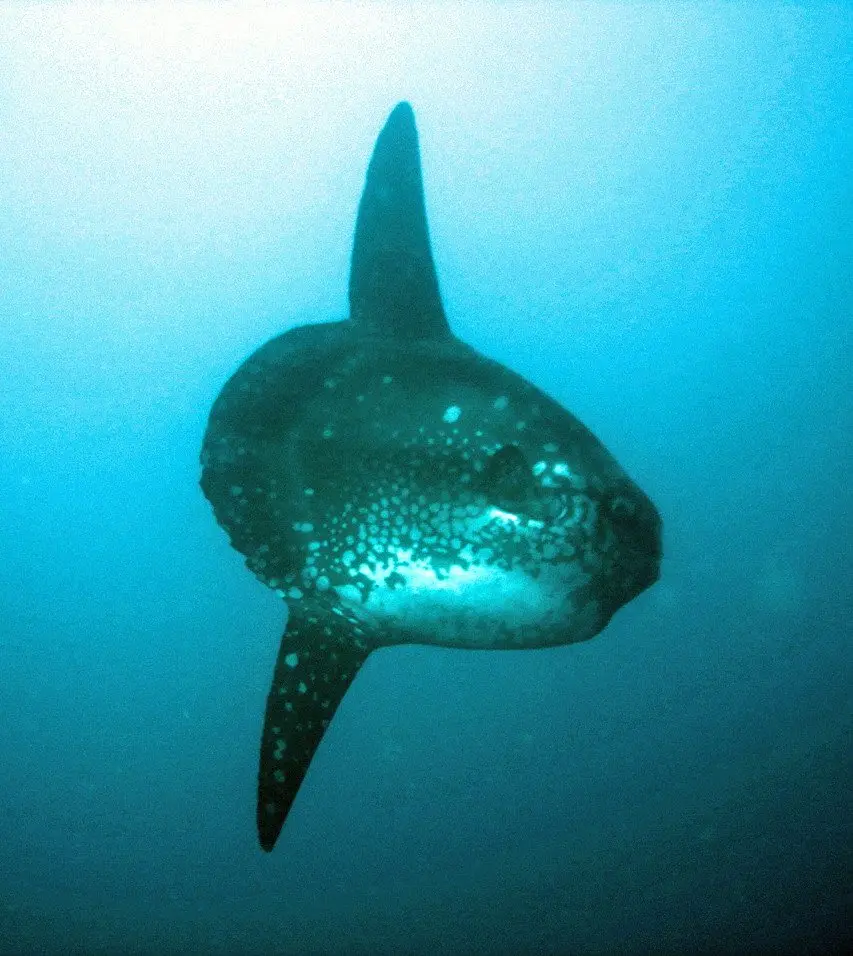
The place to see sunfish in Indonesia is Crystal Bay off Nusa Penida in Bali, from July to October, when cold upwelling brings them up to diveable depth. The species there is actually Mola alexandrini, the bumphead sunfish, locally called mola mola. Sightings are seasonal and the diving is demanding.
Best time: July to October, peaking August–September
Well documented, and reliably seen in season.
When to go
Mola alexandrini normally lives deep, with recorded dives beyond 600 meters, and surfaces mainly to warm up after cold hunting dives. From roughly July to October, seasonal upwelling along Nusa Penida's ocean-facing coast cools the surface layer and the fish rise to cleaning stations around 20–30 meters, where reef fish can service them and recreational divers can reach them. That is also precisely why the water runs colder and the currents run stronger during the months you most want to be there.
Best dive sites for mola mola in Indonesia
-
Crystal Bay, Nusa Penida
The most reliable site, with a cleaning station on the drop-off past the bay's Second Corner — and also the strongest, most hazardous downcurrents in the area.
-
Gamat Bay, Nusa Penida
Occasional exceptional encounters, including multiple sunfish on a single dive, according to local operators.
-
Manta Point, SD Point, Ped & Sental, Nusa Penida
Secondary sites with more dynamic current where sunfish sometimes appear away from Crystal Bay.
-
Toyapakeh & Blue Corner
Technical sites in the channel with powerful currents; sunfish sightings here are far less predictable than at Crystal Bay.
How to see them
Crystal Bay in mola season is not beginner terrain. Operators recommend Advanced Open Water or better with real experience in strong current. Water drops to roughly 16–22°C below the thermocline, so a 5mm suit is standard. The site is known for sudden, powerful downcurrents — visible as 'washing machine' swirls on the surface — that have been linked to serious accidents, including diver deaths in 2011, 2012 and 2014. Go only with a guide who knows this specific site well, dive in a small group, and abort if the surface looks rough. At the cleaning station, sunfish tolerate divers only if you approach slowly, stay low, and never block their route to deep water.
What an encounter is like
Even in peak season a sighting is not guaranteed: operators estimate roughly a 1-in-3 chance per dive at Crystal Bay during July–October, and as low as 1-in-10 depending on conditions. A typical encounter is a mola holding motionless, tilted at an angle at 20–30 meters, while bannerfish or angelfish pick parasites from its skin — usually a few minutes before it drops back into deep water. Outside the July–October window, sightings become rare because the fish stay too deep for recreational diving.
Frequently asked questions
- Is the Bali sunfish really a mola mola?
- Not technically. Genetic work published in 2017 identified the Nusa Penida sunfish as Mola alexandrini, the bumphead sunfish — a distinct species from the true ocean sunfish, Mola mola. Locally, and in most dive marketing, it is still called mola mola out of habit.
- When is mola mola season in Bali?
- Peak season runs July to October, with August and September generally the best months, when cold upwelling brings the fish up to cleaning stations around 20–30 meters at Crystal Bay, Nusa Penida.
- Is Crystal Bay diving dangerous?
- It is one of Bali's higher-risk sites, due to sudden downcurrents that have contributed to diver deaths in 2011, 2012 and 2014. It calls for an experienced local guide, ideally Advanced Open Water or better, and a real willingness to abort the dive if the surface looks rough.
- Are mola mola sightings guaranteed in season?
- No. Even in peak months, operators cite odds of around one in three dives or lower. These are wild, deep-water animals visiting a cleaning station on their own schedule.
Sources
- Mola Mola Bali — Season, Diving in Nusa Penida — nusapenida.org
- The Ultimate Guide for Molas of Nusa Penida — Legend Diving Penida
- Two Deaths at One of Indonesia's Most Dangerous Dive Sites — Undercurrent