Animal profile
Where to see nurse sharks
Ginglymostoma cirratum
Frequent. Odds on a typical dive within its range — the right place and season are what beat them, which is what the destinations below are for.
VUVulnerable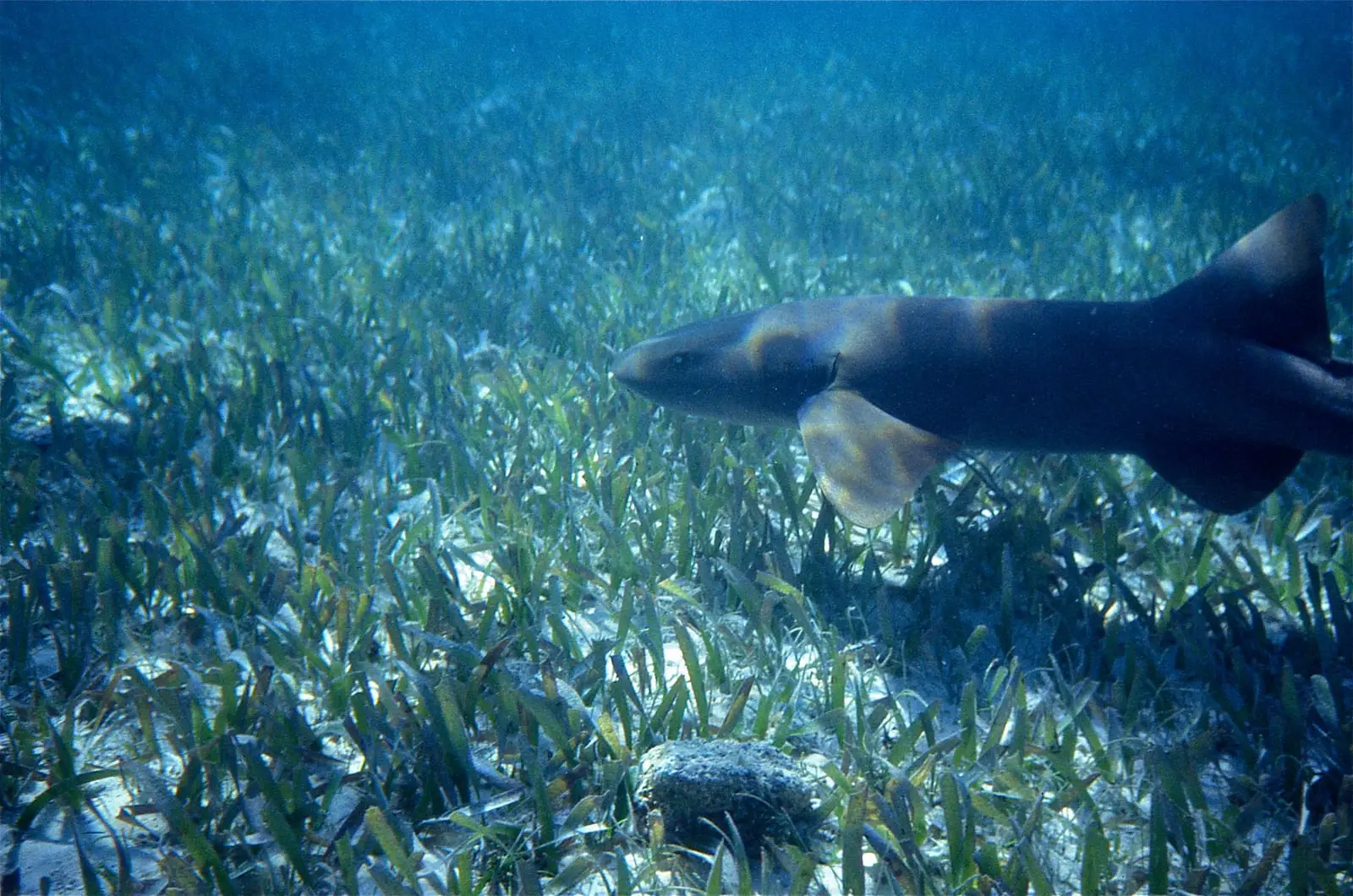
The nurse shark is the shark most Caribbean divers meet first, usually as a large brown animal wedged motionless under a ledge with its head in a crevice. That stillness is the daytime half of its life: it is nocturnal, and after dark it becomes a strong, deliberate swimmer that hunts by clamping onto holes and pulling prey out with a suction force strong enough to draw a conch from its shell. It has an unusual habit for a shark of resting in piles, two to thirty animals leaning on and over one another, and it returns to the same caves and ledges night after night — which is exactly why a dive guide can tell you where one will be. The docility is real but conditional: it is a bottom-feeder with a small mouth and no interest in divers, and essentially every bite on record followed someone grabbing its tail.
Size
The short version
Lifespan
~25 years
Small groups
a handful in the same spot
Diet
Crabs, lobster, urchins, octopus and small fish, drawn out of holes by suction
Risk to youModerate
Sluggish until grabbed — then a suction bite that is hard to release.
Risk from us
touching, disturbing resting piles — the last one is the part you control.
Planning the encounter
Depth
5–20 m on reef
Recorded between 1 m and 75 m
Night diving
Better on a night dive
Odds through the day
Dawn
possible
Day
likely
Dusk
likely
Night
best time
Finding one is easy by day and interesting only at night. Daylight dives turn them up reliably but asleep under ledges; the suction-feeding, bottom-working animal the species is actually built to be only appears after dark, which makes this one of the better reasons to book a Caribbean night dive.
Best places to see nurse sharks
How to identify a nurse shark
- Two short barbels hang from the upper lip, just in front of the mouth. No other Caribbean shark has them, and they settle the identification on their own.
- The tail is unmistakably lopsided: a very long upper lobe with almost no lower one, closer to a nurse hound than to a reef shark, and the two dorsal fins sit far back and are close to the same size.
- It will be plain brown to yellowish, broad-headed, and either lying still or clambering over the bottom on its pectoral fins. Reef sharks in the same water never stop swimming.
Meeting them responsibly
- Never touch the tail. This is the single cause of nearly every recorded nurse shark bite, and the animal’s jaws are built for suction and grip, so it does not let go quickly.
- Do not pull one out of its ledge for a photograph, and do not crowd the entrance to a resting cave. Those sites are used repeatedly by the same individuals, and a regularly disturbed ledge gets abandoned.
- If you want to see one doing something other than sleeping, dive at night and keep your distance rather than trying to wake one during the day.
Frequently asked questions
- Are nurse sharks dangerous?
- Not in normal circumstances. They are slow bottom-feeders with small mouths that show no interest in divers, and almost every bite in the record followed someone grabbing or riding one. The jaws grip hard enough that a provoked bite is difficult to release, which is the real argument for keeping your hands off.
- Why are they always lying still?
- Because you are seeing them off shift. Nurse sharks are nocturnal: they rest through the day under ledges and in caves, often piled together, and hunt after dark. Unlike requiem sharks they can pump water over their gills while stationary, so they do not need to keep swimming to breathe.
- Where is the best place to see one?
- Almost any Caribbean reef, which is what makes them the region’s most-seen shark. The Bahamas is the most dependable: they turn up on nearly every reef dive, they join the baited shark dives off New Providence in numbers, and the shallows of the Exumas are known for them.
Check me
The reference records behind this page on nurse shark.