New Providence and the Exumas
Where to see nurse sharks in Bahamas
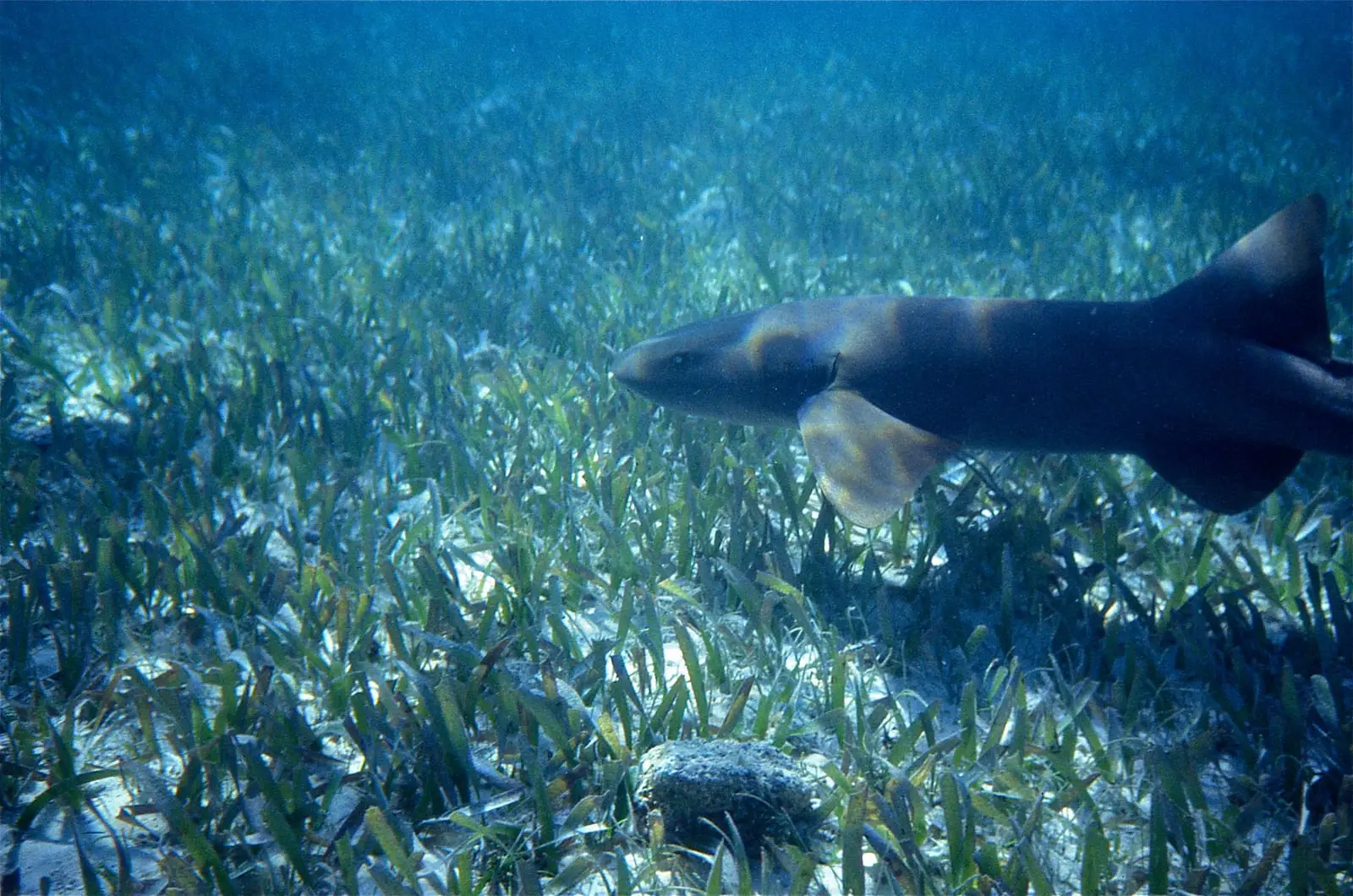
Nurse sharks are on more or less every Bahamian reef, all year, which makes this the easiest shark encounter in the country rather than one you plan a trip around. They rest under ledges and in caves through the day, often piled on top of one another, and return to the same sites repeatedly — so a guide can usually take you straight to one. The baited shark dives off New Providence bring them in numbers, and a night dive is what shows you the animal actually hunting.
Best time: Year-round; resident and non-migratory
Well documented, and reliably seen in season.
When to go
There is no season. Nurse sharks are resident and non-migratory in the Bahamas, they show strong fidelity to the same resting sites, and they are seen year-round on essentially every reef dive. Choose your months for weather instead: winter brings the nortes and cooler water, while summer and autumn are calmest but sit inside hurricane season.
Best dive sites for nurse sharks in Bahamas
-
The New Providence reef and wall dives
Ledges, swim-throughs and small caves along the drop-off south-west of Nassau, where nurse sharks rest through the day. They also join the area’s baited Caribbean reef shark dives in numbers, usually working the sand below the action.
-
The Exumas shallows
Shallow sand flats, mangrove edges and cuts through the cays, long known for nurse sharks in very shallow water — including habituated groups at marina docks, which is a different and much less wild proposition than a reef dive.
How to see them
No planning required beyond booking a dive: any Bahamian operator will put you on nurse sharks in the course of ordinary reef diving, and Open Water is plenty. If you want more than a sleeping shark, ask specifically for a night dive — that is when they leave the ledges and hunt, and it turns the most overlooked shark in the Caribbean into the most interesting thing on the reef. On the baited dives, expect them as supporting cast to the reef sharks rather than the main event.
What an encounter is like
Large brown sharks lying motionless under ledges with their heads pushed into crevices, frequently in groups of several animals resting against each other. They are indifferent to divers and will usually stay put while you look, which is precisely why the temptation to touch has to be resisted. At night the same animals are unrecognisable: strong swimmers working the bottom, clamping onto holes and pulling prey out by suction.
Frequently asked questions
- Do I need a special trip to see nurse sharks here?
- No. They turn up on ordinary reef dives across the Bahamas all year, and no operator treats them as a target species. If you want to see one hunting rather than sleeping, the thing to book is a night dive.
- What about swimming with them at the Exumas docks?
- Habituated nurse sharks gather at some Exuma marinas, and it is popular, but it is a fed and crowded interaction rather than a wild encounter, and handling is common there. A reef dive gives you the same species behaving normally.
- Are they safe to be around?
- Yes, with one rule: do not touch, and specifically never grab the tail. They ignore divers entirely, but their bite is a suction-and-grip design that does not release easily, and nearly every recorded incident began with someone handling one.
Sources
- Nurse shark — Ginglymostoma cirratum — Shark Research Institute
- Nurse Shark: Habitat, Behavior & Diving Encounters — Epic Diving
- Nurse Sharks, Ginglymostoma cirratum — MarineBio
- Exploring the Enigmatic Nurse Sharks of the Bahamas — Shore 2 Shore Bahamas