Cat Island, central Bahamas
Where to see oceanic whitetip sharks in Bahamas
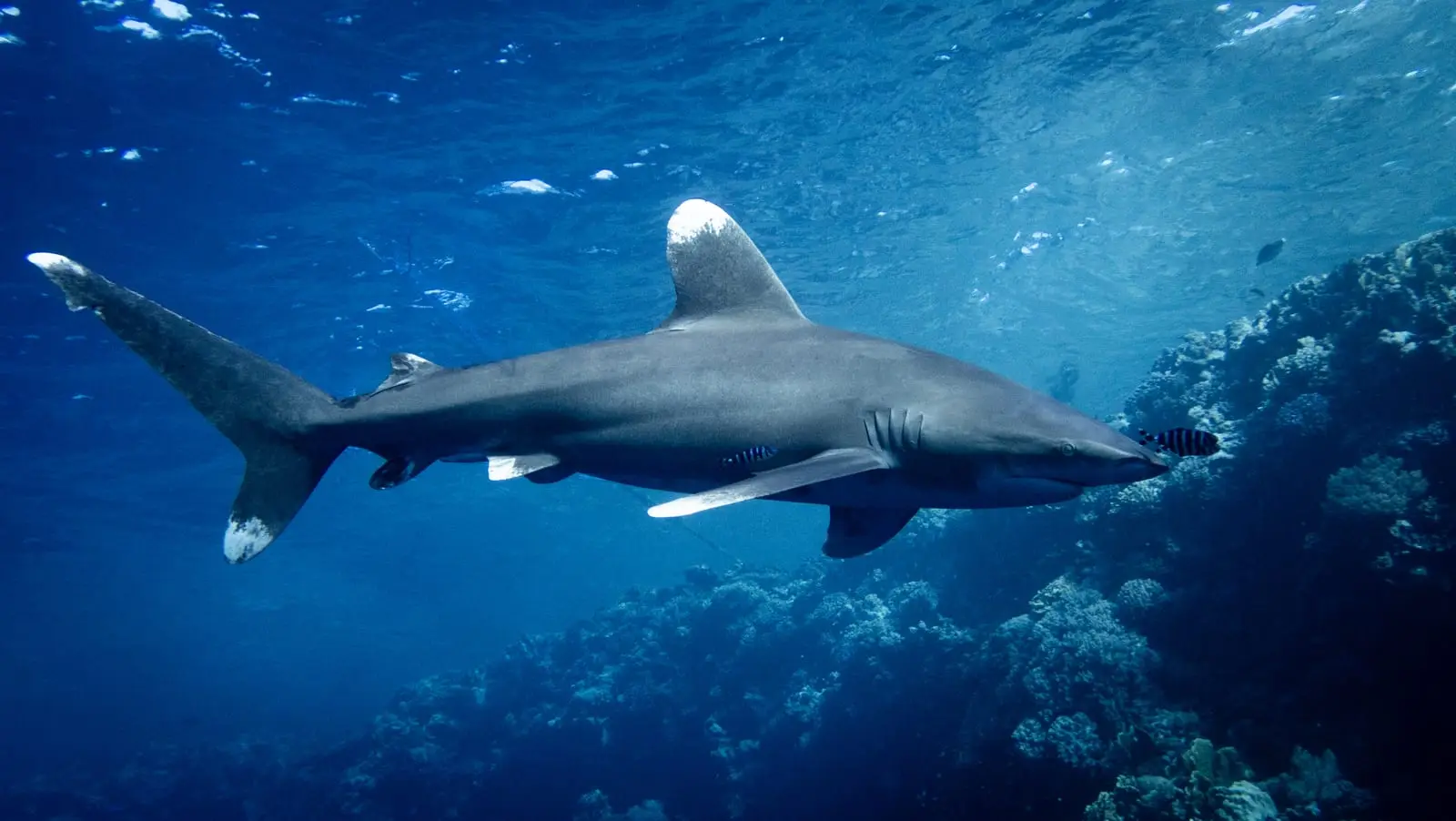
Cat Island is the one place on earth where oceanic whitetips are dependable. Each spring they follow the tuna migration into the deep water off the island’s southern end, and operators run blue-water dives in open ocean with thousands of metres beneath the boat, hanging a bait box at about ten metres to keep the sharks shallow. April and May bring the most animals; the season tails off through June.
Best time: April to June; the largest numbers in April and May
Well documented, and reliably seen in season.
When to go
The season is driven by the tuna migration rather than by weather: the sharks arrive in April, numbers are highest through April and May, and the encounter holds into June before thinning out. Outside that window there is no oceanic whitetip dive at Cat Island. Spring conditions are usually good, with warm water and long visibility, and being outside hurricane season is part of why the trips sit here.
Best dive sites for oceanic whitetip sharks in Bahamas
-
The deep water off the southern tip
Not a dive site in any normal sense — a stretch of open ocean over depths of around 2,000 m, reached by boat and dived with no bottom in sight. Divers stay in a briefed group near the boat while a bait box holds the sharks in the top ten metres.
How to see them
This runs as a dedicated multi-day trip with one of the small number of operators working Cat Island in April and May, not as an add-on to a reef holiday. Certification requirements are modest because the diving is shallow, but blue-water diving is its own skill: there is no reference, no bottom, and buoyancy control has to be automatic rather than thought about. Bring composure more than experience — the briefing about facing the sharks and staying in the group is the entire safety model, and the sharks are close for most of the dive.
What an encounter is like
Typically a handful of oceanic whitetips at a time, closing steadily and repeatedly rather than passing once, each trailing pilot fish and often escorted by dorado. Silky sharks are usually there too, and occasionally duskies, which makes fin shape worth learning before you go. Visibility is excellent and the water warm; what surprises most divers is how unhurried and deliberate the sharks are, and how much of the dive is spent turning to keep track of them.
Frequently asked questions
- How deep is the dive?
- Shallow — most of it happens in the top ten to fifteen metres, held there by a bait box. What is deep is the water beneath you, which is around two thousand metres, and that is a psychological adjustment rather than a decompression one.
- Is it safe?
- The record on organised Cat Island trips is good, but this is a bold, inquisitive shark in open ocean and the dive depends on you following the briefing: stay vertical, face the animals, keep the group tight, and redirect firmly rather than retreating. It is not a dive to do distracted or behind a camera.
- Why only here?
- Because the species lives in open ocean rather than any fixed place, so there is almost nowhere to reliably meet one. Cat Island works because the spring tuna migration concentrates them predictably in deep water within boat range, and Bahamian shark protection since 2011 helps keep them there.
Sources
- Oceanic Whitetip Shark Diving — Epic Diving
- The oceanic whitetips of Cat Island — DIVE Magazine
- The Stunning Oceanic Whitetip Sharks of Cat Island — Scubaverse
- Diving with Oceanic Whitetip, Silky and Dusky Sharks at Cat Island — Big Fish Expeditions