Malapascua Island, northern Cebu
Where to see pelagic thresher sharks in the Philippines
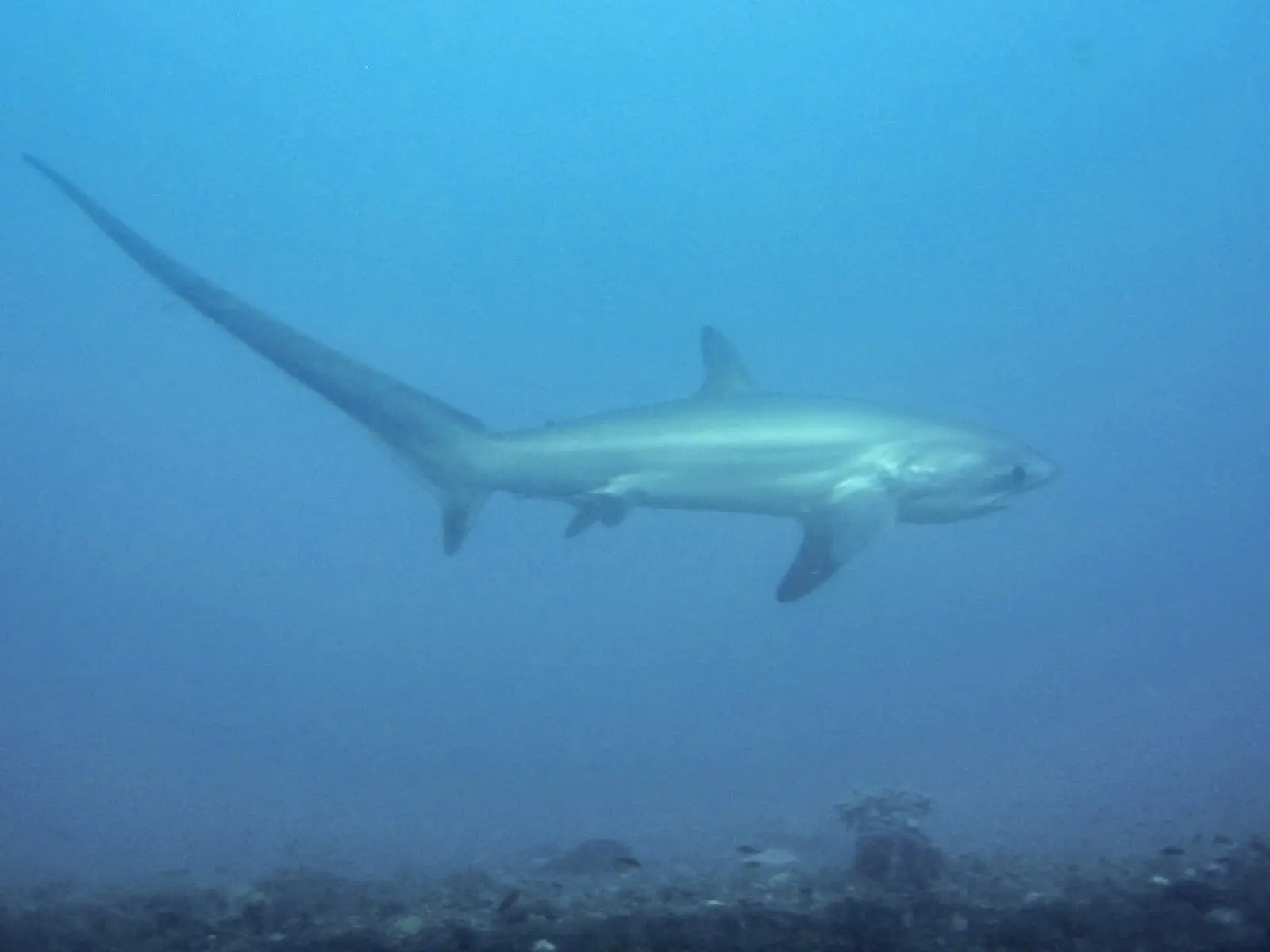
Malapascua is the only place on earth where pelagic threshers are a near-daily certainty rather than a fluke. They come inshore at dawn to be cleaned by wrasse on a submerged seamount, and divers simply wait on the plateau while the sharks circle. Since around 2022 the action has been at Kimud Shoal rather than the famous Monad Shoal — shallower, clearer, and closer to the sharks.
Best time: Year-round; December to July for the calmest crossing
Well documented, and reliably seen in season.
When to go
The sharks are resident year-round, so there is no wrong month for presence. Typhoon season from roughly August to November costs the occasional dive day, and December to July gives the best visibility and the calmest crossing.
Best dive sites for pelagic thresher sharks in the Philippines
-
Kimud Shoal
The current thresher site, with cleaning stations at roughly 14 to 20 metres on a sunken-island plateau about an hour out. Several sharks in view at once is normal.
-
Monad Shoal
The historic thresher site, still worth diving, but the threshers moved off it around 2020 to 2022 when tiger sharks arrived. Monad is now dived for tigers and devil rays.
-
Gato Island
Not a thresher site, but part of the same shark and ray sanctuary declared in 2015, and usually dived on the same trip.
How to see them
Boats leave Bounty Beach between 04:30 and 05:30 so you are in the water at first light. Advanced Open Water is what most operators want, and Philippine rules require a buoyancy workshop or check dive before a first shark dive — worth confirming directly with your operator, since fees and certification rules change. Underwater the rules are simple and enforced: no strobes and no flash, ever. Descend to the plateau, get neutral, and stop. You wait for the shark; the shark does not wait for you. No chasing, no sudden kicks, and when a shark appears the group stops moving entirely.
What an encounter is like
One operator quotes better than ninety percent on a typical morning, and several offer a free extra dive if you blank, which tells you how confident they are. What you actually get is usually a silhouette in blue water five to fifteen metres away, circling a coral head for anywhere from twenty seconds to several minutes — beautiful, but distant, and dim enough that photography without strobes is genuinely hard. It is early, cool, dark, and often a bouncy hour-long crossing before dawn. Some mornings the sharks simply are not there.
Frequently asked questions
- Have the thresher sharks left Monad Shoal?
- Largely, yes. Around 2020 to 2022 the threshers shifted to Kimud Shoal after tiger sharks settled on Monad, and operators now run the thresher dive at Kimud. Monad is still dived, but for tigers and devil rays.
- Do I need to be an Advanced diver?
- Most operators want Advanced Open Water, though the shallower Kimud stations have opened the dive to some Open Water divers with a buoyancy check. Rules change, so confirm with your operator when booking.
- Why is flash photography banned?
- Because the sharks abandon the cleaning station when disturbed. One strobe can end the encounter for everyone in the water, which is why the rule is enforced rather than merely suggested.
- What are the odds of seeing one?
- High by the standards of any big shark — operators quote above ninety percent on a typical morning dive, and several offer a free repeat dive if you miss out. It is still wild wildlife, and some mornings produce nothing.
Sources
- Thresher Shark Dives and Schedule — Thresher Shark Divers, Malapascua
- Thresher Sharks at Kimud Shoal, Malapascua — Malapascua Diving
- The Thresher Sharks of Malapascua — Evolution Diving Resort