Oahu, Maui & the Big Island
Where to see sea turtles in Hawaii
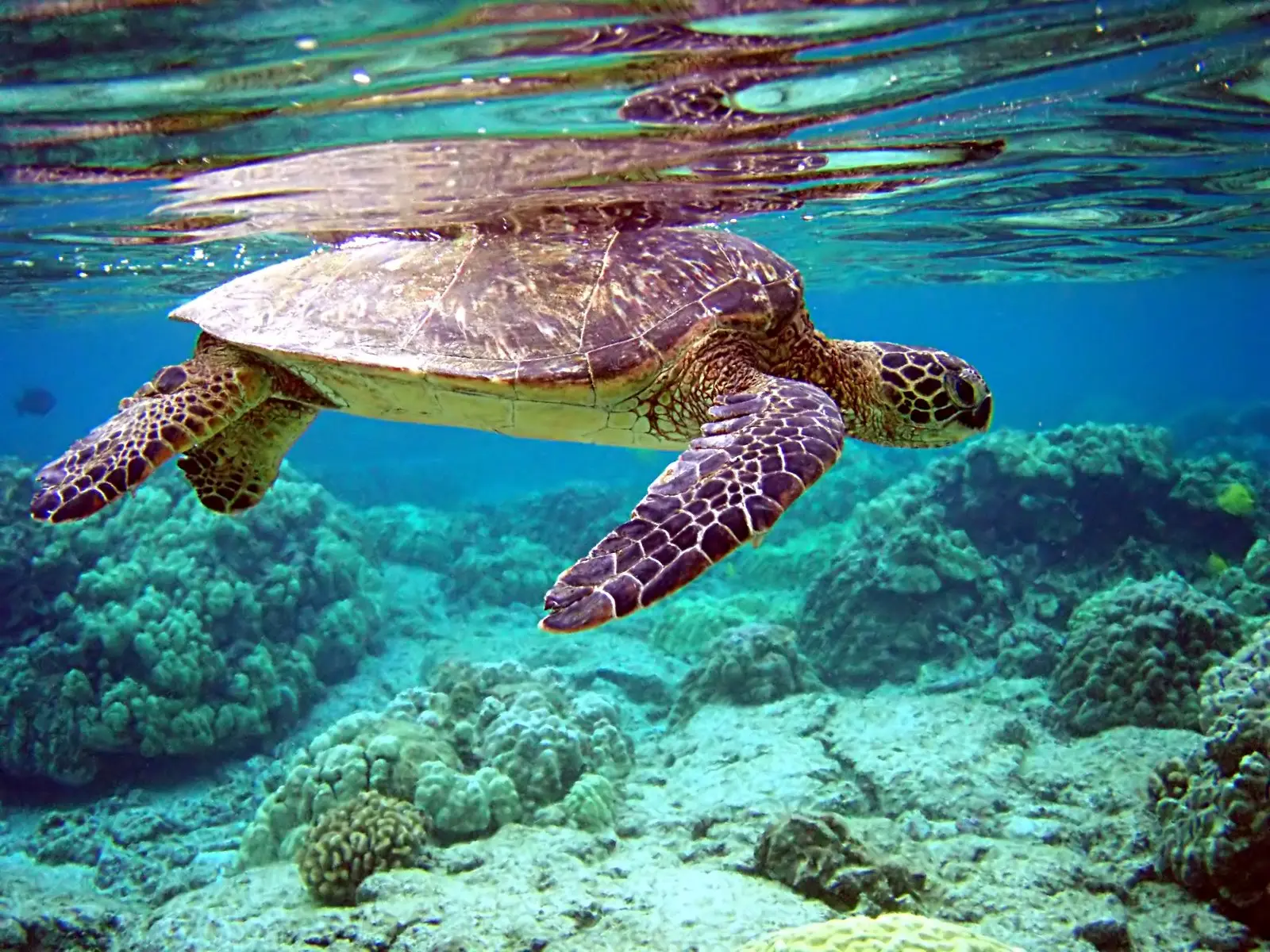
Hawaiian green sea turtles are seen almost daily at Laniakea Beach on Oahu's North Shore, Kahalu'u Beach Park on the Big Island and Black Rock at Ka'anapali on Maui — all reachable from shore. Boat trips to Turtle Canyon off Waikiki and Turtle Town near Molokini add near-certain snorkel encounters further out.
Best time: Year-round — and Hawaii is the one place they bask on land daily
Well documented, and reliably seen in season.
When to go
Green turtles are around the main islands year-round, and Hawaii is the only place in the world where they bask out of the water near-daily — which is exactly what makes beaches like Laniakea and Kahalu'u so reliable. Nesting is a separate matter and happens somewhere else entirely: roughly 96% of the Hawaiian green turtle population nests at French Frigate Shoals in the remote Papahānaumokuākea Marine National Monument, hundreds of kilometres northwest, from about late April through October.
Best dive sites for sea turtles in Hawaii
-
Laniakea Beach (Oahu, North Shore)
Nicknamed Turtle Beach; resident honu haul out on the lava rocks to bask nearly every day, with volunteers roping off resting turtles and educating an estimated 600,000 visitors a year.
-
Kahalu'u Beach Park (Big Island, Kona)
A shallow, calm bay — mostly under 4.5 m even at high tide — where honu feed on algae close to shore. Sightings while snorkelling are close to guaranteed.
-
Black Rock / Pu'u Keka'a (Ka'anapali, Maui)
A lava point with easy shore entry at the north end of Ka'anapali Beach; turtles are most consistent along the north face in calm early-morning conditions.
-
Turtle Canyon (offshore Waikiki, Oahu)
A reef 10–15 minutes by boat from Waikiki in 4.5–7.5 m of water, where turtles gather year-round at a natural cleaning station worked by reef fish.
How to see them
Shore snorkelling at Laniakea, Kahalu'u or Black Rock needs no boat and gives casual visitors the best odds; boat trips to Turtle Canyon or Turtle Town reach turtles resting in deeper, clearer water. NOAA Fisheries and Hawaii's DLNR both ask people to stay at least 3 meters (10 feet) away, in the water and on land — give a turtle basking on the sand considerably more space than that, and stay outside the volunteer ropes. Never touch, chase, feed, ride or block a turtle's path to the surface: they breathe air and need to get up freely.
What an encounter is like
At these sites, seeing at least one honu is close to a sure thing — especially at Kahalu'u and Laniakea, where the same resident turtles return daily to feed or bask. Turtles generally ignore snorkellers who keep their distance, often carrying on feeding or resting in full view for many minutes, which makes for unhurried watching rather than a fleeting glimpse. Crowding is the real problem here: at Laniakea, volunteers actively manage visitor behaviour because so many people try to get closer than the law allows.
Frequently asked questions
- How close can I get to a sea turtle in Hawaii, and can I touch one?
- No touching. NOAA Fisheries and Hawaii DLNR both set a minimum viewing distance of 3 meters (10 feet), on land and in the water, and turtles resting on the beach deserve more. Touching, chasing, feeding or riding a honu is illegal under the federal Endangered Species Act and state law — NOAA documented a visitor paying a $1,500 settlement after pursuing a turtle while snorkelling on Kaua'i.
- Where is the best place to see sea turtles in Hawaii?
- Kahalu'u Beach Park on the Big Island and Laniakea Beach on Oahu's North Shore are the two most reliable shore spots, since resident turtles return there nearly every day. Black Rock at Ka'anapali is the Maui equivalent.
- Do I need a boat tour, or can I snorkel from the beach?
- No boat needed — Laniakea, Kahalu'u and Black Rock are all walk-in from shore. Boat trips to Turtle Canyon off Waikiki or Turtle Town near Molokini simply add access to turtles resting in deeper offshore water.
- Are Hawaiian sea turtles endangered, and what are the tumours some of them have?
- Green turtles are listed as threatened and hawksbills as endangered under the US Endangered Species Act. A notable share of Hawaii's green turtles carry fibropapillomatosis, a tumour-forming disease linked to a herpesvirus, with documented prevalence of roughly 20–40% depending on location. Tumours can be mild or, in bad cases, debilitating.
Sources
- Viewing Marine Wildlife in Hawai'i — NOAA Fisheries
- Hawai'i Visitor Fined for Harassing Protected Marine Animals on Kaua'i — NOAA Fisheries
- Fibropapillomatosis and Sea Turtles — Frequently Asked Questions — NOAA Fisheries
- Protecting Marine Species — Hawaii Department of Land and Natural Resources