Animal profile
Where to see silky sharks
Carcharhinus falciformis
Rare enough to plan the trip around. Odds on a typical dive within its range — the right place and season are what beat them, which is what the destinations below are for.
VUVulnerable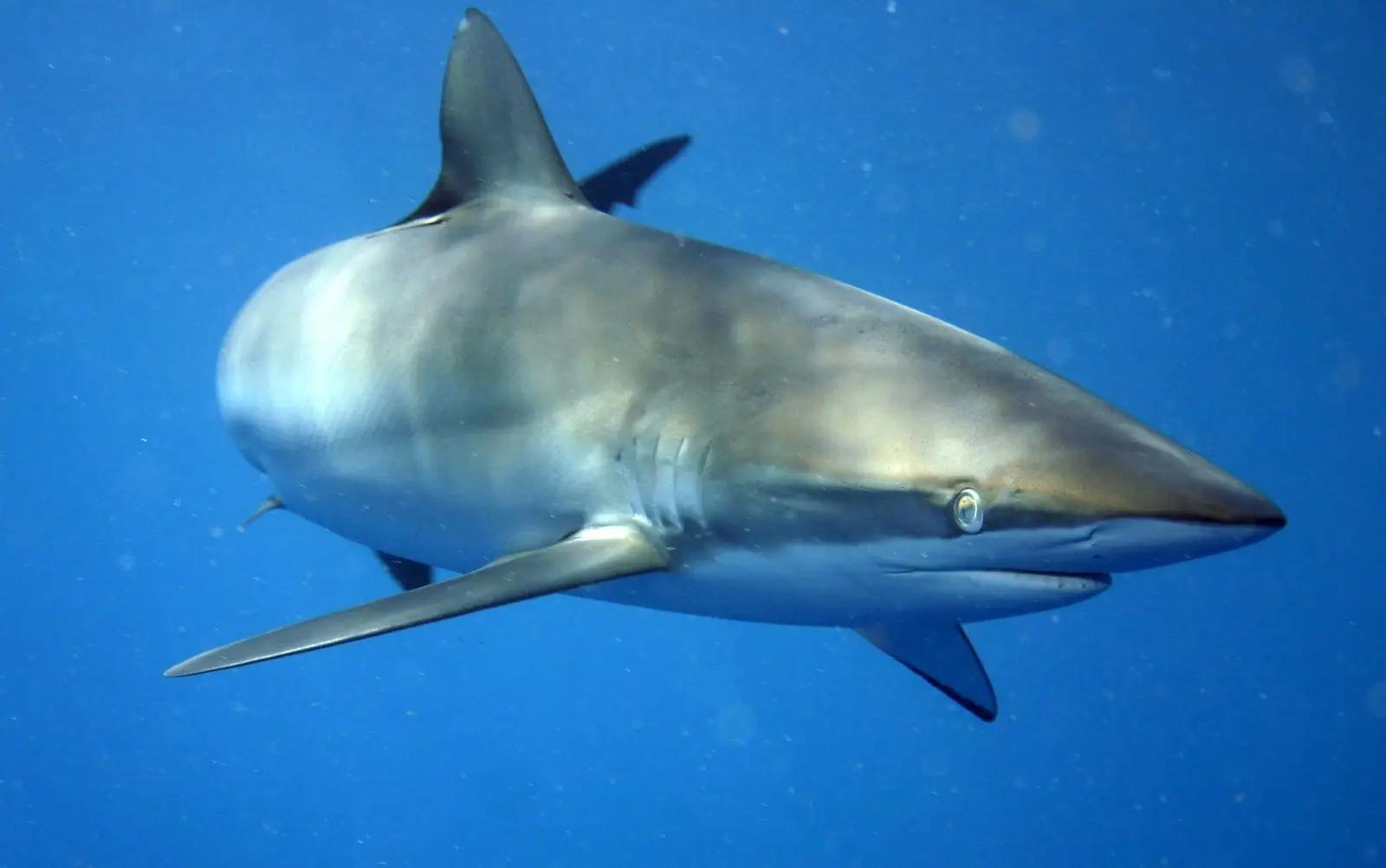
The silky shark takes its name from its skin, which is unusually smooth because its dermal denticles are so fine, and its scientific name from its fins, falciformis meaning sickle-shaped. It is one of the most numerous large sharks in the tropical open ocean and one of the most heavily caught, taken in enormous numbers as longline and purse-seine bycatch, which has moved it onto the Vulnerable list. Divers meet it in a very particular way: not on reefs but out in blue water, often in loose schools, and very often gathered under boat hulls and floating objects, a habit that makes the safety stop beneath a liveaboard one of the better shark encounters of a trip. It is curious and will approach steadily, though without the assertive persistence of an oceanic whitetip. At Socorro and the rest of the Revillagigedo archipelago it is part of the standard cast, most numerous around May and June.
Size
The short version
Lifespan
~22 years
Schools
tens to hundreds when conditions line up
Diet
Open-ocean fish, especially tuna, plus squid and pelagic crustaceans
Risk to youModerate
Curious in open water and drawn to baited activity; stay in a group.
Risk from us
finning, purse-seine bycatch, baiting — the last one is the part you control.
Planning the encounter
Depth
5–30 m in blue water, often right under the boat
Recorded between 0 m and 500 m
Night diving
Also seen on night dives
Odds through the day
Dawn
likely
Day
likely
Dusk
likely
Night
possible
Active through the day in the warm surface layer, which is when the diving happens, and more active again toward dusk. They become notably bolder around a lit boat after dark, so the sharks circling under the hull at night are the same animals you shared a safety stop with — from the deck rather than in the water.
Best places to see silky sharks
How to identify a silky shark
- Everything about it is sickle-shaped: strongly curved, backswept pectoral fins and a slender, streamlined body built for cruising rather than manoeuvring.
- The clincher is the second dorsal fin, whose free rear tip trails backward for more than twice the fin’s own height — a proportion no other requiem shark in the same water comes close to.
- There is a low ridge of skin along the back between the dorsal fins. A bull shark has none, which is the fastest way to separate the two if a heavy-looking shark comes past in open water.
Meeting them responsibly
- Stay vertical and keep the animals in front of you when you are in blue water. Silkies circle, and a diver hanging horizontally on a line watching one shark rarely notices the other three.
- Do not grab, ride or push off them, and keep gauges and octopuses clipped in. They are inquisitive and mouth-oriented toward anything trailing, and the risk on these dives is a loose hose rather than the shark itself.
- Do not encourage feeding on a safety stop. Silkies gather under hulls anyway and boats that chum for them create pushy animals around the ladder, which is where divers and sharks actually come into conflict.
Frequently asked questions
- Where can you dive with silky sharks?
- The Revillagigedo archipelago off Mexico — Socorro, San Benedicto, Roca Partida — is the most accessible place, on liveaboard trips running roughly November to June, with silkies most numerous in May and June. Cat Island in the Bahamas produces them alongside oceanic whitetips in spring, and they turn up in the Maldives’ southern channels.
- Where exactly will I see them?
- Usually in blue water rather than on the reef, and very often directly under the boat. They congregate beneath hulls and floating objects, so the safety stop at the end of a Socorro dive is frequently the best silky encounter of the day, and snorkellers off the back of the boat see them too.
- How do I tell one from an oceanic whitetip?
- Fin shape and proportion. Oceanic whitetips have huge, rounded, paddle-like pectorals and a big rounded first dorsal, all with smudged white tips. Silkies are slimmer, with narrow sickle-shaped pectorals, no white tips, and a very long trailing tip on the second dorsal fin.
Check me
The reference records behind this page on silky shark.