Animal profile
Where to see silvertip sharks
Carcharhinus albimarginatus
Rare enough to plan the trip around. Odds on a typical dive within its range — the right place and season are what beat them, which is what the destinations below are for.
VUVulnerable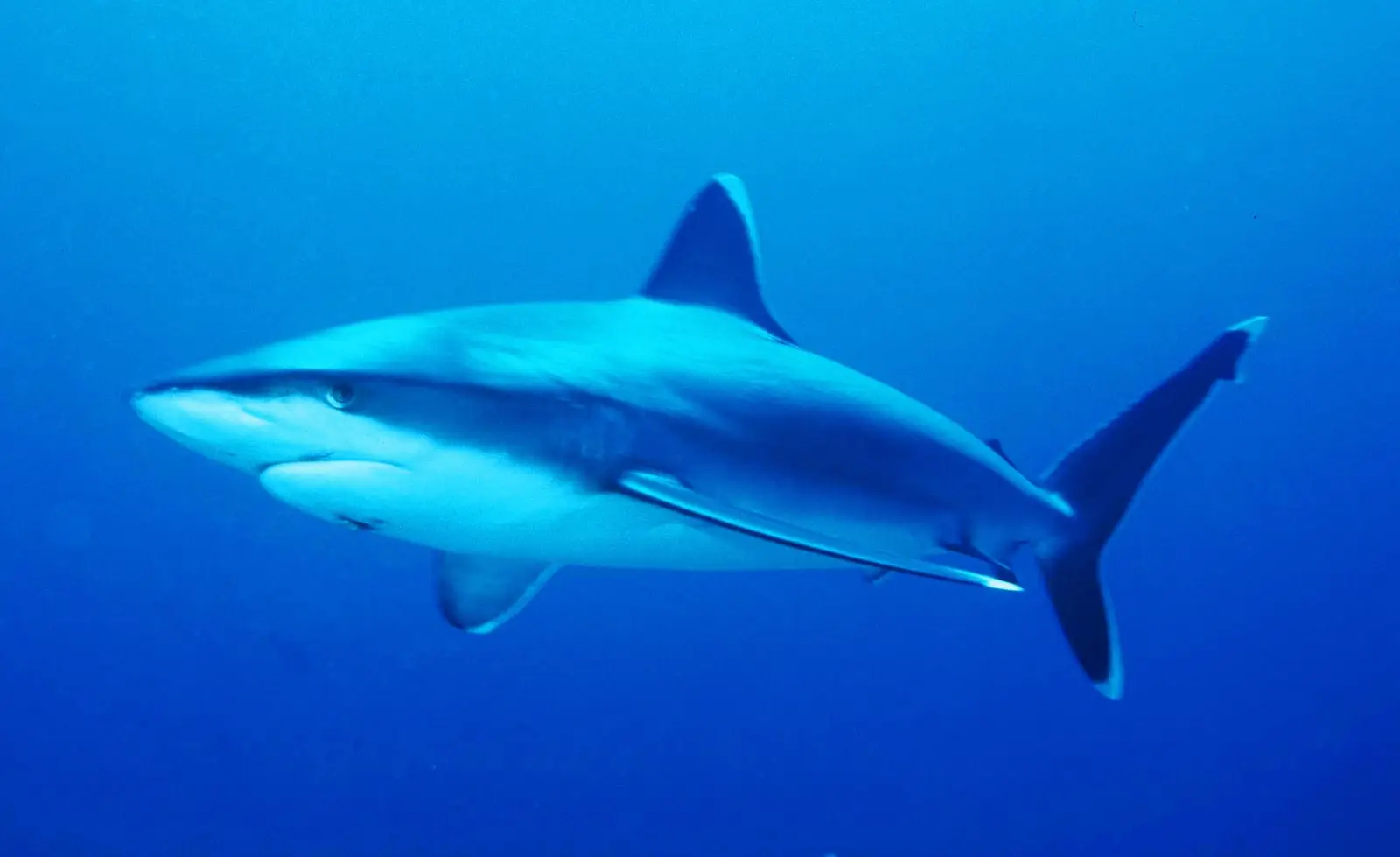
The silvertip is what a grey reef shark would be with another metre of length and considerably more confidence. Every fin is trimmed with a conspicuous bright white margin, which is where the name comes from and what makes it identifiable at range in poor light. It lives on the outer edges of things — reef drop-offs, channel mouths, offshore banks and seamounts, generally in clearer, more current-swept water than reef sharks prefer, and often a little deeper. Behaviourally it is the one to know about: silvertips are socially dominant over grey reef sharks and will displace them, and they approach divers directly and repeatedly rather than keeping their distance, which makes for spectacular encounters and a dive that rewards paying attention. It is uncommon everywhere, listed as Vulnerable, and thinly enough spread that most divers meet one by luck at a channel rather than by planning.
Size
The short version
Solitary
usually met one at a time
Diet
Mid-water reef fish and open-water species, plus squid, octopus and smaller rays
Risk to youModerate
Bold and inquisitive — it will close on you rather than leave.
Risk from us
finning, baiting — the last one is the part you control.
Planning the encounter
Depth
20–35 m on channel edges and drop-offs
Recorded between 3 m and 800 m
Night diving
Also seen on night dives
Odds through the day
Dawn
likely
Day
likely
Dusk
likely
Night
possible
Active around the clock and seen readily through the day, which is unusual among the sharks worth planning a dive for. What actually moves the odds is current rather than light: silvertips work channel mouths and drop-off edges on incoming water, so time the tide rather than the hour.
Best places to see silvertip sharks
How to identify a silvertip shark
- The white margins are the whole identification: broad, brilliant white edges and tips on the dorsal, pectoral and tail fins, obvious even in flat light and at a distance.
- It is bulkier and longer than the grey reef sharks it swims among, with a broader, more rounded snout and no dark trailing edge on the tail — the grey reef’s tail is edged in black, which is the inverse marking.
- Do not confuse it with the whitetip reef shark, which is small, slender, bottom-hugging and carries white only on the dorsal and tail tips. If a large shark in open water is edged in white on every fin, it is this one.
Meeting them responsibly
- Hold your ground and stay on the reef or wall rather than drifting into open blue. Silvertips close in confidently and repeatedly, and a diver who backs away in mid-water simply invites more of the same behaviour from behind.
- Keep dangling gear clipped and your hands close. This is a bold, inquisitive shark in current, and loose octopuses and camera lanyards get investigated.
- Photograph and report it. It is listed as Vulnerable and uncommon at almost every site it occurs, so a dated photograph from a channel dive is worth passing to a local operator or ID catalogue.
Frequently asked questions
- Where can you dive with silvertip sharks?
- Beqa Lagoon in Fiji is the most reliable place in the world, where individuals are known by name on the baited dives. In the Maldives they turn up in the outer channels — Fotteyo Kandu is a well-known one — and in the remote southern atolls such as Huvadhoo, usually in current alongside grey reef and silky sharks.
- How is it different from a grey reef shark?
- Size, markings and attitude. The silvertip is a metre longer, edged in bright white on every fin where the grey reef has a black-edged tail, and it is socially dominant — silvertips displace grey reefs at a site. It also approaches divers far more directly.
- Is it dangerous?
- It is bold and it will come close, which unsettles divers used to reef sharks keeping their distance, but recorded incidents are very rare. Treat it like any large requiem shark in current: face it, stay near the reef, and do not flail or flee.
Check me
The reference records behind this page on silvertip shark.