Vaavu Atoll and across the archipelago
Where to see tawny nurse sharks in the Maldives
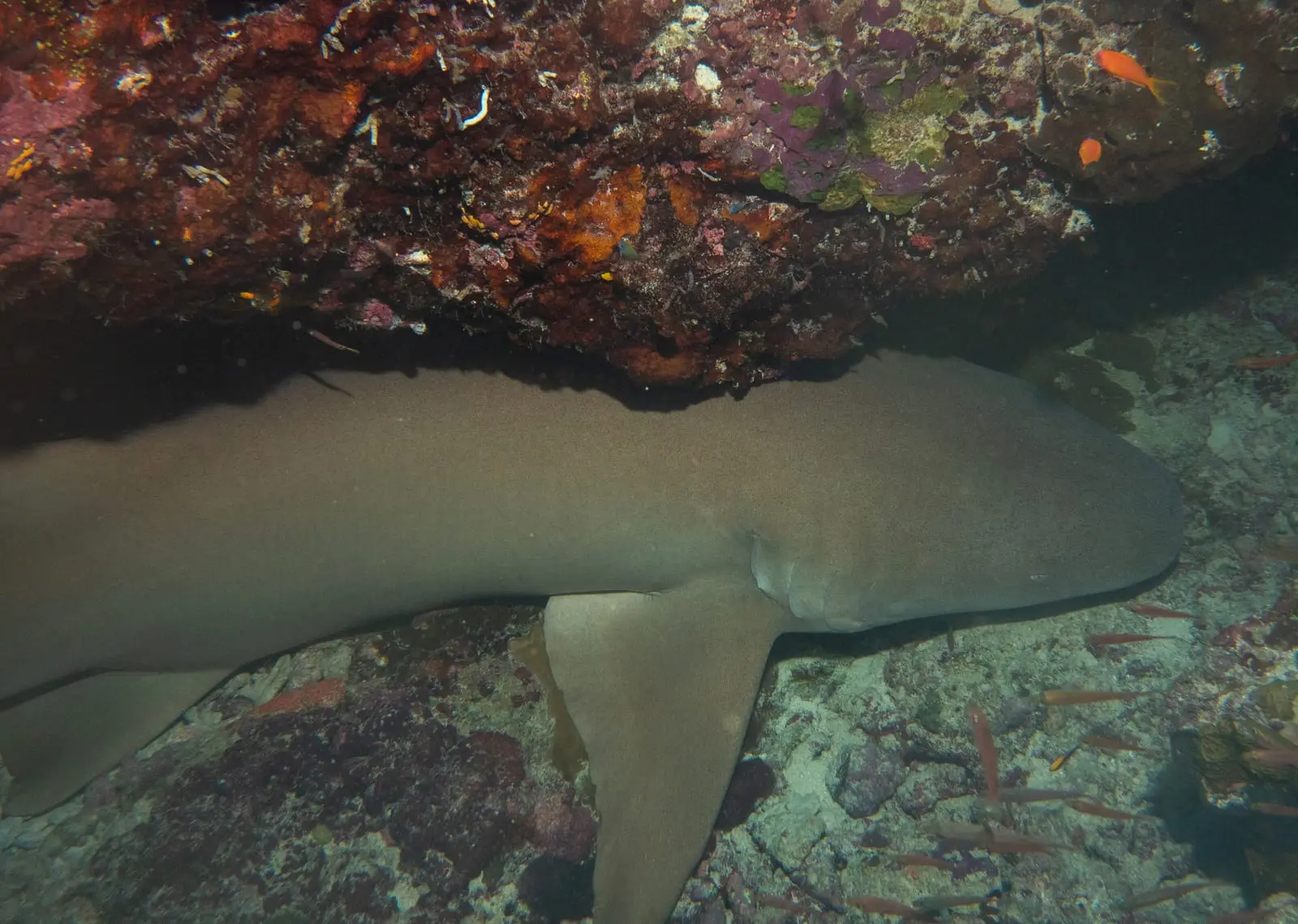
Tawny nurse sharks are common and resident throughout the Maldives, resting under coral bommies and ledges by day and hunting after dark. The famous encounter is the Alimatha jetty night dive in Vaavu Atoll, where large numbers gather in the shallows — spectacular, and a fed site, which is worth knowing before you book. On ordinary reef dives they are found asleep under overhangs almost anywhere in the country.
Best time: Year-round; resident throughout the atolls
Well documented, and reliably seen in season.
When to go
Resident and non-migratory, so there is no season for the sharks. Pick months for conditions: the northeast monsoon from December to April brings the clearest water and calmest seas, while the southwest monsoon from May to November is greener and more plankton-rich, which suits mantas and whale sharks. Night dives are comfortable year-round in water around 27–30°C.
Best dive sites for tawny nurse sharks in the Maldives
-
Alimatha jetty, Vaavu Atoll
A shallow sand-and-jetty night dive where tawny nurse sharks gather in numbers alongside rays and jacks. The aggregation is sustained by feeding, and the animals are habituated and crowded — the most reliable sighting in the country, and the least natural.
-
Reef bommies and overhangs, atoll-wide
The ordinary way to see one: large tawny sharks lying still under coral heads and ledges on daytime reef dives, sometimes several stacked in the same shelter, from the northern atolls to the far south.
How to see them
No trip planning needed for the species itself — dive almost anywhere in the Maldives and look under the bommies. For the animal doing something, book a night dive: a reef night dive shows you suction feeding on the hunt, and the Alimatha dive shows you numbers. Both are shallow and undemanding, so Open Water is enough. If you want to see it hunting rather than being fed, tell the guide that specifically and ask for a reef site rather than the jetty; several liveaboards run both and the difference is worth choosing deliberately.
What an encounter is like
By day, big plain-brown sharks up to three metres and more, motionless under coral, entirely unbothered by divers. On a reef night dive, the same animals working the reef with their heads pushed into crevices, using suction hard enough to hear. At Alimatha, dozens at close quarters in a few metres of water, jostling, along with stingrays and a wall of fish — an intense experience, and one where keeping your hands in genuinely matters because the animals are conditioned to expect food.
Frequently asked questions
- Should I do the Alimatha night dive?
- It delivers the numbers, and plenty of divers rate it among their most memorable dives. It is also a fed aggregation with habituated, crowding animals, so go in knowing that and keep your hands in. If you would rather see natural behaviour, ask for a reef night dive instead.
- How is it different from the Caribbean nurse shark?
- Different species with almost identical habits: this is Nebrius ferrugineus of the Indo-Pacific, and the Atlantic animal is Ginglymostoma cirratum. Their ranges do not overlap, so where you are diving answers the question.
- What certification do I need?
- Open Water is fine. These are shallow, low-current dives on reef tops and sand — the only real requirement is being comfortable diving at night with a torch.
Sources
- Tawny Nurse Shark — Nebrius ferrugineus — Florida Museum of Natural History
- Diving with Tawny Nurse Sharks — Dive The World
- Nurse Shark Encounters: Where, When, What to Expect — IM Maldives
- Tawny Nurse Shark — No Troubles Just Bubbles