Animal profile
Where to see thresher sharks
Alopias pelagicus (pelagic thresher)
Rare enough to plan the trip around. Odds on a typical dive within its range — the right place and season are what beat them, which is what the destinations below are for.
ENEndangered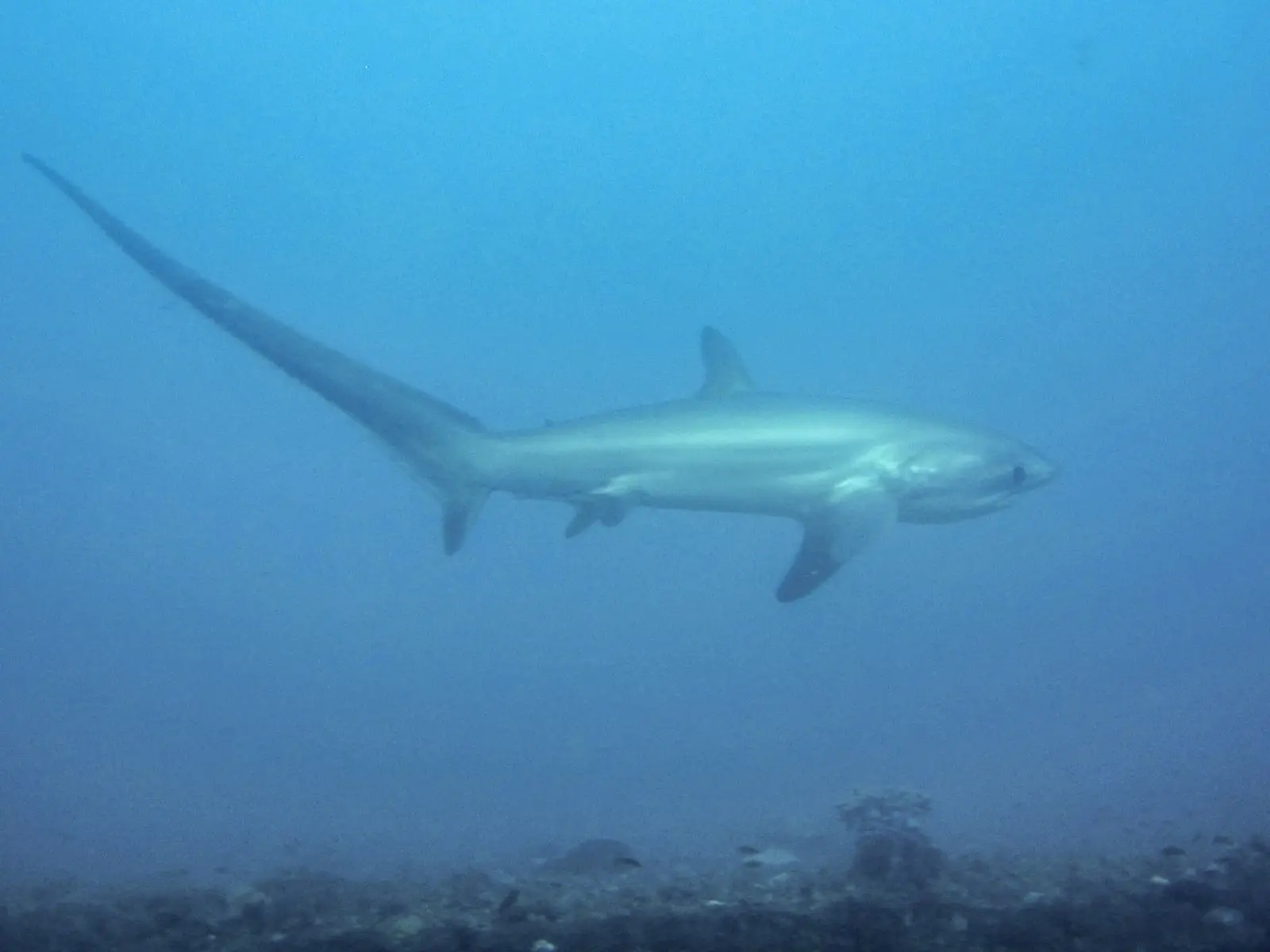
The pelagic thresher's upper tail lobe can be as long as the rest of the animal, and researchers filming the species in the Philippines documented it rearing back and whip-cracking that tail overhead to stun several fish at once before eating them. Threshers normally live deep and out of reach, which is what makes Malapascua extraordinary: sharks rise from deep water each morning to seamount cleaning stations where wrasse pick parasites from their skin and fins, putting them briefly within recreational depth. The species is IUCN Endangered, with declines estimated at 50% or more over three generations, driven by bycatch and targeted fisheries outside protected shoals like these.
Size
The short version
Solitary
usually met one at a time
Diet
Small schooling fish and squid, stunned with tail-slaps
Risk to youHarmless
Timid and easily driven off — the reason Malapascua bans flash.
Risk from us
bycatch, finning, crowding at cleaning stations — the last one is the part you control.
Planning the encounter
Depth
20–30 m
Recorded between 20 m and 30 m
Night diving
Daylight only
Odds through the day
Dawn
best time
Day
unlikely
Dusk
not seen
Night
not seen
The most time-bound encounter in diving: threshers visit Monad Shoal's cleaning stations at first light and are largely gone by 08:00. Boats leave around 05:00.
Best places to see thresher sharks
How to identify a thresher shark
- An unmistakable whip-like upper tail lobe, about as long as the rest of the body.
- Large, dark eyes built for low light at depth and at dawn.
- A slender body with narrow, curved pectoral fins and countershading from grey-blue to white.
Meeting them responsibly
- No strobes, no flash, no lights aimed at the sharks — they are light-sensitive, and Kimud Shoal's marine protected area rules prohibit it outright.
- Stay behind the roped viewing line and keep at least 5 meters back rather than swimming out toward them.
- Move slowly and keep your breathing calm. A startled thresher abandons the cleaning station it came for.
Frequently asked questions
- Where can I dive with thresher sharks?
- Malapascua Island in Cebu, the Philippines, is the only place where pelagic threshers reliably visit shallow cleaning stations daily — at Kimud Shoal since 2022, and originally at Monad Shoal.
- When is thresher shark season?
- There isn't really one. Sightings at Malapascua's cleaning stations are reported year-round. Sea conditions shift with the monsoons, and underwater visibility is generally best from March through June.
- Are thresher sharks dangerous?
- No. They are shy, they feed on small schooling fish by stunning them with the tail rather than biting, and no attacks on divers are recorded at these sites. If anything the risk runs the other way: crowd one and it leaves.
Check me
The reference records behind this page on thresher shark.