Animal profile
Where to see tiger sharks
Galeocerdo cuvier
Rare enough to plan the trip around. Odds on a typical dive within its range — the right place and season are what beat them, which is what the destinations below are for.
NTNear Threatened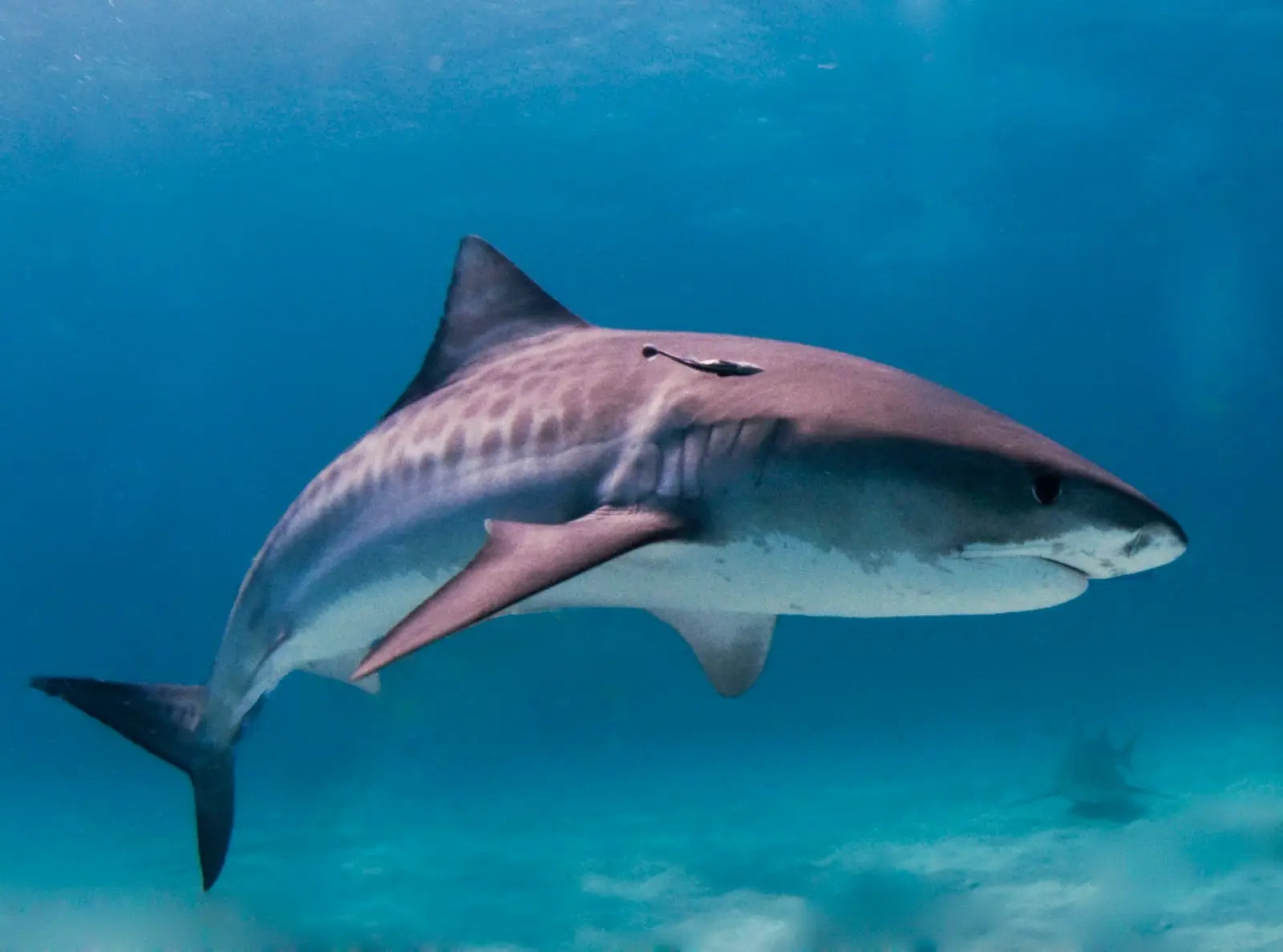
The tiger shark is one of the ocean's great generalists: a heavy-bodied requiem shark with a broad, squared-off snout and cockscomb-shaped, deeply serrated teeth built to shear turtle shell and bone. It eats almost anything — fish, other sharks and rays, turtles, sea snakes, seabirds, carrion, and the indigestible human litter that earned it the 'garbage can of the sea' nickname — and its diet shifts with age, from more invertebrates in juveniles to turtles and larger prey in adults. Young tigers wear the dark vertical bars that name the species; they fade as the animal grows past three, four, sometimes five metres. Its reputation as a biter is real — it sits behind only the white shark in the historical record — but almost all of that involves swimmers and surfers, and on organised dives the animals are typically slow, deliberate and investigative. The IUCN lists it as Near Threatened, with a decreasing population.
Size
The short version
Lifespan
27–50 years
Solitary
usually met one at a time
Diet
An extreme generalist — fish, sharks and rays, turtles, sea snakes, seabirds, carrion
Risk to youNeeds a briefed operator
A large generalist that investigates closely — only with an operator running a proper briefing.
Risk from us
finning, provisioning, shark control nets — the last one is the part you control.
Planning the encounter
Depth
6–15 m at the baited flats
Recorded between 5 m and 30 m
Night diving
Daylight only
Odds through the day
Dawn
likely
Day
possible
Dusk
likely
Night
possible
Naturally a crepuscular and nocturnal hunter, but the encounters that matter to divers are daytime baited dives, where the sharks keep hours set by the boats rather than the light.
Best places to see tiger sharks
Well documented, and reliably seen in season.
Best time: October to January (great hammerheads December to March)
Well documented, and reliably seen in season.
Best time: Year-round for tigers; best conditions December to April
How to identify a tiger shark
- Dark vertical bars or stripes on a grey flank — bold in juveniles, fading with age, but the feature no other large requiem shark carries.
- A broad, blunt, squared-off snout and a heavy body tapering hard to the tail. A bull shark is also blunt-nosed but stockier and unstriped.
- Cockscomb-shaped, heavily serrated teeth, identical top and bottom — visible on a close pass.
Meeting them responsibly
- Dive tigers only with an experienced operator running a proper briefing, and follow the positioning you are given — this is a large apex predator, not a photo prop.
- Stay vertical and aware, and don't turn your back on the bait or the animal. Tigers investigate, and a hand or camera pushed at the bait crate invites a mistake.
- Ask how the operator baits and whether they hand-feed, and weigh the ethics before you book — provisioning changes the animals' behaviour.
Frequently asked questions
- Where can I dive with tiger sharks?
- Two sites stand out: Tiger Beach off Grand Bahama, a shallow sand flat where baited dives draw large females, and Fuvahmulah in the southern Maldives, where a resident, habituated population gathers at the harbour mouth year-round.
- Are tiger sharks dangerous to divers?
- They are capable of harm and deserve respect — the tiger shark ranks second to the white shark in the historical bite record. But almost all of those incidents involve swimmers and surfers, not briefed divers on managed dives, where the animals are slow, curious and manageable. The risk is real but, handled properly, low.
- How big do tiger sharks get?
- Adults commonly run 3 to 4.3 metres; large females exceed 5 metres and can weigh over a tonne. The often-quoted 7-plus-metre giants are anecdotal and not reliably documented.
Check me
The reference records behind this page on tiger shark.