Tiger Beach, off West End, Grand Bahama
Where to see tiger sharks in Bahamas
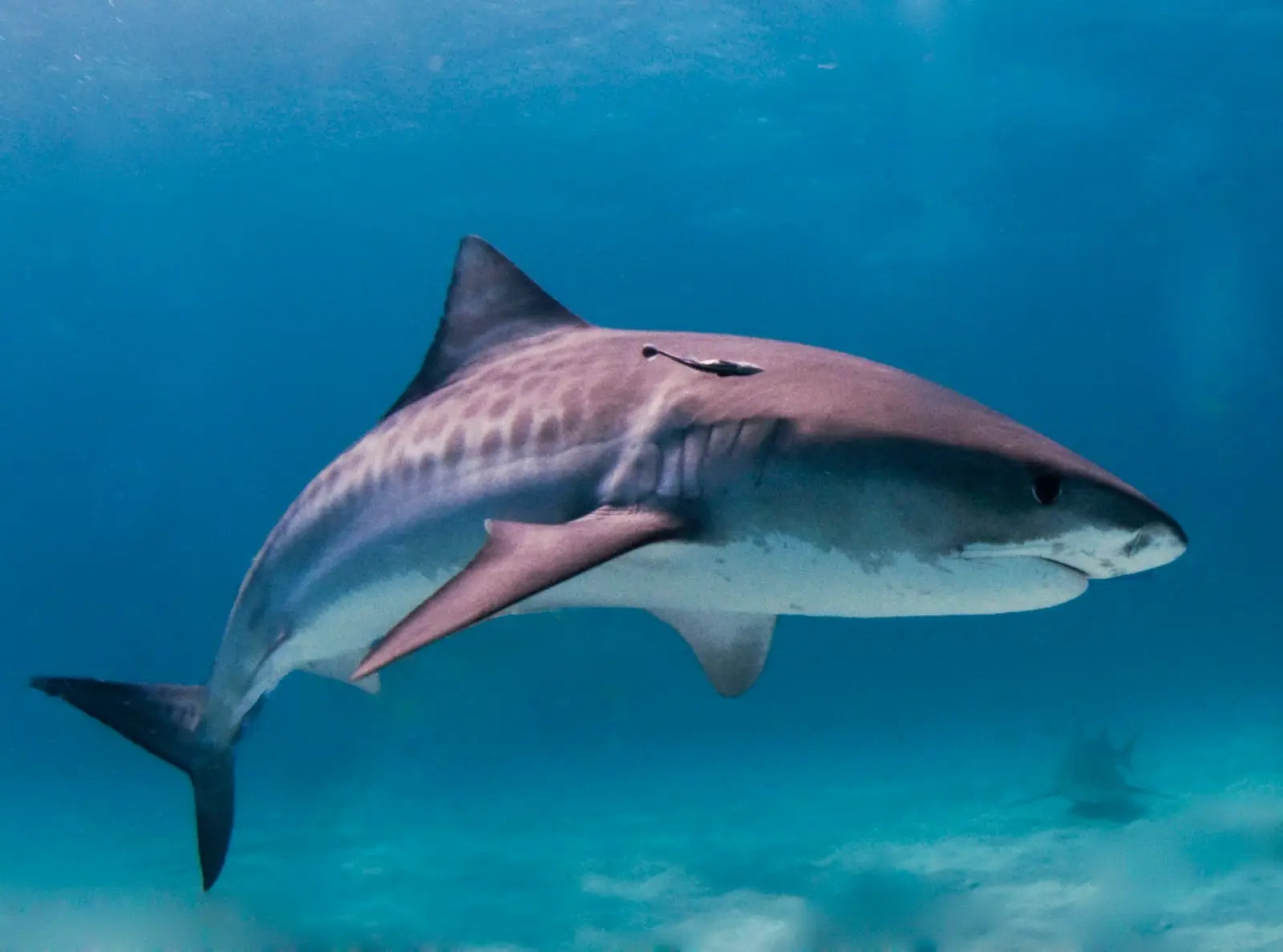
Tiger Beach is a shallow white-sand flat about an hour by boat off West End, Grand Bahama, and it is the classic place to dive with tiger sharks. These are baited dives in around 6 metres: divers kneel on the sand while a feeder draws large female tigers past, usually alongside twenty or more lemon sharks. Tigers are resident year-round but most numerous October to January.
Best time: October to January (great hammerheads December to March)
Well documented, and reliably seen in season.
When to go
Tigers are resident and can show year-round, but October to January brings the most of them, coinciding with the local breeding period; July and August are the leanest months. Great hammerheads overlap from roughly December to March. Water runs about 24–27°C in the dry-season core and warmer in summer — but two hours near-motionless on sand is cold, so most divers wear a full 5 mm or more.
Best dive sites for tiger sharks in Bahamas
-
Tiger Beach
The main event: a white-sand flat in about 5–7 m on the Little Bahama Bank. Divers settle on the sand in a semicircle facing the current while the feeder works a bait crate at the apex.
-
The surrounding flats and reef
Shallow sand-and-reef nearby, worked on the same trips and thick with lemon sharks and Caribbean reef sharks between tiger passes.
How to see them
This is a boat-based baited dive, not a chance reef encounter. Trips run from West End, Grand Bahama, on both day boats and liveaboards, and the diving is shallow — often around 6 metres — so a single tank lasts a long time. A professional feeder manages a bait crate to draw the sharks past a line of divers kneeling on the sand; the positioning briefing is strict and matters. Any recognised open-water certification is accepted, but solid buoyancy and the discipline to hold position count for far more than the card. The bank is exposed, so trips are weather-dependent and cancel in wind and swell.
What an encounter is like
Typically four or five tiger sharks a dive — occasionally many more — predominantly large, often pregnant females making slow, deliberate close passes. Add twenty to thirty lemon sharks on most dives, plus Caribbean reef and nurse sharks. The reliability rests on Bahamian protection: commercial shark fishing has been banned in these waters since 2011, which is a large part of why the animals are here at all. Tiger numbers dip in mid-summer, and great hammerheads join the cast from December to March.
Frequently asked questions
- Are the Tiger Beach dives baited?
- Yes. A feeder uses a bait crate to draw the sharks past divers kneeling on the sand, and tigers are sometimes hand-fed. There is no reliable unbaited way to see them here, so it is worth knowing you are taking part in a provisioned dive before you book.
- How dangerous is it?
- Tiger sharks are large apex predators and rank second to the white shark in the historical bite record, so the dive demands respect and discipline. But on professionally run Tiger Beach operations, with strict briefings and an experienced feeder, incidents are very rare — the animals are slow and investigative rather than aggressive.
- What certification do I need?
- Any recognised open-water certification is accepted, and the diving is shallow. Good buoyancy and the composure to hold your position on the sand matter far more than your certification level.
Sources
- Best Scuba Diving in Tiger Beach — Bluewater Dive Travel
- Tiger Beach — Epic Diving
- Tiger Shark & Hammerhead Diving, Bahamas — Big Fish Expeditions
- Species Implicated in Shark Attacks — International Shark Attack File, Florida Museum