Animal profile
Where to see whitetip reef sharks
Triaenodon obesus
Frequent. Odds on a typical dive within its range — the right place and season are what beat them, which is what the destinations below are for.
VUVulnerable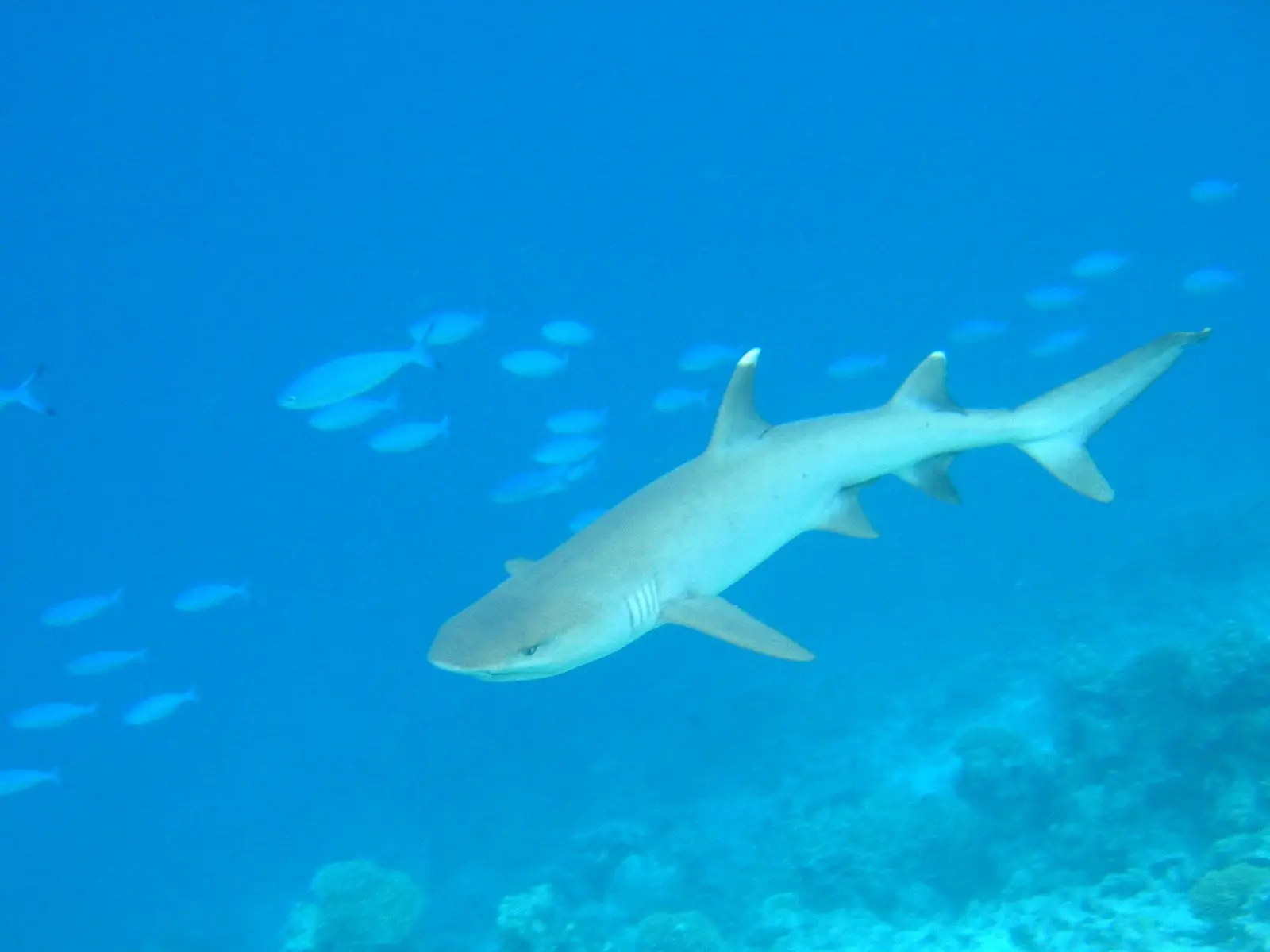
The whitetip reef shark is the one requiem shark that doesn't have to keep swimming to breathe: it pumps water over its gills, so it can lie for hours on sand or stacked under ledges and in caves, often in groups. That habit makes it one of the easiest sharks to approach — a slim, grey-brown metre-and-a-half of animal with bright white tips on the first dorsal and upper tail. By night it becomes a different creature, an active, probing hunter that wriggles into holes and crevices after fish, octopus and crustaceans, frequently in loose cooperative packs that cover every exit of a coral head at once. It is common across Indo-Pacific reefs but listed as Vulnerable by the IUCN, a slow-breeding species squeezed by coastal fishing.
Size
The short version
Lifespan
~25 years
Small groups
a handful in the same spot
Diet
Reef fish, octopus and crustaceans, prised from crevices at night
Risk to youLow
Placid by day; bites are almost always at speared fish.
Risk from us
spearfishing near them, disturbing daytime resting caves — the last one is the part you control.
Planning the encounter
Depth
8–30 m
Recorded between 8 m and 40 m
Night diving
Better on a night dive
Odds through the day
Dawn
possible
Day
likely
Dusk
likely
Night
best time
Resting by day, hunting by night. You'll find them sleeping under ledges on a day dive; the active hunting — the reason to book a night dive — starts after dark.
Best places to see whitetip reef sharks
How to identify a whitetip reef shark
- Bright white tips on the first dorsal fin and the upper tail lobe, on a slim grey-brown body with a short, broad, blunt head.
- The only reef shark you'll find lying motionless on the bottom or under a ledge — a blacktip or grey reef shark has to keep swimming.
- Not a blacktip (black fin tips, very shallow water) or a grey reef shark (stocky, dark-edged fins, patrolling drop-offs).
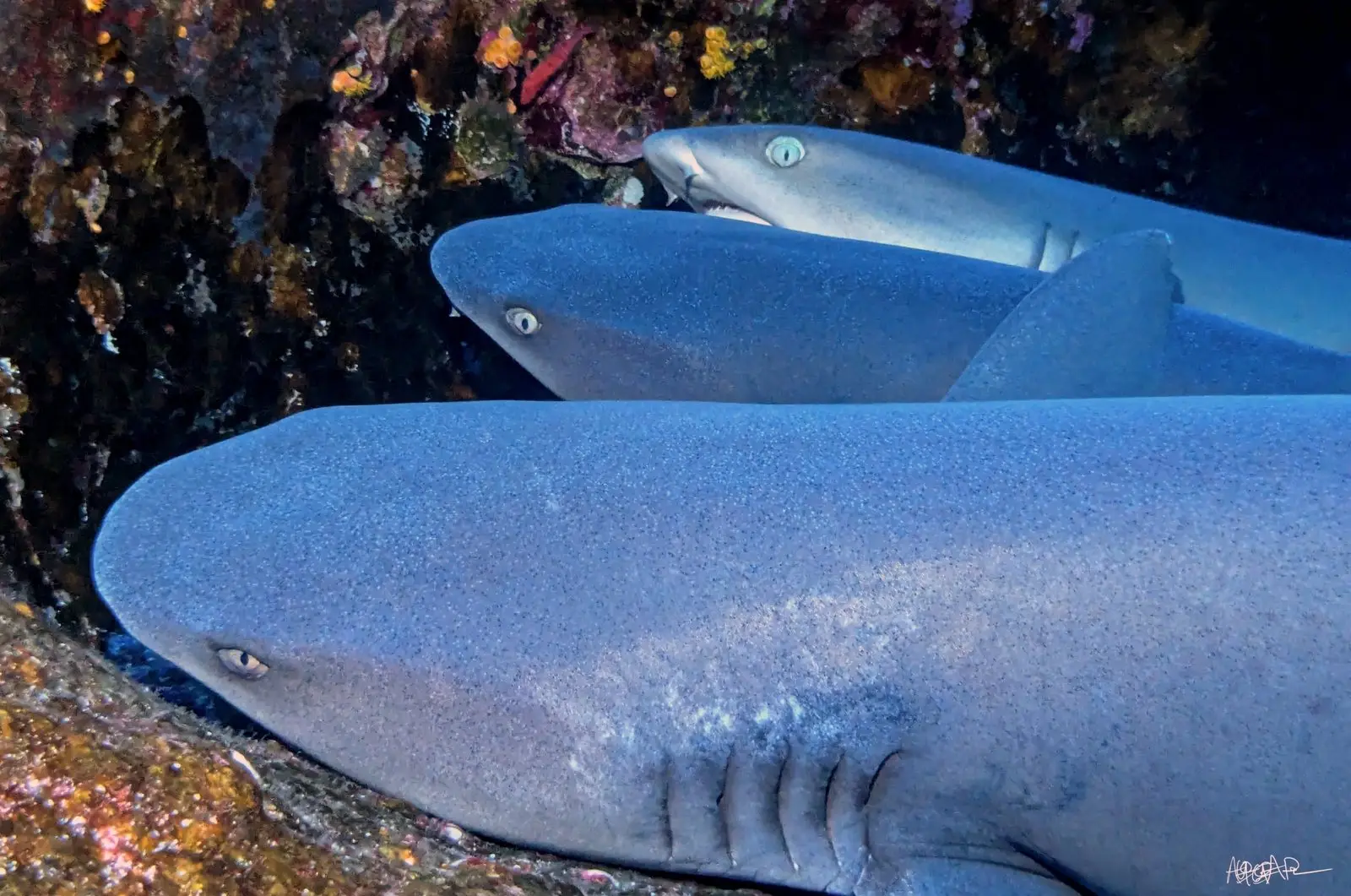
Whitetip Reef Shark, photographed in Mexico. Photo by Alicia Christman · CC BY 4.0
Meeting them responsibly
- Let resting sharks rest. A whitetip stacked under a ledge is sleeping — don't corner it, flash it, or reach in for a closer frame.
- On a night dive, keep your light off the sharks' eyes and give the hunt room; crowding a hunting pack pushes it off the reef.
- Never grab or ride one, however docile it looks. The bites on record almost all involve spearfishing or handling.
Frequently asked questions
- Where's the best place to see whitetip reef sharks?
- They're common on healthy Indo-Pacific reefs, but Kona on Hawaii's Big Island is a standout: whitetips rest in the lava tubes by day and work the manta night dive's light column after dark, so you can see both sides of the animal in one place.
- Do whitetip reef sharks really hunt at night?
- Yes — it's their signature. After dark they become active predators, wriggling into crevices after fish and octopus, often several sharks working the same coral head at once. By day the same animals lie motionless on the bottom.
- Are they dangerous?
- No. They're small, docile and used to divers, and they feed on reef fish and octopus rather than anything diver-sized. Treat them with the usual respect — no touching or handling — and they're among the most relaxed sharks to be around.
Check me
The reference records behind this page on whitetip reef shark.