Kona, Big Island
Where to see whitetip reef sharks in Hawaii
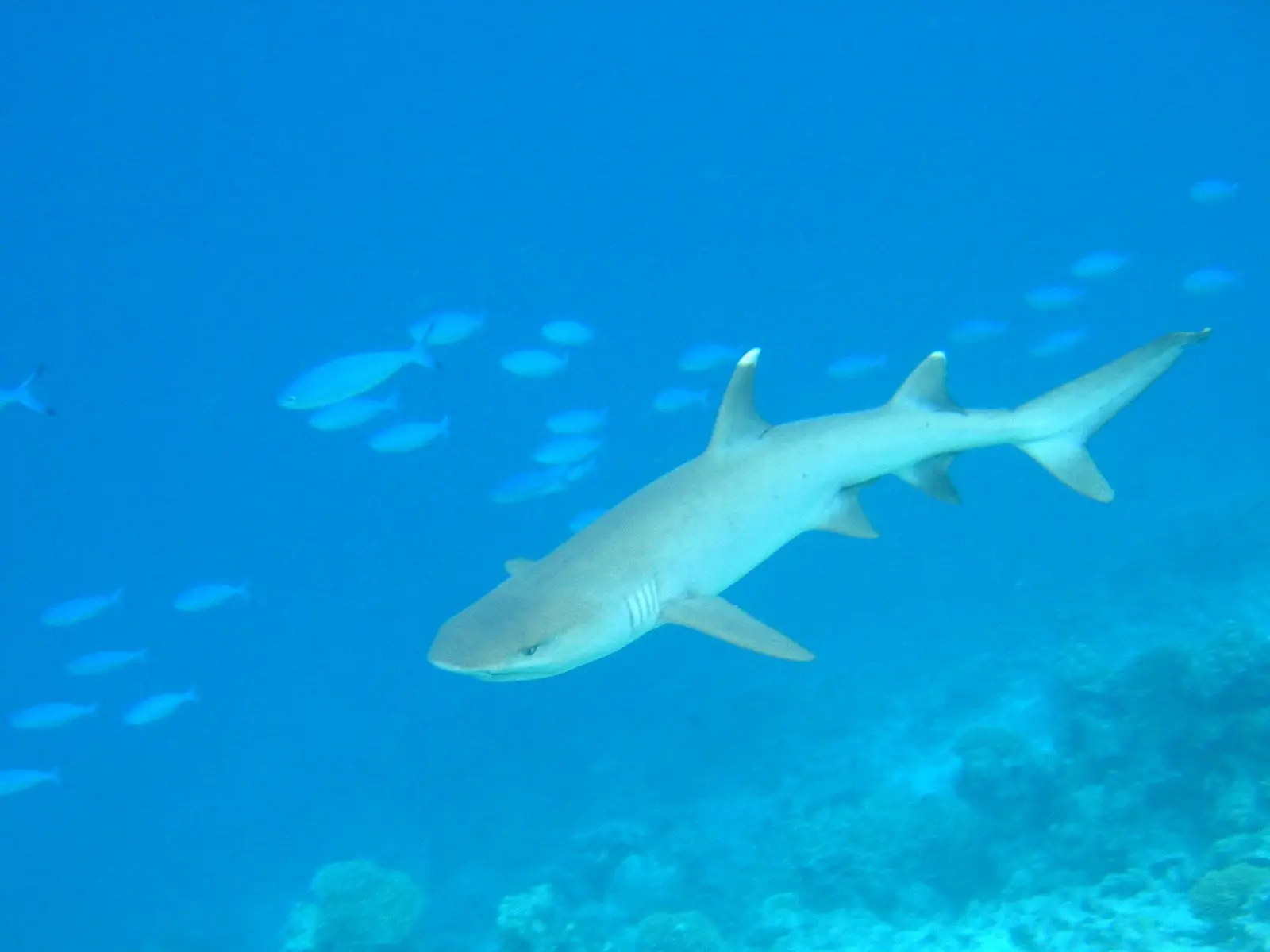
Kona on Hawaii's Big Island is the best place among these destinations to see both sides of the whitetip reef shark: they rest motionless in the lava tubes and on the sand by day, and after dark a few work the edge of the famous manta night dive's light column, picking off fish drawn to the beams. Sightings are year-round; the flattest, clearest water is May to September.
Best time: Year-round; calmest conditions May to September
Consistently reported, but a good way short of a sure thing.
When to go
Kona's resident reef sharks and its daily manta night dive both run year-round, so there is no true season for whitetips here. Conditions are the variable: summer, roughly May to September, brings the calmest seas, warmest water (about 26–27°C) and best visibility, while winter is a touch cooler (24–25°C) and can be rougher on exposed sites.
Best dive sites for whitetip reef sharks in Hawaii
-
Garden Eel Cove / Manta Ray Village
The Kona manta night dive. Divers settle on the bottom around 10–14 m and shine lights up to concentrate plankton; whitetip reef sharks patrol the perimeter and snatch fish disoriented by the beams.
-
Golden Arches and the lava tubes
Lava-tube and arch sites where whitetips lie motionless on sandy floors and under ledges by day — the easy, close daytime encounter.
How to see them
Two modes, often on the same trip. By day, reef and lava-tube dives turn up whitetips resting under ledges and on sand, calm and easy to approach. By night, the Kona manta dive — run daily, shallow and stationary — is where you see them active, working the light column for fish. Open Water is enough for both; the night dive asks for comfort with a dark-water entry and good light discipline more than any advanced card.
What an encounter is like
Ones and twos rather than schools: a resting whitetip or two on many reef dives, and usually a few cruising the lights on the night dive. They are docile, curious and unbothered by divers — often called the pussycats of the shark world. Set expectations honestly, though: whitetips are the reliable supporting act here, not the headline, and this is not the hundred-shark cooperative night hunt of Cocos or the Galápagos. It is a smaller, opportunistic version of that behaviour.
Frequently asked questions
- Can I see whitetip reef sharks hunting at night in Kona?
- Yes, in a modest way. On the manta night dive, whitetips work the edge of the light column and pick off fish drawn to the beams. It is real night-hunting behaviour, but smaller and more opportunistic than the large cooperative hunts filmed at Cocos Island and the Galápagos.
- Are whitetips guaranteed on a Kona dive?
- No — the mantas are the near-sure thing on the night dive; whitetips are the reliable supporting act rather than a guarantee on any single dive. Across a few day and night dives, though, you are very likely to see them resting and hunting.
- Do I need to be an experienced diver?
- Open Water is enough. The day reef dives are straightforward, and the manta night dive is shallow and stationary — the main ask is comfort with a night entry and keeping your light out of the animals' eyes.
Sources
- Kona Diving Guide — Bluewater Dive Travel
- Whitetip Reef Shark — Save Our Seas Foundation
- Triaenodon obesus — Whitetip Reef Shark — Florida Museum of Natural History
- The Big Kahunas: Hawaii's Sharks — Dive Training Magazine