Fish Rock, South West Rocks, New South Wales
Where to see wobbegongs in Australia
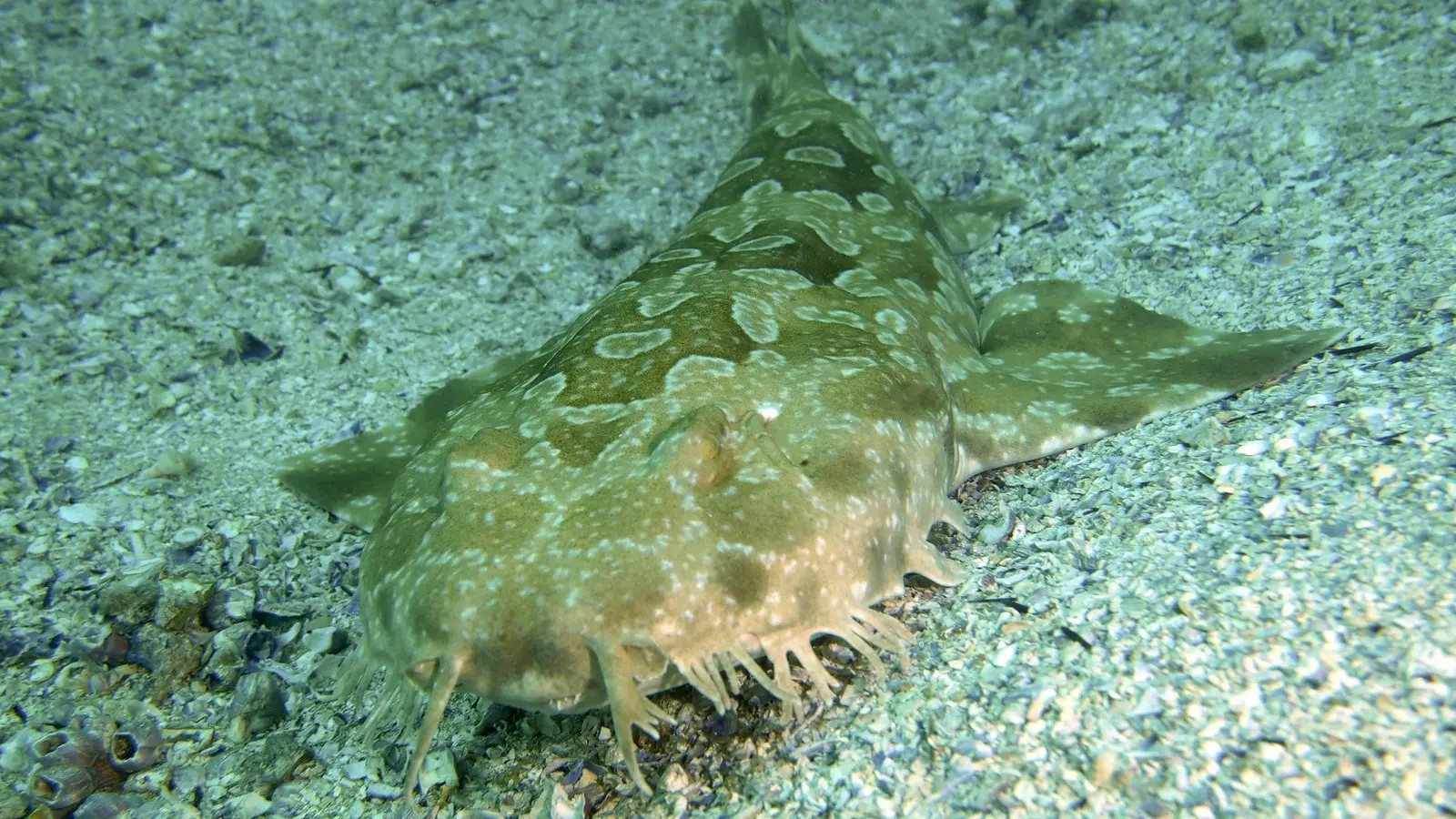
For wobbegongs in Australia, Fish Rock off South West Rocks on the New South Wales mid-north coast is about as dependable as it gets. Large spotted and ornate wobbegongs rest among the boulders and in the island's through-cave, resident and reliably found. The same site holds a year-round aggregation of grey nurse sharks, which is why most divers come — the wobbegongs are the ever-present supporting cast.
Best time: Year-round; best conditions December to May
Well documented, and reliably seen in season.
When to go
Grey nurse sharks and the resident wobbegongs are present year-round, so there is no closed season. Conditions are the variable: the warmer months from about December to May bring the best visibility and water in the low-to-mid 20s°C, while winter is cooler and can be rougher. The East Australian Current strengthens through summer, which lifts both the fish life and the challenge.
Best dive sites for wobbegongs in Australia
-
Fish Rock Cave
A ~125 m through-cave about 30 minutes by boat from the marina. Large wobbegongs lie near the deeper entrance around 24 m as you descend; the shallow exit chimney tops out near 12 m at the grey nurse gutter.
-
The bommies and boulder fields
Rocky bommies and boulder slopes around 22–28 m on the island's flanks, where wobbegongs wedge under ledges among bullseyes and bait clouds.
How to see them
Fish Rock is a boat dive from South West Rocks. Wobbegongs turn up on most dives resting under and between the boulders and near the cave mouth — you look on the bottom and under ledges, not in open water. The signature dive runs through the cave, descending a naturally-lit cavern and ascending a chimney; operators typically ask for Advanced Open Water plus nitrox for that route, since it is deeper and current-exposed. The East Australian Current feeds the site and can make it a demanding drift.
What an encounter is like
Several large wobbegongs on a typical dive, lying still among the rocks — spotted and ornate, up to a couple of metres. The headline animal is the resident grey nurse shark aggregation at the shallow cave gutter, critically endangered on this coast and present year-round; add black cod, giant cuttlefish, rays and big schooling fish. It is a rich, current-swept temperate site rather than a warm-water reef.
Frequently asked questions
- Which wobbegongs will I see at Fish Rock?
- Mostly spotted and ornate wobbegongs — the common eastern-Australian carpet sharks — resting among the boulders and near the cave. They are a different, simpler-bearded animal than the tasselled wobbegong of Raja Ampat.
- Is Fish Rock a beginner site?
- Not really. The through-cave route usually needs Advanced Open Water and nitrox, and the East Australian Current can make it a demanding drift. Newer divers can still dive the shallower gutter with the right operator and conditions.
- Are the wobbegongs dangerous?
- Only if provoked. They rest still and won't chase you, but they bite defensively if grabbed or stepped on, and the bite is hard to release. Watch where you put your hands and fins around the ledges.
Sources
- Fish Rock, South West Rocks — Dive Centre Manly
- Spotted Wobbegong, Orectolobus maculatus — The Australian Museum
- Wobbegong — Wikipedia