Raja Ampat, West Papua
Where to see wobbegongs in Indonesia
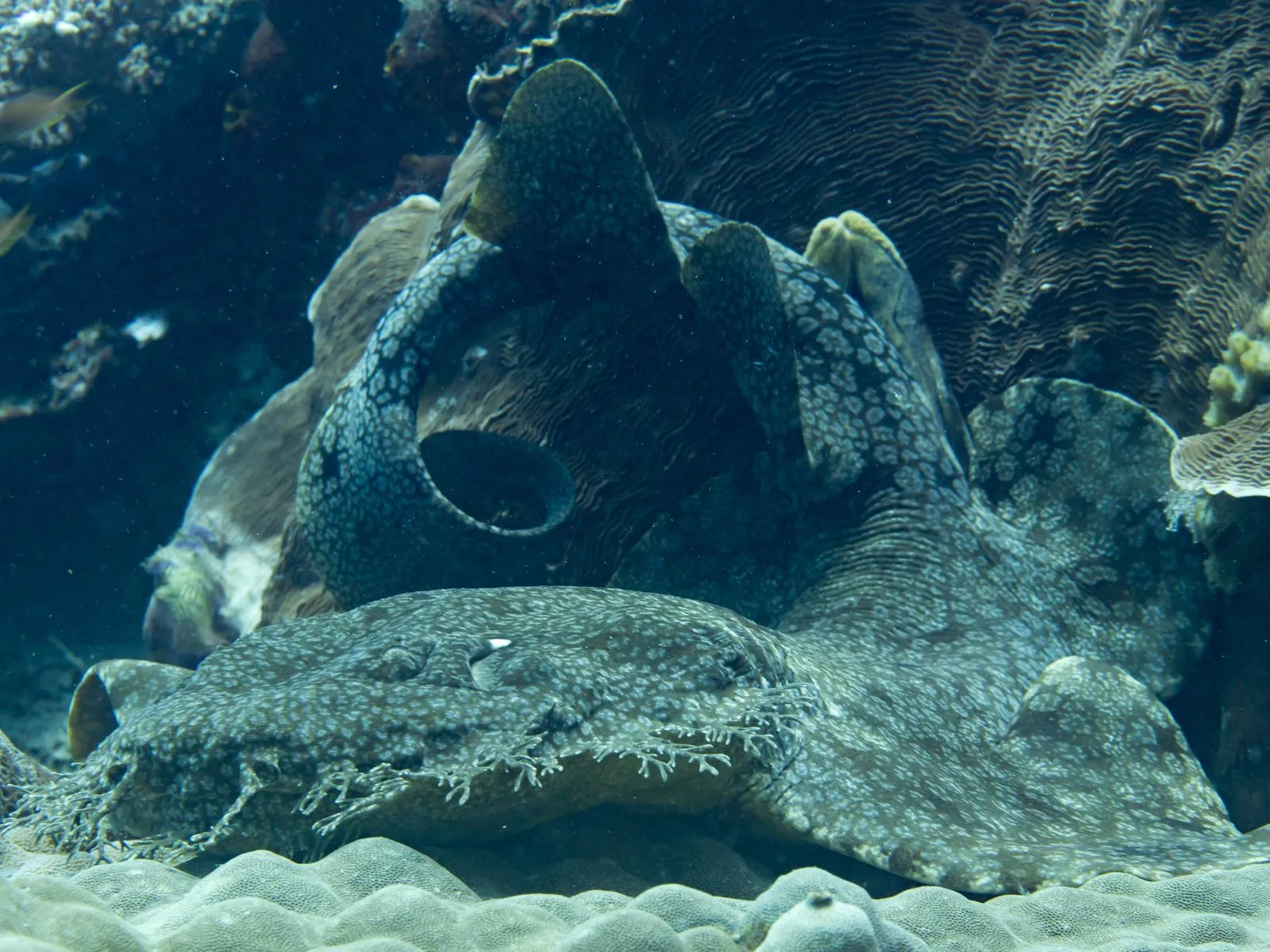
The tasselled wobbegong is resident and non-migratory, and Raja Ampat in West Papua is the most reliable place on earth to see one. Operators in the Dampier Strait — Cape Kri, Sardine Reef, Mioskon — and around Misool regularly show divers four or five individuals resting under coral ledges on a single dive.
Best time: Resident year-round; best diving conditions October to April
Well documented, and reliably seen in season.
When to go
Tasselled wobbegongs are present year-round, since they are territorial ambush hunters rather than seasonal migrants. The variable is diving conditions, not shark presence: the dry season from roughly October to April brings calmer seas and visibility beyond 30 meters, with a shorter wet spell around December–January. The southeast monsoon from May to September brings most of the rain and rougher surface conditions, though diving continues.
Best dive sites for wobbegongs in Indonesia
-
Cape Kri (Dampier Strait)
One of Raja Ampat's signature sites; wobbegongs tuck under ledges alongside the famously dense fish schools it is known for.
-
Sardine Reef (Dampier Strait)
A current-fed reef where wobbegongs shelter beneath overhangs, often paired with Cape Kri on the same day.
-
Mioskon (Dampier Strait)
Tasselled wobbegongs are regularly found under coral ledges here at roughly 5 to 25 meters.
-
Misool (South Raja Ampat)
A separate, less-visited part of the same marine park, with dense reef ledges and caves where wobbegongs rest through the day.
How to see them
Look under table corals, overhanging ledges and inside small cave mouths on the reef slope rather than in open water — tasselled wobbegongs spend daylight motionless in shade, and a guide who knows a site's regular resting spots is by far the fastest way to find one. Liveaboards covering the Dampier Strait and Misool circuits reach the main sites, as do resorts and homestays running day trips from Waisai. Every visitor must carry a Raja Ampat Marine Park entry tag — a conservation fee of roughly IDR 700,000 plus a separate visitor ticket, with patrol boats running spot checks.
What an encounter is like
A wobbegong encounter is a still, close-up look rather than a chase. The fringed, mottled body blends so completely into the sponge and coral around it that divers routinely swim within a meter without noticing until the guide points. It lies motionless with mouth and tail tucked under a ledge, breathing slowly, and won't leave when you approach calmly — but that same stillness is why an unaware diver can brush against or kneel on one while inspecting the reef.
Frequently asked questions
- Where can I see wobbegong sharks in Indonesia?
- Raja Ampat in West Papua, on reef ledges in the Dampier Strait (Cape Kri, Sardine Reef, Mioskon) and around Misool. This is a different region entirely from Indonesia's other megafauna sites — Nusa Penida and Komodo for mantas, or Cenderawasih Bay for whale sharks.
- Are wobbegong sharks dangerous to divers?
- They are not aggressive and won't chase, but they are ambush predators that bite defensively if touched, stepped on or cornered. The International Shark Attack File lists 31 documented unprovoked wobbegong bites and the Australian file over 50 — none fatal, but the teeth go through a wetsuit and the shark can be hard to detach.
- Why are they called wobbegongs?
- The name is thought to come from an Australian Aboriginal language, meaning roughly 'shaggy beard' — a reference to the branching skin flaps, or dermal lobes, fringing the shark's mouth and head.
- Do I need a permit to dive in Raja Ampat?
- Yes. Every visitor buys a marine park entry permit — a conservation fee of roughly IDR 700,000 — plus a visitor ticket, and carries the resulting waterproof tag, which patrol boats check. Raja Ampat was also declared a shark and manta sanctuary in 2012, banning shark and ray fishing across roughly 46,000 km².
Sources
- Raja Ampat Creature Feature: Wobbegong Shark — Divernet
- Marine Park Entry Card — Raja Ampat Marine Park Authority
- Tasselled wobbegong — Wikipedia