Andaman Sea — Phuket, Phi Phi and the Similan route
Where to see leopard sharks in Thailand
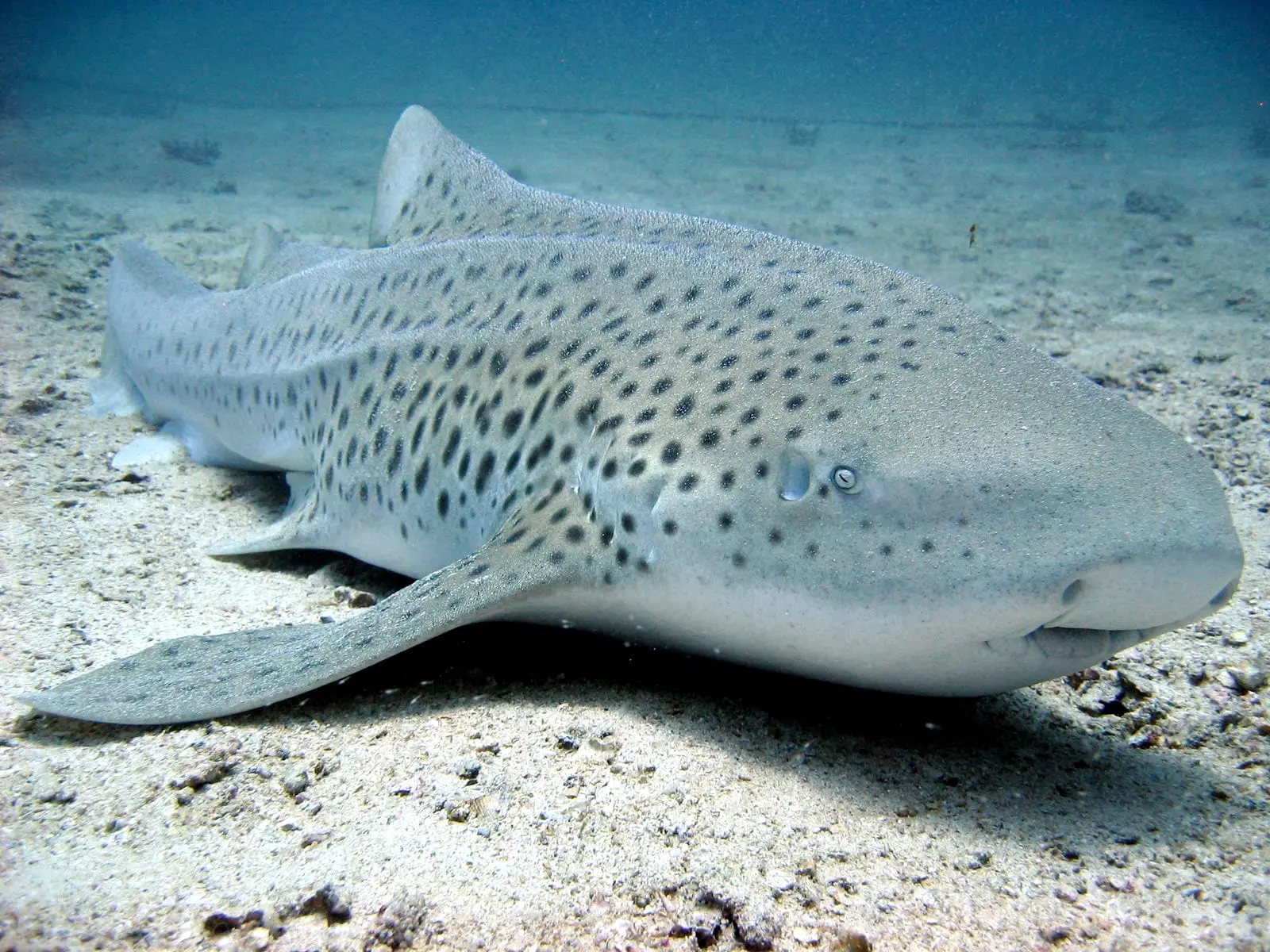
Thailand’s Andaman coast offers the most reliable everyday leopard shark diving in the world, and this is the species Thai guides mean when they say "leopard shark". They rest on sand and rubble at the base of pinnacles, often in only 10 to 25 metres, so even a first day of diving can produce one. Shark Point off Phuket is named for them.
Best time: November to April, the Andaman dry season
Well documented, and reliably seen in season.
When to go
Leopard sharks are resident year-round on the Phuket-side sites, so the months are about diving conditions rather than shark presence. November to April is the Andaman dry season with the best visibility and calmest seas, and the Similan and Surin national parks close from roughly mid-May to mid-October.
Best dive sites for leopard sharks in Thailand
-
Shark Point (Hin Musang), Phuket
The classic: limestone pinnacles ringed by sand where leopard sharks park through the day. Run several times a week by Phuket operators.
-
Koh Bida Nok, Phi Phi
Sandy shelves on the eastern side, usually 12 to 20 metres, and another dependable resting spot.
-
Koh Tachai and Koh Bon, Similan–Surin
Liveaboard territory, with sharks resting on open sand off the pinnacle bases. Season-limited by the national park closure.
-
Racha Yai, south of Phuket
Sandy bays that also serve as training sites, so the sharks here see more traffic than at Shark Point.
How to see them
Stop scanning the reef and scan the sand. These sharks do not hover in the blue — they lie flat on sand, gravel or rubble at the foot of a pinnacle, often tucked against a rock, facing into the current with the tail streaming behind. From fifteen metres away one looks like a tan rock with a stripe of shadow. Once you find one, stop where you are, settle your buoyancy, and approach obliquely and slowly, never head-on and never from directly above. Leave the animal a clear lane to open sand on at least one side; a semicircle of divers closing off the exit is what makes them bolt. Two minutes at four metres will give you better photographs than thirty seconds at one metre.
What an encounter is like
Realistically you are looking at a motionless shark on sand, not an action sequence. Visibility on the Phuket-side sites is often mediocre at five to fifteen metres, and the sites are busy — three boats on Shark Point is normal, and the shark that was there at eight in the morning has frequently moved by the third group. Sightings are common but not guaranteed on any single dive, though most divers connect over a three-day package. Numbers are lower than they were in the 2000s.
Frequently asked questions
- Where is Shark Point in Phuket?
- Hin Musang, a set of limestone pinnacles about an hour east of Phuket by boat, dived as a standard day trip. It is named for the leopard sharks that rest on the surrounding sand.
- Are leopard sharks in Thailand the same as Californian leopard sharks?
- No, and the name collision causes real confusion. Thailand’s is Stegostoma tigrinum, a spotted bottom-resting carpet shark also called the zebra shark. California’s is Triakis semifasciata, an unrelated houndshark.
- What depth are they found at?
- Usually 10 to 25 metres on the Andaman sites, lying on sand or rubble at the base of a pinnacle. That is comfortably within recreational limits.
Sources
- Leopard Sharks In Phuket — Local Dive Thailand
- 8 shark varieties that divers encounter in Thailand — Sea Bees Diving