Animal profile
Where to see whale sharks
Rhincodon typus
Rare enough to plan the trip around. Odds on a typical dive within its range — the right place and season are what beat them, which is what the destinations below are for.
ENEndangered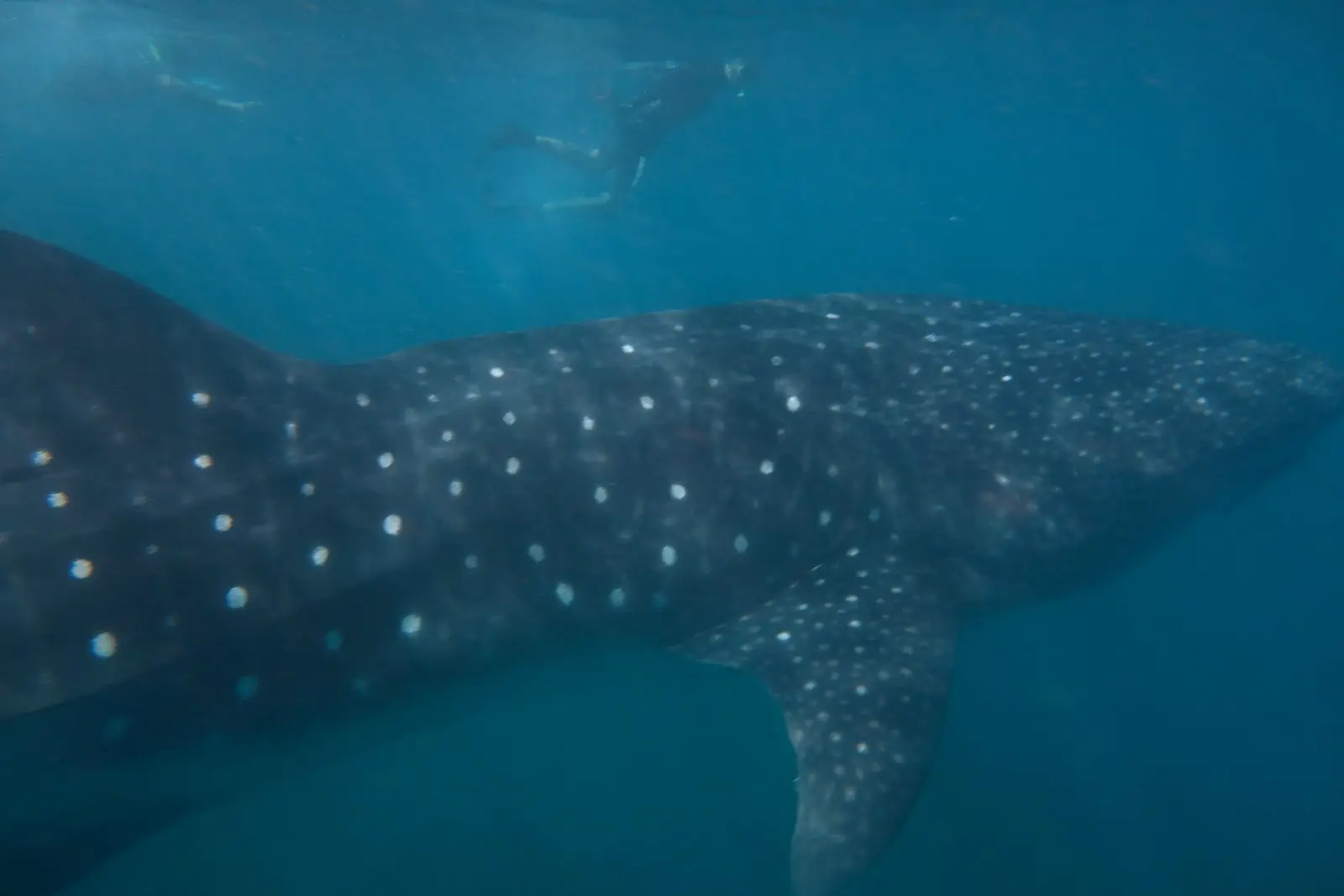
The whale shark is the largest fish alive, and despite the name it is a shark, not a whale. It feeds by cruising slowly near the surface with its mouth open, filtering plankton and small fish. Most animals encountered by divers and snorkellers are juvenile males in the 4–8 meter range. Because they follow food, sightings are strongly seasonal in most of the world — with a few standout places where they linger year-round.
Size
The short version
Solitary
usually met one at a time
Diet
Plankton and small fish (filter feeder)
Risk to youHarmless
A filter feeder; the only real hazard is the tail when you crowd it.
Risk from us
provisioning, boat strike, finning, riding or touching — the last one is the part you control.
Planning the encounter
Depth
Surface to 15 m
Recorded between 0 m and 30 m
Night diving
Daylight only
Odds through the day
Dawn
likely
Day
likely
Dusk
unlikely
Night
not seen
A surface-feeding animal found by spotter boats, so encounters need daylight. Early morning has the flattest water and the best spotting.
Best places to see whale sharks
Well documented, and reliably seen in season.
Best time: Year-round in South Ari Atoll, with the clearest water and biggest gatherings December to April
Well documented, and reliably seen in season.
Best time: June–September off Isla Mujeres; late November–February off La Paz
Well documented, and reliably seen in season.
Best time: March to July, sometimes extending into August
Well documented, and reliably seen in season.
Best time: November to June in Donsol, peaking February–April
Well documented, and reliably seen in season.
Best time: Year-round resident population; best conditions June to October
Consistently reported, but a good way short of a sure thing.
Best time: October to March, though sightings are far below their 2000s levels
How to identify a whale shark
- Broad flat head with a mouth right at the front — unlike most sharks, whose mouth sits underneath.
- A checkerboard of pale spots and stripes; the pattern behind the gills is unique to each individual.
- Slow, sculling tail beats near the surface — they cruise, they don't dart.
Meeting them responsibly
- Keep at least 3 meters from the body and 4 meters from the tail — the tail is powerful.
- No touching, no riding, no blocking its path. Swim alongside, never in front.
- Cut the engine when a shark is near the boat; propeller strikes are a leading cause of injury.
Frequently asked questions
- Where can I swim with whale sharks?
- South Ari Atoll in the Maldives is the only place with a documented resident population, so it works year-round. Ningaloo Reef in Australia, Isla Mujeres in Mexico and Donsol in the Philippines all have strong, predictable seasons.
- When is whale shark season?
- It varies by destination: year-round in South Ari, March–July at Ningaloo, June–September off Isla Mujeres, and February–April in Donsol. Each location's page has the detail.
- Are whale sharks dangerous?
- No. Despite being the largest fish in the sea, whale sharks are filter feeders that eat plankton and pose no threat to swimmers. Keep clear of the tail, which is powerful, and never block the animal's path.
Check me
The reference records behind this page on whale shark.