Donsol, Sorsogon & Southern Leyte (Sogod Bay)
Where to see whale sharks in the Philippines
Donsol in Sorsogon offers the Philippines' best-regulated wild whale shark encounter: a community-based, non-provisioned, snorkel-only programme set up with WWF, with sharks present November to June and peaking February to April. Sogod Bay in Southern Leyte is a similar wild option. Oslob, by contrast, hand-feeds its sharks — see below.
Best time: November to June in Donsol, peaking February–April
Well documented, and reliably seen in season.
When to go
Donsol's whale sharks aggregate from roughly November through June, tracking plankton and small-fish blooms carried in on the Donsol and Ticao Pass currents, with the highest counts reported February through April. Sogod Bay follows a similar plankton-driven pattern from about November to May, with the interaction season formally opened and closed by the local municipality. Oslob's fed sharks are present year-round because provisioning removes the seasonal, food-driven reason to migrate at all.
Best dive sites for whale sharks in the Philippines
-
Donsol, Sorsogon
A community-based, non-provisioned programme established with WWF Philippines in 1998. The sharks are wild and unfed, it is snorkel-only, and a trained Butanding Interaction Officer rides every boat.
-
Sogod Bay, Southern Leyte (Pintuyan)
A wild, seasonal aggregation from roughly November to May drawn by natural plankton blooms. Researchers have identified over 330 individual sharks here, mostly juvenile males.
-
Manta Bowl, Ticao Island
A scuba site about 45 minutes by boat from Donsol where whale sharks pass through cleaning stations — the diving alternative, since Donsol Bay itself is snorkel-only.
-
Oslob, Cebu — not recommended
Fishermen have hand-fed whale sharks daily to hold them in place for tourists since 2012. Long-term LAMAVE research found provisioned sharks carry significantly more injuries and boat-strike scarring than wild ones, and that 93–97% of tourists breach minimum distance rules.
How to see them
In Donsol, register at the Whale Shark Interaction Center in the morning, watch the mandatory briefing, and head out with an assigned Butanding Interaction Officer. The rules are strict and enforced: one boat per shark, a maximum of six swimmers, snorkel only, no touching or feeding, a minimum of 3 meters from the head and 4 from the tail, and interactions capped at around ten minutes. Trips run up to about three hours. Southern Leyte operators around Pintuyan run similar non-provisioned trips, but the season opens and closes on the municipality's own schedule, so check with the tourism office.
What an encounter is like
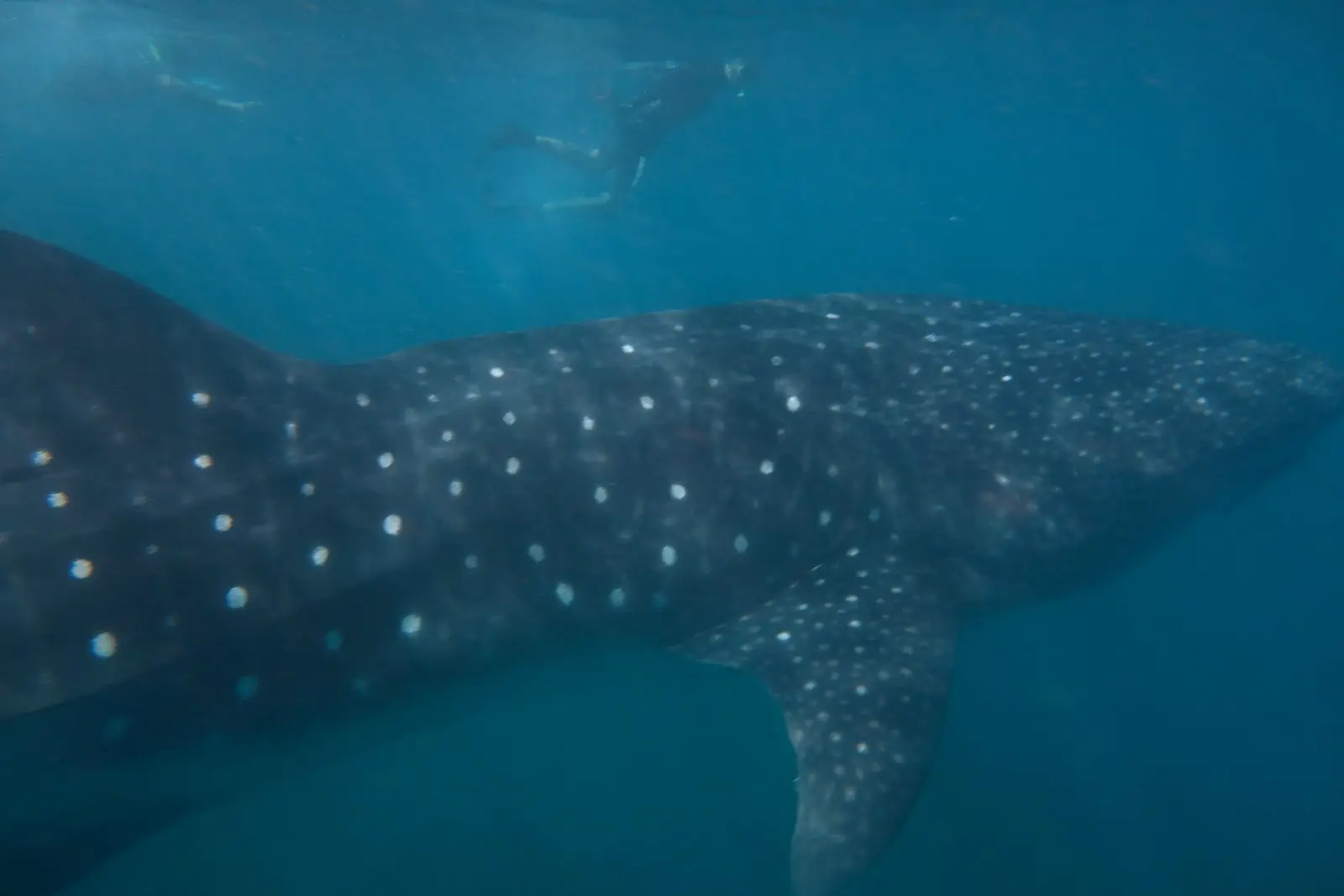
This is wildlife, not an aquarium, so sightings vary day to day. In peak season most Donsol trips see several sharks; a slow day can mean a long search or nothing at all. Encounters are brief and shark-led: the officer spots a dorsal fin or shadow, positions the boat ahead of the animal's path, and you slip in for a fast snorkel alongside a filter-feeding giant before it moves on. Oslob, by contrast, all but guarantees a close, prolonged sighting precisely because the sharks are fed and held in place — which is the practice conservationists object to.
Frequently asked questions
- Is it ethical to swim with whale sharks in Oslob?
- Marine researchers say not in its current form. Long-term LAMAVE research (2012–2020) found hand-feeding conditions sharks to approach boats and propellers, that provisioned sharks show significantly more injuries and scarring than wild ones, and that 93–97% of tourists still breach minimum distance rules after years of study. LAMAVE has paused its Oslob work citing a lack of management action. Donsol and Southern Leyte are the non-provisioned alternatives.
- When is the best time to see whale sharks in the Philippines?
- In Donsol, whale sharks are present roughly November through June, with the highest numbers typically February to April. Sogod Bay in Southern Leyte follows a similar season from about November to May.
- Do I need to be a certified diver to swim with whale sharks in Donsol?
- No. Donsol Bay is snorkel-only — scuba gear and motorised propulsion are prohibited to protect the sharks — so anyone who can swim and snorkel can join. Divers wanting a scuba encounter go instead to Manta Bowl near Ticao Island, about 45 minutes away by boat.
- Are whale shark sightings guaranteed in Donsol?
- No. Donsol's sharks are wild and unfed, so sightings depend on natural conditions — unlike Oslob's provisioned encounters. In peak season most trips see multiple sharks, but on a slow day the three-hour boat window can close before any shark appears.
Sources
- Long term study reveals no improvement in the impact of whale shark tourism in Oslob — LAMAVE (Large Marine Vertebrates Research Institute Philippines)
- Whale Shark research and conservation projects in the Philippines — LAMAVE
- Tourism hurting whale sharks in Oslob – study — Philippine Daily Inquirer
- In Donsol, whale shark conservation bears fruit — Philippine Daily Inquirer