Ningaloo Reef, Western Australia
Where to see whale sharks in Australia
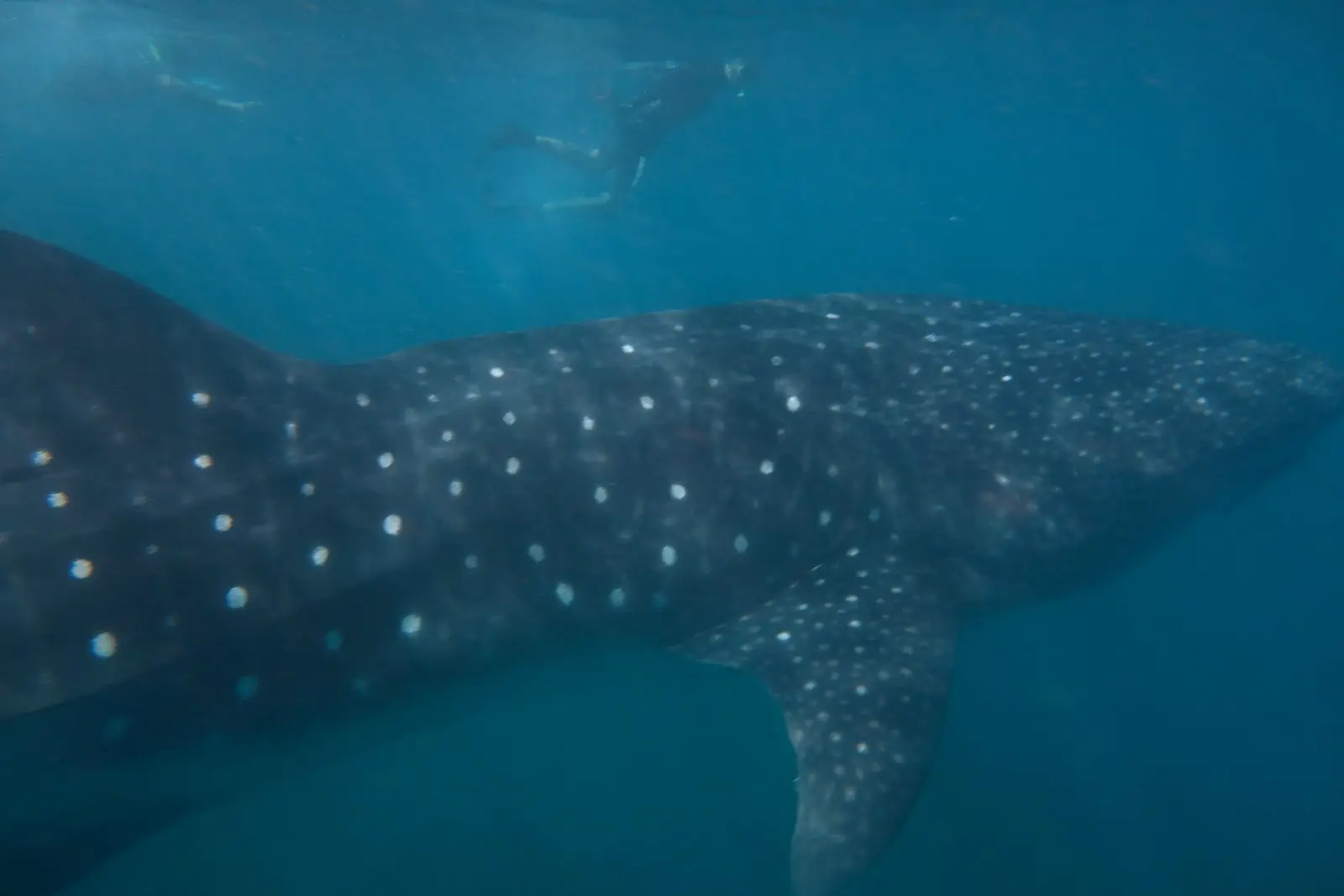
Ningaloo Reef, off Exmouth and Coral Bay in Western Australia, is Australia's reliable whale shark destination. Licensed operators use spotter planes to find sharks from March to July, guiding small snorkel groups into the water under strict distance rules. It is one of the few places worldwide where whale sharks aggregate predictably each year.
Best time: March to July, sometimes extending into August
Well documented, and reliably seen in season.
When to go
Whale sharks gather at Ningaloo from March to July, occasionally into August, timed to the reef's mass coral spawning in March, which triggers the bloom of plankton and fish spawn they come to feed on. Water runs 24–28°C during the season and cools to roughly 19–22°C outside it; visibility is often 20–30 meters or better in the peak months. Outside whale shark season, Ningaloo still offers manta rays from roughly May to November and passing humpbacks June to August.
Best dive sites for whale sharks in Australia
-
Exmouth
The main departure town, with the largest fleet of licensed operators and dedicated spotter planes. Season typically runs March to August.
-
Coral Bay
A smaller village further south along the reef; tours generally run March to June, departing around 7am with snorkel groups capped at about 10 swimmers per rotation.
-
Ningaloo Marine Park
The 300 km fringing reef where an estimated 300–500 whale sharks aggregate annually, drawn by the plankton bloom that follows the coral spawning.
How to see them
Whale shark encounters at Ningaloo are legal only through operators licensed by Western Australia's Department of Biodiversity, Conservation and Attractions. Most work with a spotter plane that radios the boat once a shark is found, so you are not searching blind. Only one vessel may be within a 250 m contact zone at a time, for a maximum of 90 minutes, and swimmers enter in relay groups of up to 10 at the guide's signal. It is snorkel-only: scuba and motorised propulsion aids are prohibited, as is flash photography and touching. Stay at least 3 m from the head or body and 4 m from the tail.
What an encounter is like
Odds in peak season are good because operators spot sharks from the air rather than relying on chance — but no wildlife sighting is guaranteed. Reflecting that, most licensed operators back peak-season bookings with a no-sighting guarantee, typically a free repeat tour, a voucher, or a partial refund. The encounters themselves are brief and shared: you move in a group alongside a shark for a few minutes per rotation rather than diving with it, with several rotations across a full-day tour.
Frequently asked questions
- What is the best time to swim with whale sharks in Australia?
- The Ningaloo Reef season runs March to July, with some years extending into August. Sharks are most reliable through this window because it follows the reef's mass coral spawning and the plankton bloom it triggers.
- Do you need to be scuba certified to swim with whale sharks at Ningaloo?
- No certification is needed. Encounters are snorkel-only by law under Western Australia's code of conduct, which prohibits scuba gear and motorised propulsion aids during swims.
- What happens if no whale shark is sighted on the tour?
- Most licensed operators offer a no-sighting guarantee in peak season — typically a free repeat tour, a multi-year voucher, or a partial refund — though terms and eligible dates vary by operator.
- How close can swimmers get to a whale shark at Ningaloo?
- The statutory code requires staying at least 3 m from the head or body and 4 m from the tail, with no touching or riding. Vessels must respect a 250 m contact zone, with only one boat allowed inside it at a time.
Sources
- Whale shark management in Western Australia — Dept. of Biodiversity, Conservation and Attractions (WA)
- Ningaloo Coast — UNESCO World Heritage Centre
- Ningaloo Marine Park management program best practice for whale shark conservation — Frontiers in Conservation Science
- Multi-Year Impacts of Ecotourism on Whale Shark Visitation at Ningaloo Reef — PLOS One