Isla Mujeres (Caribbean) & La Paz (Sea of Cortez)
Where to see whale sharks in Mexico
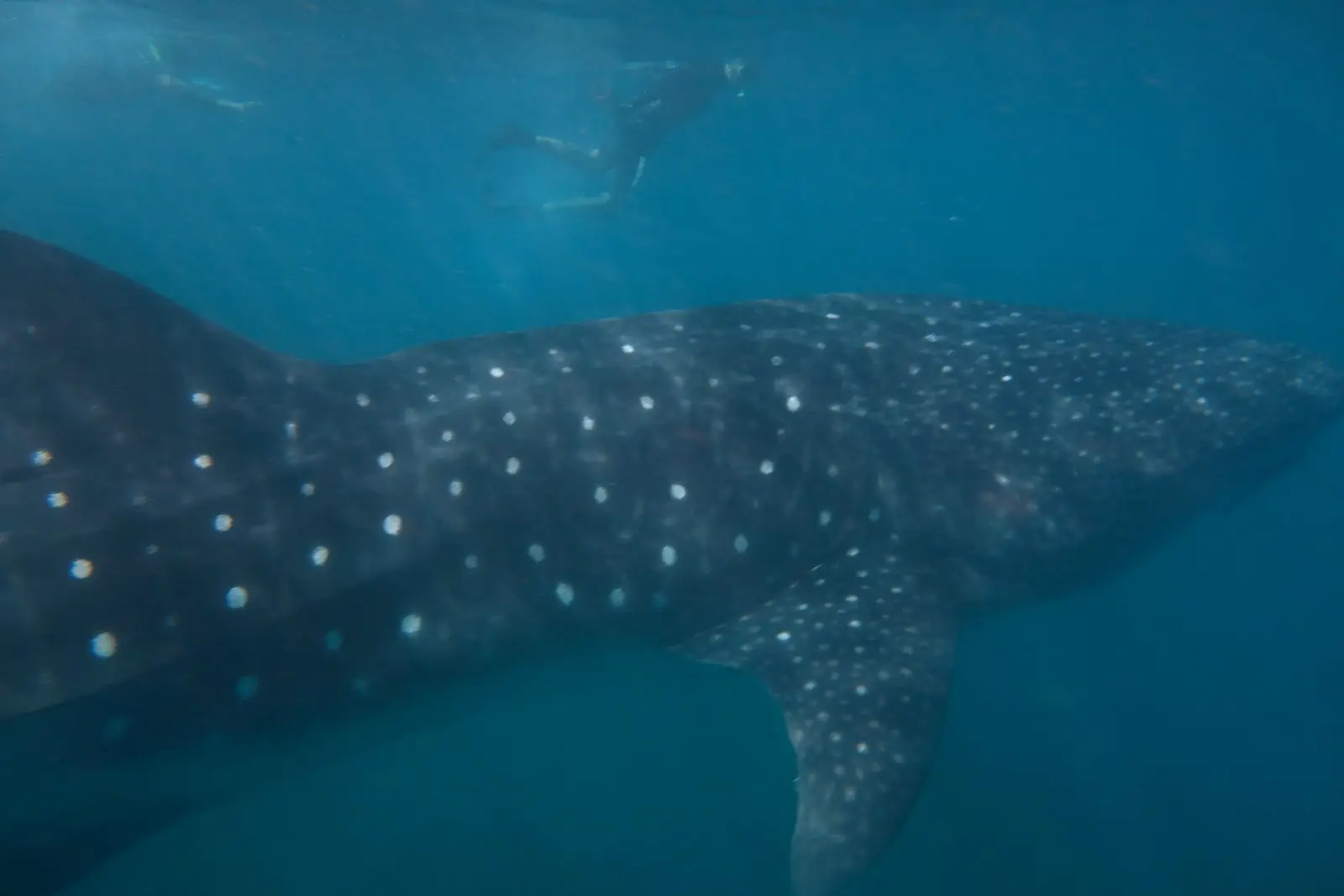
Mexico has two reliable whale shark destinations on opposite coasts and opposite calendars: Isla Mujeres and Cancún in the Caribbean from June to September, and La Paz in Baja California Sur from roughly late November to February. Both are snorkel-only under licensed permits — scuba with whale sharks is prohibited nationwide.
Best time: June–September off Isla Mujeres; late November–February off La Paz
Well documented, and reliably seen in season.
When to go
The two regions run opposite calendars because they track different feeding triggers on different coasts. The Caribbean aggregation off Isla Mujeres follows the official 15 June–15 September window, best mid-June to mid-August, when currents concentrate plankton and fish spawn. La Paz, in the Sea of Cortez, has an official October–April season, but the sharks reliably show and tours consistently run from late November through February, after which numbers taper as the water cools. Between the two windows — roughly March–May and September–October — whale shark encounters are unreliable in both regions.
Best dive sites for whale sharks in Mexico
-
Isla Mujeres / Cancún aggregation zone
A 1–1.5 hour boat ride north into the whale shark reserve near Isla Contoy during the official 15 June–15 September season, when plankton and fish spawn draw the largest aggregation on the planet.
-
Holbox
Shares the same summer aggregation and season as Isla Mujeres, with boats leaving from the island rather than the Cancún docks.
-
La Paz, Baja California Sur
Juvenile whale sharks feed close to the bay in the Sea of Cortez, officially October–April, with the best odds from late November through February.
How to see them
Every whale shark encounter in Mexico is snorkel-only; scuba with the animals is prohibited by federal regulation. Trips run through CONANP-permitted operators, and the permit number should be visible on the boat and your booking. Boats are capped at around 10 tourists, and only two snorkellers plus one guide may be in the water with a given shark at a time. Life jackets are mandatory, fins and flash are barred, touching is forbidden, and you must hold roughly 2 meters from the body and more from the tail. Reef-safe sunscreen only. A very cheap tour is a red flag for an unpermitted or overloaded boat.
What an encounter is like
In the Isla Mujeres season, sightings are close to guaranteed at the mid-June to mid-August peak, since dozens to hundreds of sharks gather in a compact feeding zone — but the area draws heavy boat traffic, up to around 120 permitted boats a day, so encounters are brief, rotated between boats, and shared. In La Paz, numbers are smaller and confined to the bay, with the best odds late November to early February; the water gets noticeably colder toward the end, into the mid-teens °C. Neither is a private or leisurely encounter.
Frequently asked questions
- Can you scuba dive with whale sharks in Mexico?
- No. Scuba with whale sharks is prohibited under Mexican federal regulation across all authorised zones. Every legal encounter is snorkel-only, with a guide, a life jacket, and a cap of two swimmers per shark at a time.
- Is Isla Mujeres or La Paz better for whale sharks?
- Isla Mujeres (June–September) has the larger, denser aggregation and near-guaranteed sightings at peak, but heavier boat traffic and shorter, rotated encounters. La Paz (late November–February) has fewer sharks in a smaller bay but feels less crowded. The seasons don't overlap, so your travel dates usually decide it.
- How close can you get to a whale shark in Mexico?
- Regulations require staying roughly 2 meters from the shark's head and further from the tail, with no touching, no fins, and no flash photography.
- Do I need a licensed operator to swim with whale sharks in Mexico?
- Yes. Only operators holding a valid CONANP permit, shown on the boat and your booking confirmation, may legally run whale shark tours. Unusually cheap trips are a common sign of an unpermitted or overloaded boat.
Sources
- How to Swim with Whale Sharks in Isla Mujeres, Mexico — Scuba Diving Magazine
- Should you swim with whale sharks in Isla Mujeres, Mexico? — World Adventure Divers
- The Best Time to See Whale Sharks in La Paz — Eco Migrations