Tofo Beach, Inhambane
Where to see whale sharks in Mozambique
Tofo Beach in Inhambane is Mozambique's best-known whale shark spot, reached by ocean-safari snorkel boats rather than on scuba. Sharks can turn up in any month, with October–March historically the best odds — but published research shows sightings have fallen sharply since the mid-2000s, so treat an encounter as possible, not likely.
Best time: October to March, though sightings are far below their 2000s levels
The evidence here is strong — it's the odds that aren't. Peer-reviewed research documents an ~89% decline in whale shark abundance off Tofo since the mid-2000s, so this rating reflects the sharks, not the sourcing.
When to go
Whale sharks are present off Tofo in every month, so there is no closed season, and sightings have long tracked plankton availability — October to March, the warmer and more productive months, historically gave the best odds. That seasonal shape hasn't changed, but the baseline has: researchers attribute the decline mainly to a sharp rise in gillnet fishing along the Mozambican coast, which suppresses abundance in every month rather than just outside the peak.
Best dive sites for whale sharks in Mozambique
-
Tofinho Bay / Praia do Tofo
The main ocean-safari search area straight off Tofo Beach, where boats scan for surface-feeding whale sharks and dolphins en route to the reef sites.
-
Manta Reef
A dive site south of Tofo with several manta cleaning stations. Whale sharks occasionally pass over during a dive, though the species is mainly met on snorkel safaris rather than scuba.
-
The Inhambane coast, Bazaruto to Zavora
Satellite tagging shows tracked whale sharks favouring this roughly 200 km stretch of productive coastal water, of which Tofo is the historic hub.
How to see them
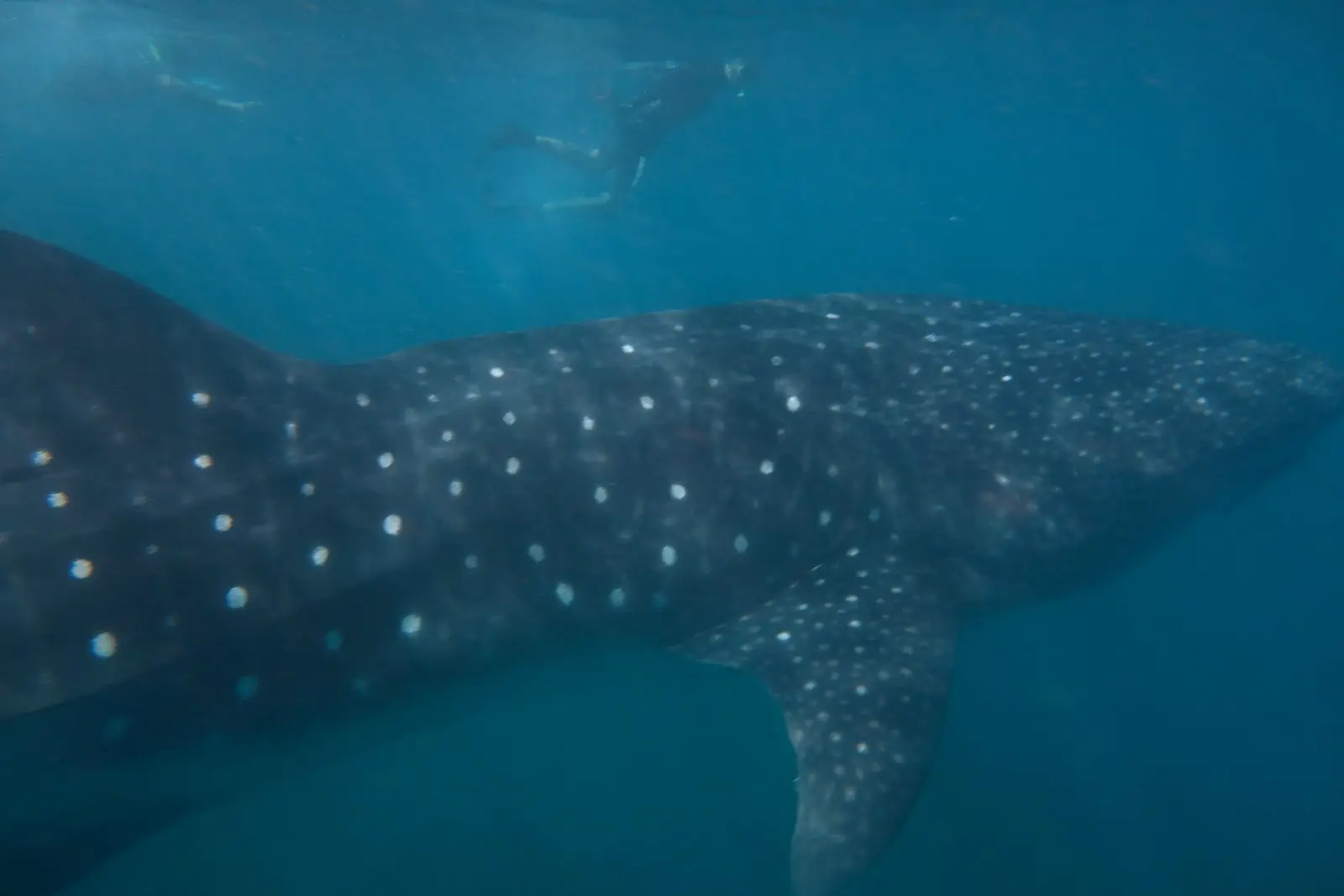
Whale sharks at Tofo are met on ocean safaris: a rigid inflatable launches through the surf, a spotter watches for surface activity, and once a shark is found snorkellers slip in ahead of its path rather than chasing from behind. No certification is needed and no diving happens with the animal — it is snorkel-only. Operators run these under a code of conduct developed with the Marine Megafauna Foundation, covering no touching, roughly 3 m from the body and 4 m from the tail, capped group sizes and limited time per encounter.
What an encounter is like
Tofo built its reputation as one of the most reliable whale shark encounters in the world through the 2000s. That is no longer true, and it would be dishonest to imply otherwise. A 15-year photo-identification study of 706 individually identified sharks (2005–2019) found seasonal abundance off Praia do Tofo fell by roughly 89% — about 81% for males and 92% for females — and researchers had already reported a 79% drop by 2013. Book an ocean safari today expecting a marine-life boat trip where a whale shark would be a genuine bonus, and where dolphins and mantas are the likelier highlight.
Frequently asked questions
- Is it still likely to see a whale shark at Tofo?
- Possible, but no longer close to guaranteed. A 15-year Marine Megafauna Foundation study (2005–2019) documented roughly an 89% decline in seasonal whale shark abundance off Tofo, so operators now frame the ocean safari as a marine-life search rather than a certain whale shark sighting.
- Do you scuba dive with whale sharks at Tofo?
- No. They are encountered on snorkel-based ocean safaris from a rigid inflatable, not on scuba. Snorkellers enter the water ahead of the shark's path when one is spotted.
- Is there a code of conduct for swimming with whale sharks in Mozambique?
- Yes. Operators and the Marine Megafauna Foundation developed a joint code covering no touching, minimum approach distances of about 3 m from the body and 4 m from the tail, capped swimmer numbers per shark, and limited interaction time.
- Why have whale shark sightings declined so much at Tofo?
- Researchers link the drop mainly to a large increase in gillnet fishing along the Mozambican coast, which affects whale sharks and other pelagic megafauna such as manta rays. The decline contributed to whale sharks and mantas gaining full legal protection in Mozambique in 2021.
Sources
- A 15-Year Time Series Shows Major Declines in Whale Sharks in Southern Mozambique — Aquatic Conservation: Marine and Freshwater Ecosystems (Wiley)
- Mozambique Whale Shark Project — Marine Megafauna Foundation
- Manta rays and whale sharks now protected in Mozambique — Marine Megafauna Foundation