Animal profile
Where to see manta rays
Mobula alfredi & Mobula birostris
Regular, but it has to want to be seen. Odds on a typical dive within its range — the right place and season are what beat them, which is what the destinations below are for.
Reef manta Vulnerable; oceanic manta Endangered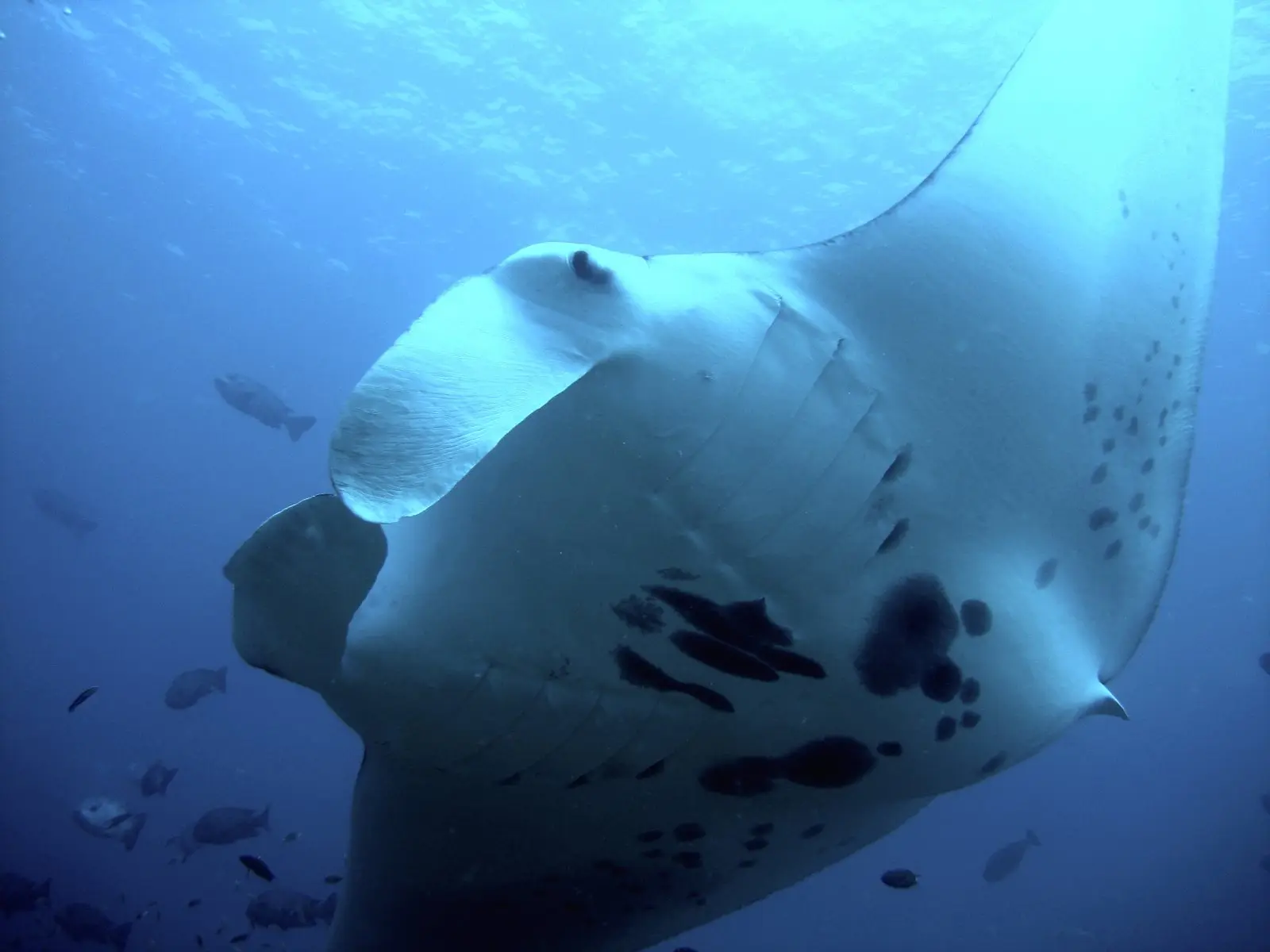
Manta rays are the largest rays in the ocean. The reef manta (Mobula alfredi) reaches about 3–4 meters across and stays close to coastal reefs, while the oceanic manta (Mobula birostris) can span 7 meters and roams the open blue. Both are filter feeders — harmless to divers — and both return, often for years, to the same cleaning stations and feeding channels. That fidelity to a handful of sites is exactly why manta diving is so reliable when you go to the right place at the right time.
Size
The short version
Small groups
a handful in the same spot
Diet
Plankton (filter feeder)
Risk to youHarmless
No teeth to speak of and no barb — a filter feeder that ignores divers.
Risk from us
gill-plate trade, entanglement, boat strike, touching — the last one is the part you control.
Planning the encounter
Depth
10–25 m
Recorded between 5 m and 30 m
Night diving
Also seen on night dives
Odds through the day
Dawn
possible
Day
likely
Dusk
possible
Night
possible
Cleaning-station visits run through daylight. Kona is the exception that proves the rule — its manta dive is at night, over lights that concentrate plankton.
Best places to see manta rays
Well documented, and reliably seen in season.
Best time: May to October, with the best odds in September and early October
Well documented, and reliably seen in season.
Best time: May to November, peaking August–October
Well documented, and reliably seen in season.
Best time: Year-round, with the calmest seas April to October
Well documented, and reliably seen in season.
Best time: November to June, with Komodo densest in January–February
Well documented, and reliably seen in season.
Best time: The liveaboard season, November to May
Well documented, and reliably seen in season.
Best time: May–November at Ningaloo (year-round at Coral Bay); June–September at Lady Elliot
How to identify a manta ray
- Diamond-shaped body with two forward cephalic fins that unfurl into a scoop when feeding.
- Each manta has a unique spot pattern on its pale underside — researchers ID individuals from it, and so can you in photos.
- Reef mantas rarely leave the reef; a manta far offshore in deep blue is usually the larger oceanic species.
Meeting them responsibly
- Stay low and still at a cleaning station — never chase or swim above a manta, which blocks the cleaner fish it came for.
- No touching. The mucus layer on their skin protects them from infection.
- Keep flash off and give feeding mantas at least a few meters of room.
Frequently asked questions
- Where can I dive with manta rays?
- The most reliable manta destinations are Ishigaki in Japan, Hanifaru Bay in the Maldives, the Kona Coast in Hawaii, and Nusa Penida in Bali. Each has a different season, listed on this page.
- When is manta ray season?
- It depends entirely on the destination — mantas follow plankton, so the season tracks local currents. Kona has resident mantas year-round, Ishigaki peaks May–October, and Hanifaru Bay peaks August–October.
- Are manta rays dangerous to divers?
- No. Manta rays are filter feeders with no stinging barb — unlike the stingrays they are often confused with — and they have no interest in people. The main risk is to the animal: crowding or touching one does real harm.
Check me
The reference records behind this page on manta ray.