Hanifaru Bay, Baa Atoll
Where to see manta rays in the Maldives
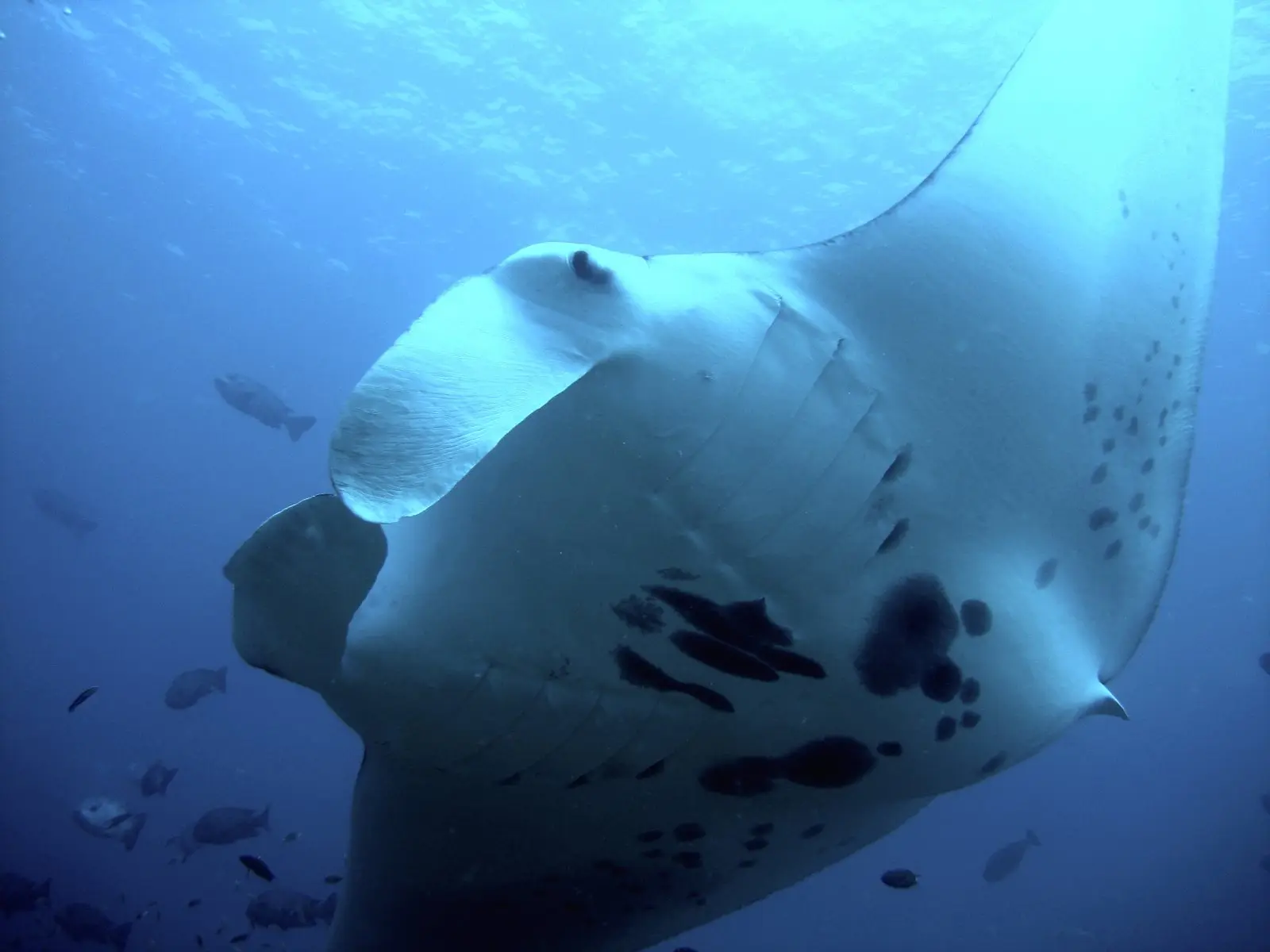
The most reliable place to see manta rays in the Maldives is Hanifaru Bay in Baa Atoll, a UNESCO-protected area where reef mantas gather to feed on trapped plankton from May to November, peaking August–October. Outside that window, Ari Atoll's cleaning stations offer scuba encounters, best December to April.
Best time: May to November, peaking August–October
Well documented, and reliably seen in season.
When to go
The Maldives has two manta seasons driven by the monsoon. During the southwest monsoon (roughly May–November), currents push plankton-rich water onto the eastern side of the atolls, and Hanifaru's funnel shape traps it — this produces the August–October aggregations. During the northeast monsoon (December–April) the pattern reverses and plankton concentrates on the western side of atolls like Ari, favouring cleaning stations over bay feeding. Visibility is generally better in the northeast monsoon, which suits photography.
Best dive sites for manta rays in the Maldives
-
Hanifaru Bay, Baa Atoll
A funnel-shaped bay inside a UNESCO biosphere reserve where currents trap plankton. Snorkel-only: 5–10 mantas on a typical day, and 200 or more during rare peak feeding events.
-
Rangali Madivaru (Manta Point), South Ari Atoll
A cleaning station where reef mantas hover to be cleaned by wrasse. Most reliable during the northeast monsoon, roughly January to April.
-
Kudarah Thila, South Ari Atoll
Another Ari Atoll cleaning-station thila, dived on the same manta circuit as Rangali Madivaru, with better visibility in the northeast monsoon months.
-
Fesdhoo Lagoon, North Ari Atoll
A night site where divers hold lights on the sandy bottom to draw plankton, pulling mantas in after dark.
How to see them
Hanifaru Bay is snorkel-only — scuba, motorised devices and fishing are all banned inside the Marine Protected Area, and rangers control entry. Boats buy a token per person for a 45-minute session, a maximum of five vessels and around 45 snorkellers are allowed in the bay at once, and a licensed guide must accompany every group (up to 10 snorkellers each). Fees change, so confirm current rates when you book. Away from Hanifaru, the mantas at Ari Atoll cleaning stations are visited by scuba divers on standard dive-centre trips with no special permit.
What an encounter is like
Hanifaru is a feeding ground, not a show: sightings are seasonal and weather-dependent, never guaranteed. Operators describe 5–10 mantas as a typical day, 50–70 as a good one, and 200-plus during rare peak events when plankton concentration spikes. Encounters can be brief and shared with other boats during peak weeks. At the Ari Atoll cleaning stations the experience is calmer and scuba-based, with single-digit numbers cycling through rather than mass feeding.
Frequently asked questions
- Can you scuba dive with manta rays in Hanifaru Bay?
- No. Hanifaru Bay is a snorkel-only Marine Protected Area; scuba, fishing and motorised devices are banned there to protect the feeding mantas. For scuba encounters with mantas, head to the cleaning stations at Rangali Madivaru and Kudarah Thila in Ari Atoll.
- What is the best month to see manta rays in the Maldives?
- August to October is peak at Hanifaru Bay in Baa Atoll, when the southwest monsoon funnels plankton into the bay. December to April is better for Ari Atoll's western cleaning stations, which peak during the opposite, northeast monsoon.
- Do I need a permit to snorkel at Hanifaru Bay?
- Yes. Rangers manage entry under the Baa Atoll biosphere reserve system, requiring a paid token per 45-minute session and a licensed guide. Only five boats and roughly 45 snorkellers are permitted inside the bay at any one time.
- How many manta rays can you see at Hanifaru Bay?
- Reports describe 5 to 10 mantas as typical, 50 to 70 on a good day, and 200 or more during rare peak feeding events at the height of the August–October season. Numbers depend on weather and plankton and are never guaranteed.
Sources
- Whale shark and manta ray seasons in the Maldives — ZuBlu Diving
- Baa Atoll: The Largest Manta Ray Aggregation in the World — PADI
- Manta conservation at Hanifaru Bay Marine Protected Area — ZuBlu Diving
- Scuba Diving Maldives: Best Manta Ray Encounters in Ari Atoll — Dive The World