Ishigaki Island, Okinawa
Where to see manta rays in Japan
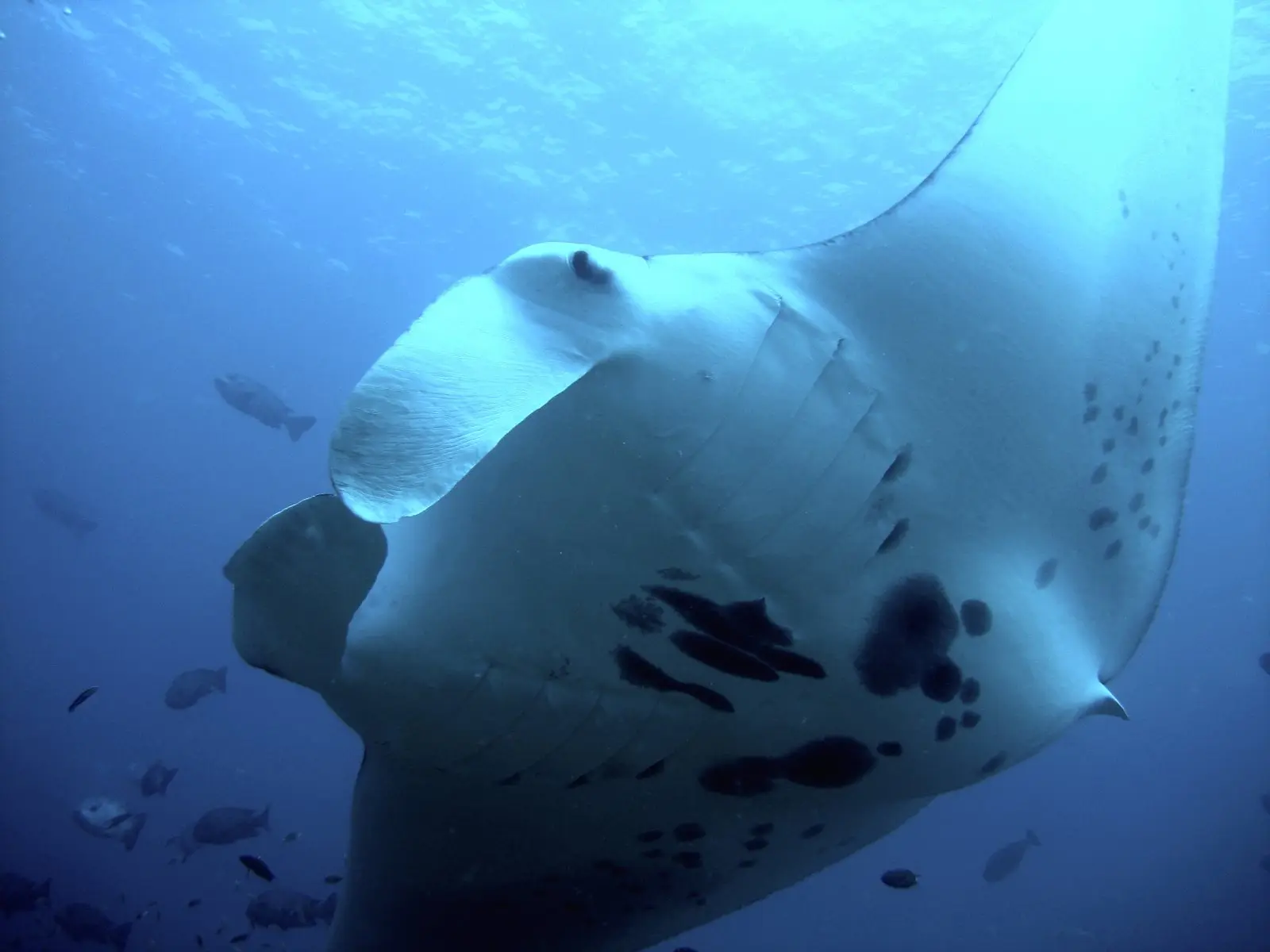
The most reliable place to dive with manta rays in Japan is Ishigaki Island in Okinawa's Yaeyama chain. Its cleaning stations off Kabira Bay — Manta Scramble and Manta City — record some of the highest manta encounter rates in the world from roughly May to October.
Best time: May to October, with the best odds in September and early October
Well documented, and reliably seen in season.
When to go
The northern Kabira sites run May–October and peak in September–early October. From roughly December to April the better chances move to the southern islands (Iriomote, Kuro, Panari), so there is some form of manta season in Ishigaki much of the year.
Best dive sites for manta rays in Japan
-
Kabira Ishizaki Manta Scramble
The signature site off Kabira Bay: a cleaning station where reef mantas queue over the coral. Among the highest encounter rates anywhere, 10–15 minutes by boat.
-
Manta City Point
A second Kabira-area cleaning station, often dived on the same trip as Manta Scramble.
-
Yonara Channel
A drift between Iriomote and Kohama where mantas ride the current — dived as a day trip from Ishigaki.
-
Southern sites (Iriomote, Kuro, Panari)
From December to April the odds shift south; Iriomote's cleaning stations run a winter-into-early-summer season.
How to see them
Book with an Ishigaki dive operator running the Kabira manta sites; a two-tank boat trip is the norm. Mantas visit cleaning stations to have parasites picked off by wrasse, so the drill is simple: descend near the station, settle low on the sand or reef, and wait. Snorkel tours also run to Manta Scramble when conditions allow, since the mantas cruise shallow.
What an encounter is like
One to several reef mantas circling a coral bommie a few meters above you, sometimes stacking up nose-to-tail as they take turns being cleaned. Encounters can last the whole dive when the station is busy. Odds are never guaranteed — this is wild wildlife — but in peak season a majority of trips connect.
Frequently asked questions
- Where in Japan can you dive with manta rays?
- Ishigaki Island in Okinawa's Yaeyama Islands is Japan's premier manta destination. The cleaning stations off Kabira Bay — Manta Scramble and Manta City — are the classic sites, with more around Iriomote and the Yonara Channel.
- What is the best time of year to see manta rays in Ishigaki?
- The Kabira manta season runs from about May to October, and encounter rates are highest in September and early October. In winter (December–April) the odds shift to the southern islands like Iriomote.
- Can you snorkel with manta rays in Ishigaki, or do you need to dive?
- Both. Because the mantas cruise shallow over the cleaning stations, snorkel tours to Manta Scramble run when sea conditions allow, alongside standard two-tank dive trips.
- Are manta ray sightings guaranteed?
- No — these are wild animals. But Kabira has some of the highest manta encounter rates in the world, so in peak season most trips see at least one.
Sources
- Scuba Diving — Visit Ishigaki (official tourism) — Visit Ishigaki
- Top Manta Ray Diving Spots and Best Season in Ishigaki — That Island Nomad
- When can you see manta rays in Ishigaki Island? — Activity Japan