Kona, Big Island
Where to see manta rays in Hawaii
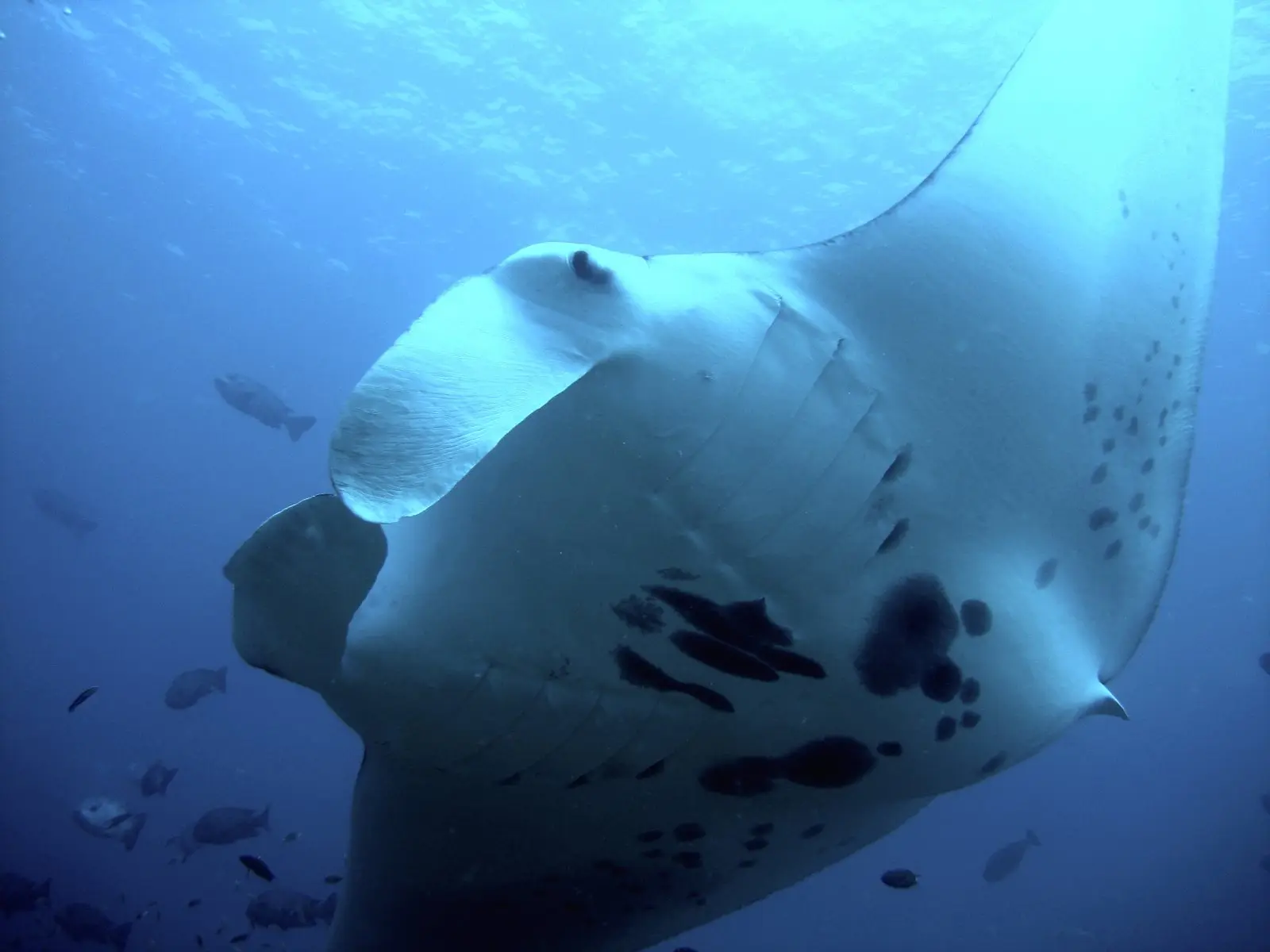
The Kona Coast on Hawaii's Big Island is the place to see manta rays, with a resident population of over 240 identified animals present year-round. Night dives and snorkels leave from Keauhou Bay (Manta Village) and near Kona airport (Manta Heaven), where lights draw plankton and mantas feed just below the surface.
Best time: Year-round, with the calmest seas April to October
Well documented, and reliably seen in season.
When to go
Kona holds a genetically distinct, largely resident reef manta population, and sightings happen in every season because the plankton they feed on is present year-round — researchers have catalogued over 300 individuals off this coast since the 1970s. Conditions are more consistent April through October, with calmer seas and fewer cancellations, while winter swells from January to March can make crossings choppy. The mantas themselves are not seasonal.
Best dive sites for manta rays in Hawaii
-
Manta Village (Keauhou / Kaukalaelae Point)
Off the Keauhou resort strip; sheltered water, boat access only. The most established site, ever since resort floodlights first drew plankton here in the 1970s.
-
Manta Heaven (Makako Bay, near Kona airport)
Established as a viewing site in 1999 and known by day as Garden Eel Cove. Often better for photography, with fewer crowds than Keauhou.
-
Manta Point (Kauna'oa Bay, Kohala Coast)
On private hotel grounds with motorised vessels prohibited — not accessible for commercial manta tours.
How to see them
Operators run both night snorkel and scuba trips to Manta Village or Manta Heaven, leaving Kona-area harbours around sunset. Divers kneel on a sandy patch with lit boards on the seafloor; snorkellers float at the surface holding a lit 'campfire' board. The lights draw zooplankton, and resident reef mantas swoop through to filter-feed, sometimes barrel-rolling within inches of you. Snorkel trips run roughly $99–250 and scuba trips roughly $190–320 per person.
What an encounter is like
Sightings are reported on the large majority of nights, with operator and guide sources citing success rates above 70–90%, and anywhere from a single animal to more than 30 mantas depending on plankton density. Encounters typically last 30–45 minutes once the lights are down. Several boats often converge on the same site, so this is a shared and sometimes crowded experience rather than a private one.
Frequently asked questions
- Where is the best place to see manta rays in Hawaii?
- The Kona Coast of the Big Island, with Manta Village off Keauhou Bay and Manta Heaven near Kona International Airport as the two active commercial viewing sites. A third site, Manta Point at Kauna'oa Bay, sits on private hotel grounds and is not open to tours.
- Is the Kona manta night dive guaranteed to work?
- No sighting is ever guaranteed with wild animals, but operator-reported success rates are commonly cited above 70–90% on a given night, and Kona's resident manta population means some animals are in the area year-round.
- Is it ethical to attract manta rays with lights?
- It is debated. No state law currently regulates the activity, so operators self-govern under a voluntary 2013 code of conduct covering mooring use, light placement and no-touch practices. Hawaii's DLNR has been drafting formal rules for years in response to crowding and safety concerns, but they remain unenacted.
- How cold is the water on a Kona manta night dive?
- Kona runs about 24°C in March to 27°C in September, with visibility commonly beyond 30 meters year-round. A 3mm wetsuit is typical for a night dive.
Sources
- Manta ray viewing sites — Kona coast — Hawaii Ocean Watch
- Why there are No Rules or Regulations for Manta Ray Tourism (2024 update) — Manta Ray Advocates Hawaii
- Genomic evidence indicates small island-resident populations of Hawaiian reef manta rays — PMC / NCBI (peer-reviewed)