Nusa Penida, Bali & Komodo National Park
Where to see manta rays in Indonesia
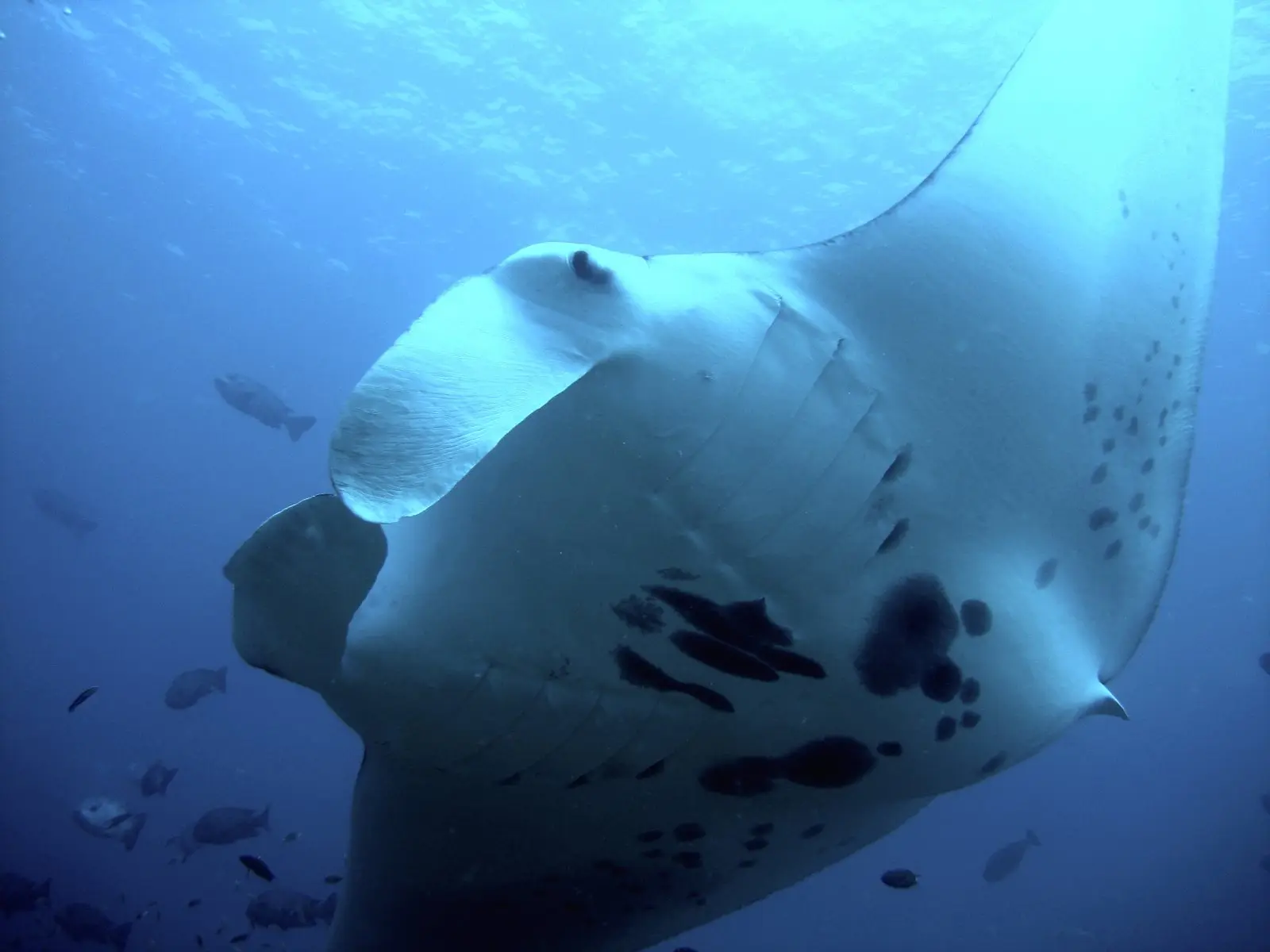
The two reliable places are Manta Point and Manta Bay off Nusa Penida in Bali, and Karang Makassar plus Manta Alley in Komodo National Park. Nusa Penida offers near year-round reef manta sightings on day trips; Komodo's central zone peaks November to June, and remote Manta Alley November to March.
Best time: November to June, with Komodo densest in January–February
Well documented, and reliably seen in season.
When to go
Reef mantas are resident at Nusa Penida and can appear in any month, but the warm season (roughly November–May) brings calmer seas and 26–29°C water, with several operators citing March–June and a May mating peak as particularly good. The cold season (June–October) brings rougher conditions and water down to 18–25°C with sharp thermoclines. In Komodo, central-zone sightings run strongest November–June with a January–February peak, while Manta Alley is tightest November–March. November is often the sweet spot, when both Komodo zones are active and the park is quieter.
Best dive sites for manta rays in Indonesia
-
Manta Point, Nusa Penida
A cleaning station on the exposed south coast, to about 20 m. PADI logs an 85–90% dive-day encounter rate, though conditions are seasonal and weather-dependent.
-
Manta Bay, Nusa Penida
A sheltered feeding aggregation near Broken Beach where mantas often surface within 2–3 m — easier for snorkellers, but frequently crowded with boats.
-
Karang Makassar (Manta Point), Central Komodo
A shallow rubble plateau with cleaning stations, reachable on a day trip from Labuan Bajo. Densest aggregations of 10–20 animals typically January–February.
-
Manta Alley, South Komodo
Remote and liveaboard-only, peaking November to March with the year's largest aggregations around January–February.
How to see them
In Nusa Penida, day boats leave Sanur or Toya Pakeh for Manta Point and Manta Bay; a marine park fee applies and both Open Water divers and snorkellers can join, though buoyancy matters given the current at Manta Point. In Komodo, Karang Makassar is a day trip from Labuan Bajo while Manta Alley needs a liveaboard; park entry runs through a bundled ticket and, since April 2026, a daily visitor quota booked via the SiOra system.
What an encounter is like
At Nusa Penida, arriving early changes everything: operators note 8–12 boats can cluster at Manta Point once the morning trips land, turning a calm cleaning-station encounter into a crowded scrum, and Manta Bay is generally more chaotic still. Currents at Manta Point run moderate to strong and the site is exposed to Indian Ocean swell, so trips are sometimes cancelled. In Komodo, Karang Makassar delivers a near-continuous procession of mantas riding the current when conditions align, while Manta Alley's remoteness means fewer boats but rougher access.
Frequently asked questions
- Where is the best place to see manta rays in Indonesia?
- Nusa Penida in Bali and Komodo National Park are the two established options. Nusa Penida's Manta Point and Manta Bay are reachable on day trips with near year-round sightings; Komodo's Karang Makassar and Manta Alley sit inside a national park with strong seasonal peaks.
- Can you snorkel with manta rays in Bali, or do you need to dive?
- Both work at Nusa Penida. Manta Bay is shallow and suits snorkellers since mantas often surface within 2–3 meters, while Manta Point is a deeper cleaning station to about 20 m that is more commonly dived — though snorkel trips run there too.
- Is Manta Point in Nusa Penida crowded?
- Yes. Operators and visitors describe 8–10 or more boats clustering at Manta Point once the morning trips arrive, and Manta Bay is often more congested still. An early departure is the main way to avoid the worst of it.
- What is the manta ray code of conduct in Nusa Penida?
- The marine protected area's guidelines call for staying at least 3 meters from mantas, never touching them, avoiding flash, and keeping boats about 50 meters from active cleaning stations. The code is voluntary, and there is currently no cap on how many boats may be at a manta site.
Sources
- Nusa Penida manta ray nursery: Tourists and fishers key to survival — Marine Megafauna Foundation
- Estimating the abundance and population trends of reef manta rays in Nusa Penida, Bali — Environmental Biology of Fishes (Springer)
- Manta Point dive site — PADI
- Manta Ray Code of Conduct: Diving with Mantas in Nusa Penida — Bali Aqua