Revillagigedo Archipelago (Socorro)
Where to see manta rays in Mexico
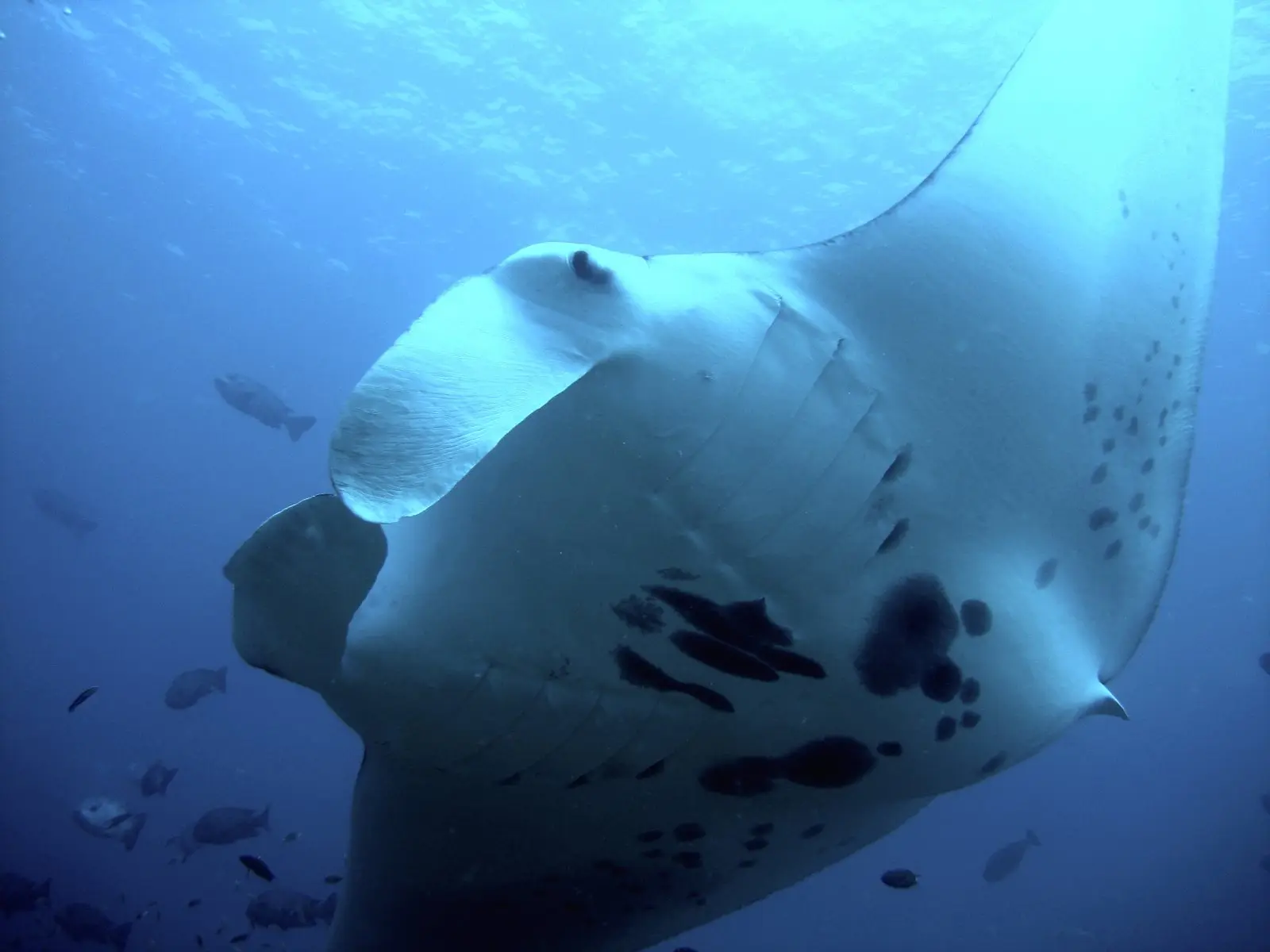
Giant oceanic manta rays gather at the Revillagigedo Archipelago — Socorro, San Benedicto and Roca Partida — some 390 km southwest of Cabo San Lucas. Access is liveaboard-only, with a 24–30 hour open-ocean crossing, and the archipelago is a UNESCO World Heritage site and no-take national marine park.
Best time: The liveaboard season, November to May
Well documented, and reliably seen in season.
When to go
The liveaboard season runs from roughly November through May, avoiding the eastern Pacific hurricane season; boats simply don't operate outside it. November–December and April–May bring warmer water around 24–27°C, while late January to early April is cooler at 21–23°C but overlaps the humpback whale migration through the archipelago. Manta sightings run across the whole season rather than peaking in a narrow window.
Best dive sites for manta rays in Mexico
-
El Boiler (San Benedicto)
The archipelago's signature cleaning station, where oceanic mantas hover at eye level above divers and often linger in their exhaled bubbles.
-
The Canyon (Socorro)
A sloping canyon dive with cleaning stations that also draw mantas, plus seasonal shark activity.
-
Roca Partida
A remote open-ocean pinnacle barely 30 m wide with sheer drop-offs, known for shark aggregations and visibility often beyond 30 meters.
How to see them
There are no flights and no day boats: the only way to dive Revillagigedo is a liveaboard from Cabo San Lucas or San José del Cabo, followed by a 24–30 hour open-ocean crossing before the first dive. Trips run 8–10 days including transits. The national park charges a per-person, per-day fee collected by the operator, which rose to 3,760 MXN per day in January 2025. Operators generally want Advanced Open Water or equivalent with recent experience in current and blue water, since sites involve open-ocean descents, surge and no fixed reference lines.
What an encounter is like
Socorro's giant mantas are famous for approaching divers rather than the other way round — hovering just above your head at El Boiler and seeming to seek out the bubbles from your exhale. Stay passive, never touch (illegal in the park, and it strips the mucus layer protecting their skin), and time your breathing so you aren't blasting bubbles straight into a manta's belly, which startles rather than delights. Nothing is guaranteed — visibility, thermoclines down to 21–23°C in the coolest months, and surge all vary — but multiple manta passes per trip are normal in season.
Frequently asked questions
- Can you dive with giant manta rays in Mexico without a liveaboard?
- No. The Revillagigedo Archipelago has no airport and no day-boat access. The only way to dive it is a multi-day liveaboard from Cabo San Lucas, including a 24–30 hour open-ocean crossing each way.
- Is it legal to touch manta rays at Socorro?
- No. Touching is prohibited in the national park, and contact strips the mucus layer that protects a manta's skin. Stay passive and let them approach you — which, at Socorro, they reliably do.
- What certification do I need to dive Socorro?
- Most operators want Advanced Open Water or equivalent with recent experience in current and open-water conditions, since the sites involve surge, current and blue-water descents without fixed reference lines.
- Is Revillagigedo protected?
- Yes. It became a UNESCO World Heritage site in 2016 and Mexico's Revillagigedo National Park in 2017 — a no-take marine reserve of roughly 148,000 km², the country's largest fully protected marine area, where commercial fishing is banned.
Sources
- Archipiélago de Revillagigedo — UNESCO World Heritage Centre
- Mexico's largest Marine Protected Area: Revillagigedo, the Mexican Galápagos — IUCN
- Socorro Diving: Best Time to Go, Giant Mantas, Sharks & Liveaboards — Bluewater Dive Travel