Ningaloo Reef & Lady Elliot Island
Where to see manta rays in Australia
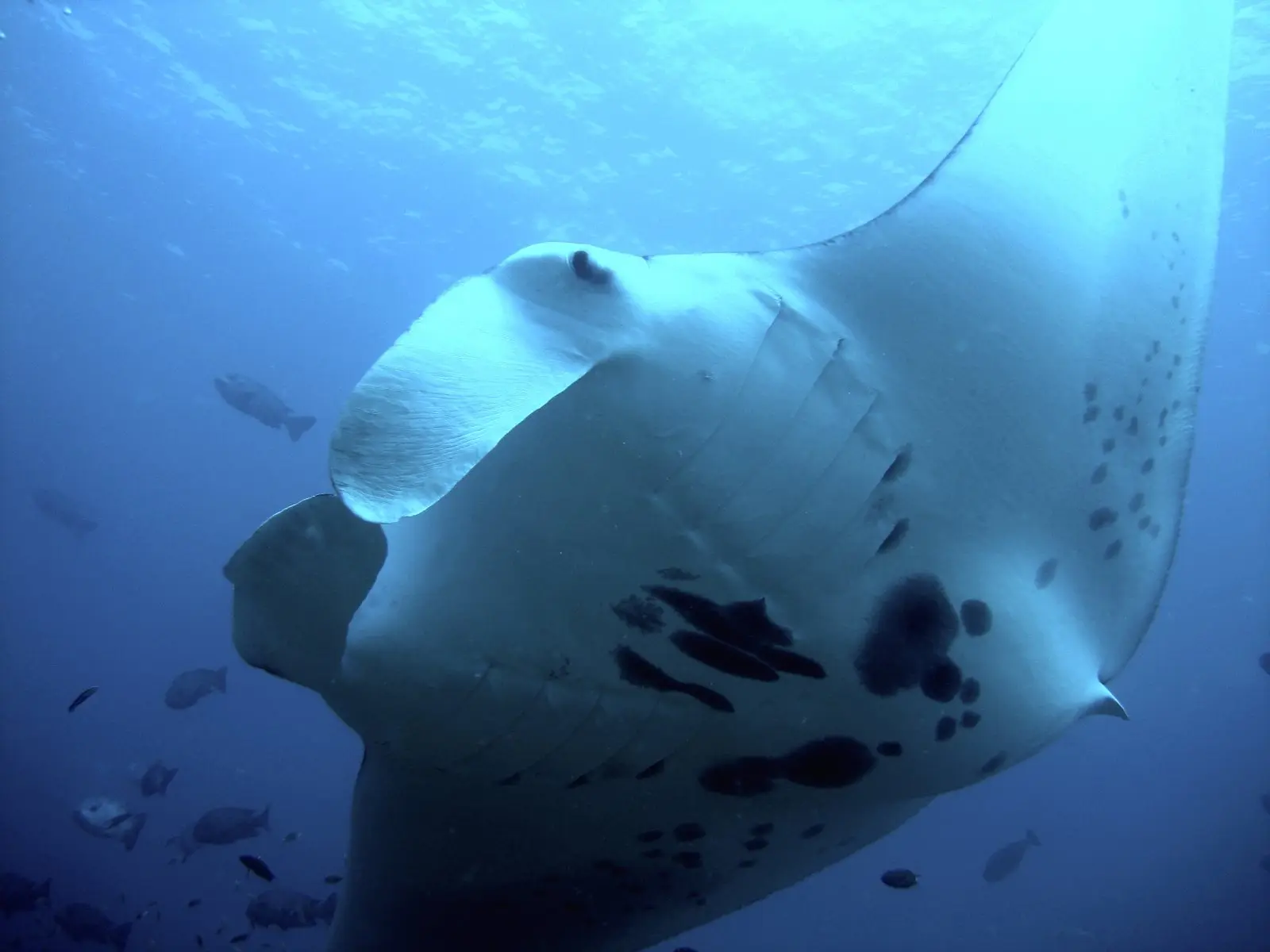
Reef mantas live year-round at Coral Bay on Ningaloo Reef, where a resident population numbering in the hundreds uses the cleaning stations in Bateman Bay; wider Ningaloo numbers peak May to November. Lady Elliot Island on the southern Great Barrier Reef is Australia's largest manta aggregation, concentrated in the austral winter.
Best time: May–November at Ningaloo (year-round at Coral Bay); June–September at Lady Elliot
Well documented, and reliably seen in season.
When to go
Ningaloo's whale shark season runs roughly March to July, driven by migratory sharks following the coral spawn. Mantas follow a different pattern entirely: Coral Bay has a resident population visible year-round, while wider Ningaloo numbers are highest May through November — overlapping the tail of whale shark season and continuing months after the sharks leave. That is precisely why mantas are the reason to come outside the whale shark window. Lady Elliot reverses it, concentrating June to September as the water cools to 21–23°C.
Best dive sites for manta rays in Australia
-
Bateman Bay cleaning stations, Coral Bay
A sandy bay where a resident population in the hundreds uses several cleaning stations. Tour boats send up a spotter plane to locate mantas before guests get in the water.
-
Exmouth waters, northern Ningaloo
Larger, more transient aggregations pass through from roughly May to November, overlapping the tail of whale shark season and running well past it.
-
Lady Elliot Island, southern Great Barrier Reef
A coral cay reached by small plane from Bundaberg or Hervey Bay, and the largest known reef manta aggregation on Australia's east coast — an estimated 70% of east-coast sightings.
How to see them
Coral Bay operators run half- and full-day manta interaction tours: a spotter plane searches Bateman Bay, and once mantas are found guests enter in small guided groups to snorkel alongside them at a cleaning station. Tours run under state wildlife-authority oversight with licensed operators and no-touch practice — though unlike the whale shark rules, a manta-specific code with published contact distances and swimmer caps is not standardised industry-wide, and a Pacific Conservation Biology study of Ningaloo recommended formalising one as the industry grows. At Lady Elliot, mantas are seen straight off the island's fringing reef on snorkel or dive, with no boat search needed.
What an encounter is like
At Coral Bay the resident population and multiple cleaning stations make a sighting close to a near-certainty on most tours, though no single outing is guaranteed. A typical encounter is a slow drift alongside one or more mantas hovering at a station while cleaner wrasse work over their gills, sometimes for several minutes. At Lady Elliot, winter dives regularly turn up mantas cruising, being cleaned, or courting.
Frequently asked questions
- Where can I see manta rays in Australia?
- Ningaloo Reef in Western Australia — Coral Bay's Bateman Bay for year-round residents, plus Exmouth where numbers peak May to November — and Lady Elliot Island on the southern Great Barrier Reef, which peaks in the austral winter.
- How does manta season differ from whale shark season at Ningaloo?
- Whale sharks are migratory visitors present roughly March to July. Reef mantas are largely resident at Coral Bay and can be seen year-round, with wider Ningaloo numbers highest May to November — so mantas are the reason to visit after the sharks have gone.
- Do I need to dive, or can I snorkel with mantas at Ningaloo?
- Snorkelling is the standard way at Coral Bay: boats use a spotter plane to find mantas over the Bateman Bay cleaning stations, then guests get in and drift alongside them. Some operators offer scuba on full-day itineraries.
- When is the best time to see manta rays at Lady Elliot Island?
- June to September, the southern winter, when the water cools to around 21–23°C and mantas increase cleaning, courting and feeding. Lady Elliot accounts for an estimated 70% of manta sightings recorded on Australia's east coast.
Sources
- Manta Rays — Ningaloo Centre (Exmouth Visitor Centre) — Ningaloo Centre
- Protecting the gentle giants of Ningaloo Reef — Tourism Western Australia
- Manta ray tourism management: a case study from the Ningaloo Marine Park — Pacific Conservation Biology
- Project Manta — Lady Elliot Island Eco Resort